
Recently @Plasma ($XPL ) has become the eye of the storm in the crypto world. It peaked upon launch, followed by a price cut in half, and community FUD surged, with on-chain analysts, KOLs, and official statements appearing in succession. All of this makes one feel as if they have gone through a 'test of faith.'
But if you can step out of your emotions and calmly sort through this turmoil, you will find that the story of Plasma is far more complex than it appears on the surface.

1. Plummeting does not equal collapse: another interpretation of on-chain data
On the surface, it seems that the price of XPL has plummeted 90% from its peak, and community sentiment has hit rock bottom. However, on-chain data presents a different answer: the number of active addresses has not decreased but rather increased, the proportion of stablecoin transfers continues to rise, and the TVL remains high.
In other words, while retail investors are cutting losses and exiting, large holders and institutions are quietly increasing their positions, making on-chain economic activity even more vibrant.
This is not a project collapse, but a severe correction of market sentiment.
Two, the truth of zero fees: subsidies exchanged for traffic is the norm in the industry.
The most eye-catching selling point of Plasma is 'zero fees for USDT transfers'. Many people question whether this is a 'loss-making deal', but in essence, it is a common strategy of exchanging ecological subsidies for traffic. Tron captured the global stablecoin payment market with low fees, while Plasma chose a more aggressive 'free' strategy, covering costs through token inflation and staking rewards. In the short term, it looks like a subsidy, but in the long term, it depends on whether a network effect and a closed loop of real demand can be formed.
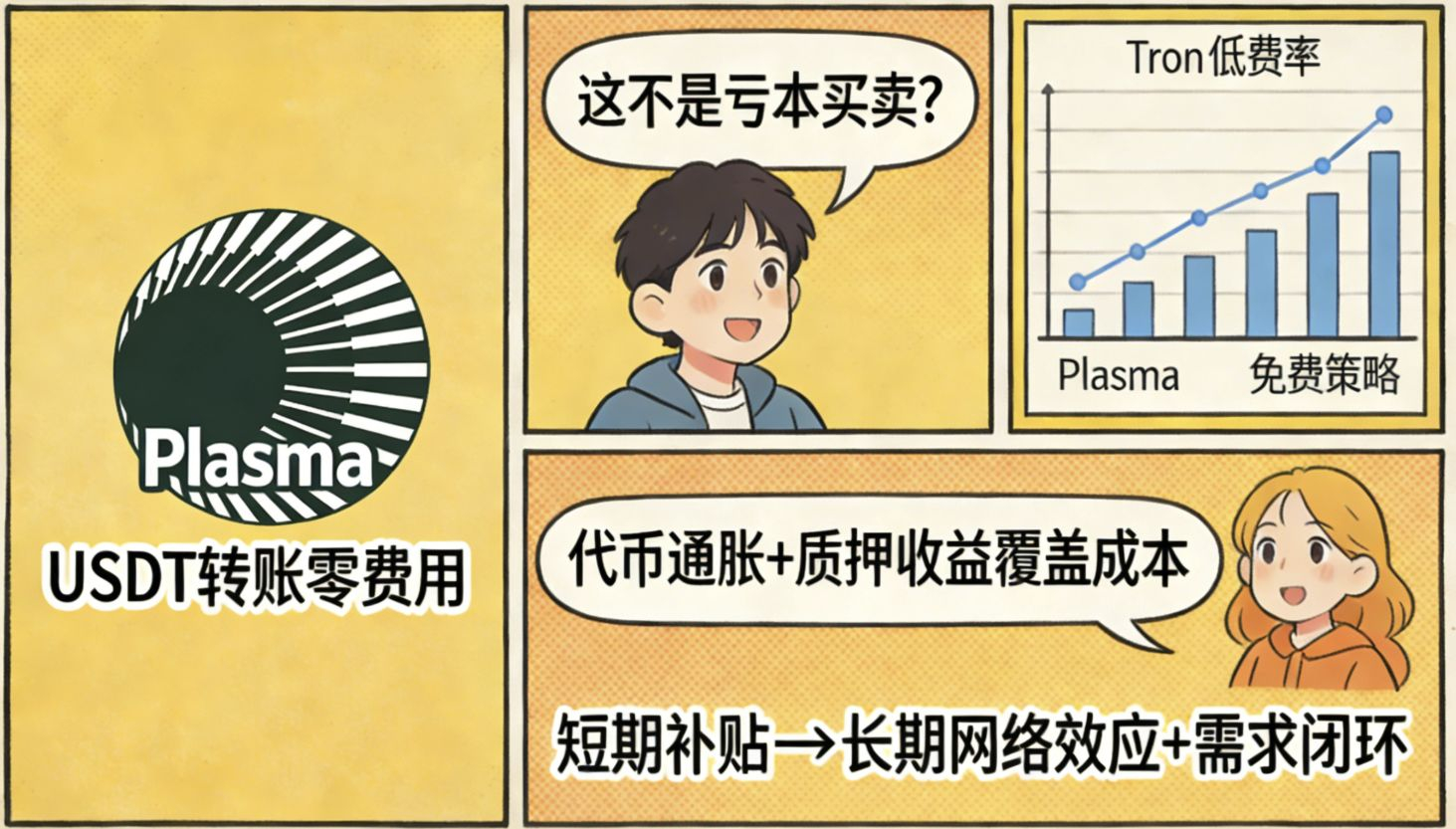
This is not a scam, but a realistic choice for the cold start of Web3 infrastructure.
Three, FUD and on-chain truth: Panic caused by information asymmetry.
The trigger for this round of plummet was the on-chain evidence of 600 million XPL flowing from the 'team treasury' to exchanges. The community's first reaction was 'the team is dumping', but the official response was that all team and investor tokens are locked, and what was actually transferred was the 'ecology and growth fund'—this portion of tokens was already unlocked at TGE and is used for ecological incentives, liquidity, and cooperation.
Technically, both sides are correct, but the ambiguity of information disclosure and the market's sensitivity have amplified panic sentiment, allowing bears to take advantage.
Four, the underlying logic of Plasma: Focus on payment as a 'clearing network'.
Plasma does not aim to become the next Ethereum; instead, it focuses on stablecoin payments and clearing. It enables zero-threshold USDT/USDC transfers through the Paymaster protocol, EVM compatibility reduces developer migration costs, and it relies on Bitcoin's security mechanism to provide a trust anchor for institutions and large funds.
The deep binding of Bitfinex and Tether gives Plasma the opportunity to become the 'favorite child' of USDT issuance; if future USDT issuance leans towards Plasma, liquidity will be at a nuclear level.
Five, how to rationally view XPL?
Focus on real on-chain data: observe the issuance of USDT/USDC, merchant access, and settlement flow, rather than just watching the candlestick charts.
Understand token distribution and unlocking: The flow and use of the ecological fund must be transparent, and the community should participate in governance and supervision to prevent 'wash trading' suspicions.
Beware of short-term fluctuations and extend the time perspective: The value of infrastructure requires time to settle, while prices are greatly influenced by emotion and liquidity in the short term.
Pay attention to compliance and withdrawal channels: For stablecoin payments to land, there must be reliable fiat entry and exit channels and local agency networks.
Diversify investments and participate rationally: Do not heavily bet; build positions in batches, adjust dynamically, and focus on risk management.
Plasma is not the next hundredfold meme coin, nor is it a speculative product for overnight wealth.
It is more like the 'fiber layer' of Web3 payment tracks, with value depending on whether it can become the underlying infrastructure for stablecoin settlement.
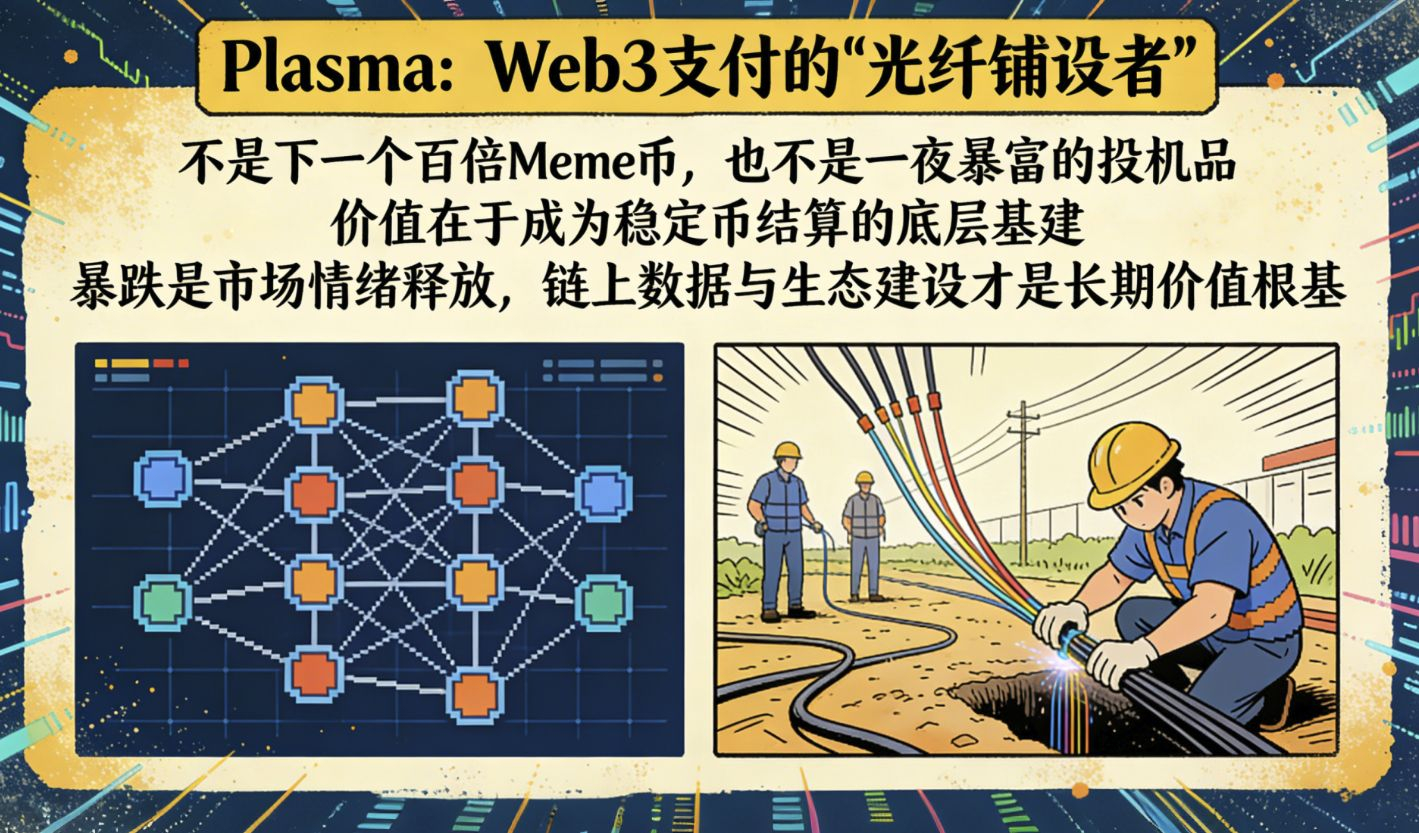
The plummet is a release of market emotion, but on-chain data and ecological construction are the foundation of long-term value.
For investors who truly value infrastructure and real demand, Plasma deserves continued attention, but one must also remain rational and patient, being wary of short-term fluctuations and risks arising from information opacity.
The market always oscillates between emotion and value; only those underlying projects that truly solve pain points and possess self-sustaining capabilities can traverse bull and bear markets. The story of XPL has just begun.