To be honest, my initial impression of Vanar was also quite average. After all, EVM-compatible chains are everywhere now; just changing a logo, shouting a few AI Ready slogans, and doing some marketing is something anyone can do. But when I really put in the effort to look at Vanar's contracts, node architecture, and on-chain data, I found that it is completely different from those 'reskin' projects.
**1. AI Ready is not a gimmick; it's a 'dimensionality reduction' in the underlying design**
Most so-called AI public chains on the market, to put it bluntly, just write AI model results onto the chain or create an AI NFT; they cannot actually run real AI businesses. You expect a large model to infer and produce a block in 12 seconds? Come on. Vanar's approach is very clear: the chain is not meant to run AI models but to certify the data generated for AI and to facilitate micro-payment settlements for robots. Its architecture is fundamentally designed for high-concurrency data streams and large-scale micro-payments.
I personally used Vanar to set up a contract simulating supply chain finance, testing large batches of data on-chain. The result surprised me: the delay from data submission to confirmation is extremely low, and resource consumption is also very stable. To be honest, this kind of performance is more like using Redis for real-time data streams rather than traditional blockchain. Its underlying architecture is clearly tailored for enterprise-level and AI-level throughput.
**Two, the partnership with Google Cloud is not a gimmick; it is a shortcut to the 'industrial internet'**
Many people think that Vanar's collaboration with Google Cloud is just about buying cloud services and issuing a press release. In fact, I have analyzed the node network and found that it genuinely integrates Google's edge computing and global fiber optic network into the consensus layer. While others are struggling with node expansion and physical network bottlenecks, Vanar directly uses the high-speed rail tracks of Web2 giants to run its own vehicles. This hybrid architecture has been criticized by extreme decentralization advocates, but for enterprises and large clients, it is a dimensional reduction strike. What you want is stability, compliance, and SLA guarantees, not 'nodes distributed in someone's garage.'
**Three, extreme energy efficiency and ESG compliance clear obstacles for institutions**
In the Web3 circle, environmental protection and energy consumption are often overlooked. But for large enterprises, ESG compliance is a necessity. Vanar calculates the carbon footprint of each transaction very precisely. This is of little use to retail investors, but for publicly listed companies and multinational corporations, it is the threshold of whether or not to use the chain. Vanar's target customers are very clear: they are not retail investors speculating on coins, but enterprise-level users who need compliance and energy audits.
**Four, a clean ecosystem and low development threshold truly pave the way for Web2 developers**
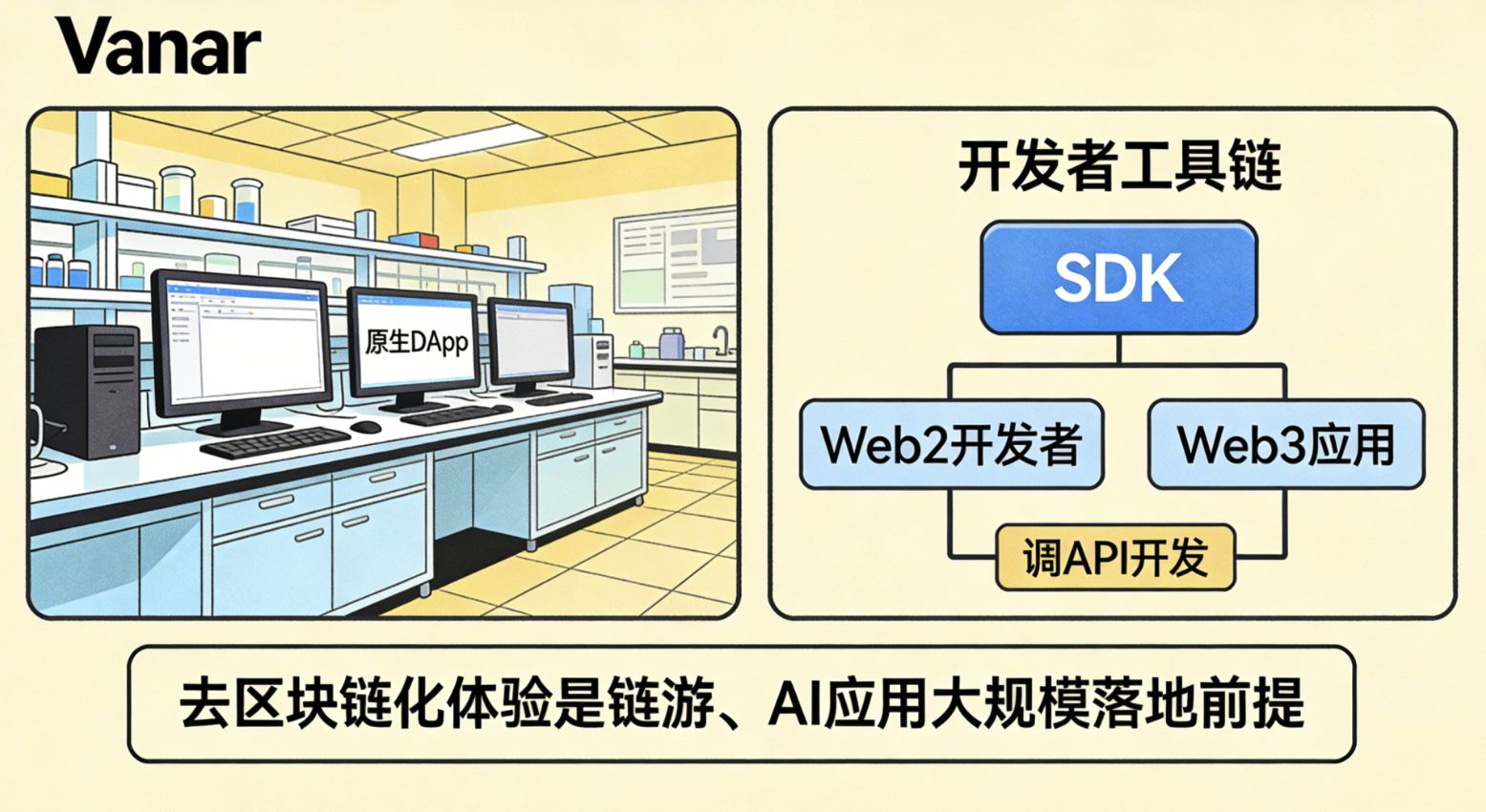
Vanar's ecosystem is still quite 'quiet' right now, with not many native DApps, but this is not a bad thing. It is like a freshly disinfected laboratory—clean, quiet, with no inflated numbers or junk information. The developer toolchain is robust, the SDK is well-packaged, and Web2 developers do not need to understand the underlying blockchain; they can directly develop Web3 applications by calling APIs. For developers looking to create blockchain games or AI applications, this 'de-blockchainization' experience is the prerequisite for large-scale implementation.
**Five, privacy computing and cross-chain interoperability have huge potential for the future**
Recently, Vanar's codebase has frequently updated its privacy computing module. In the future of AI and data economy, privacy is the core lifeline. If Vanar can tackle the challenge of making on-chain data 'usable but invisible,' its position in the AI and enterprise-level track will be very stable. At the same time, although the cross-chain asset bridging experience still has minor bugs, the underlying asset security is very strong, indicating that the team has very high self-requirements for security and compliance.
**Six, the cost and opportunity of an elite path**
Vanar's threshold is set high, and the ecosystem is not yet in full bloom, but this makes on-chain data extremely pure. There are no inflated numbers, no profiteers, and you can see the real block production of each node and the actual execution of each contract. This 'calm before the storm' is an opportunity prepared for those with true long-term vision.
**Seven, conclusion: pragmatic, rigorous, industrial-grade is the base color of the future AI chain**
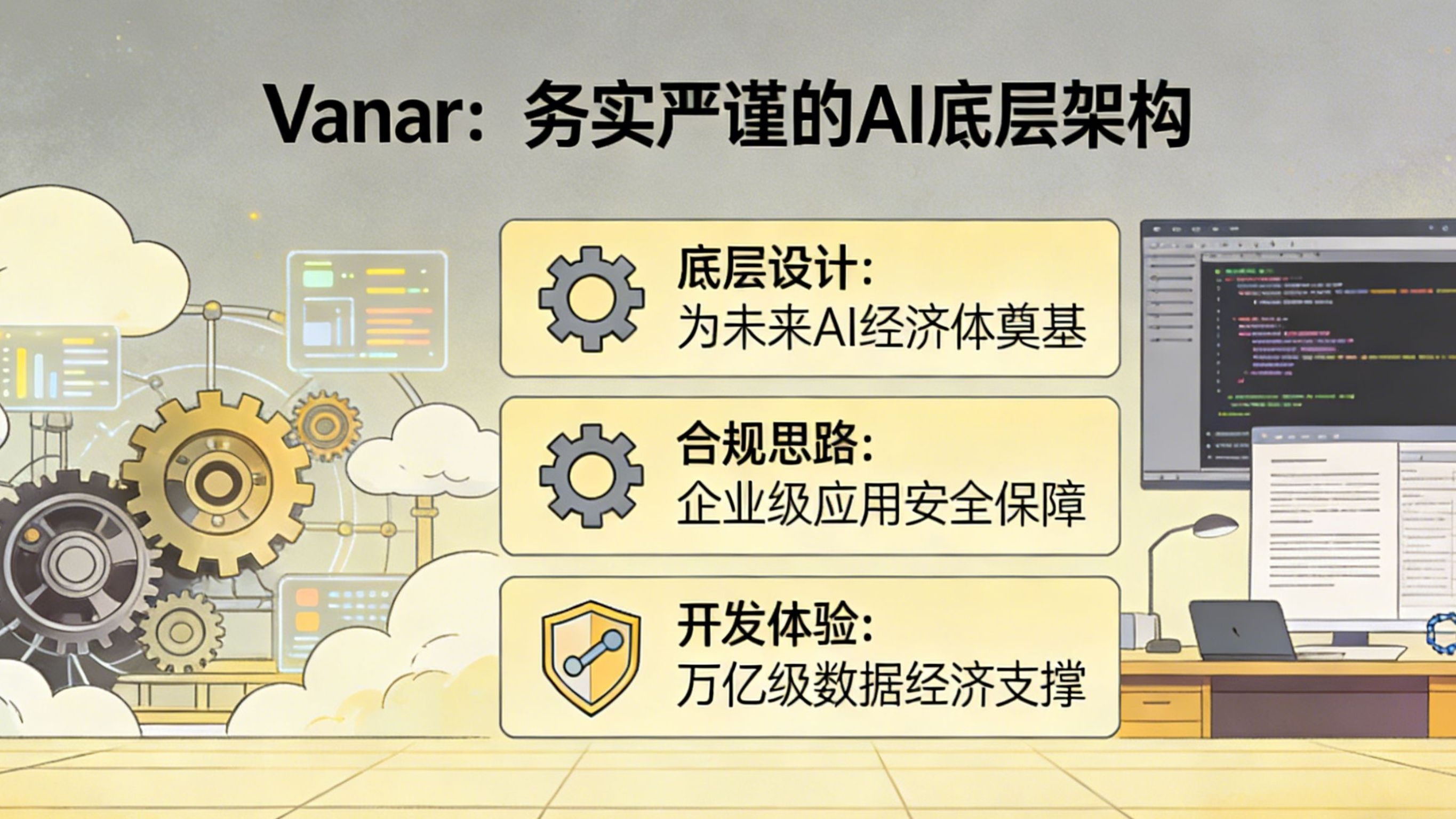
Vanar has no passionate slogans, nor does it have stories of getting rich quickly. Its underlying design, compliance approach, and development experience are all tailored for the future AI economy and enterprise-level applications. It is not glamorous; it is even a bit boring, but it is this practicality and rigor that may support the future trillion-dollar AI and data economy.
In this industry full of bubbles and noise, the 'honest person' trait of Vanar may be the most scarce Alpha. Don’t just focus on coin prices and popularity; true value often lies in those understated, solid, and trustworthy underlying technologies.
@Vanarchain $VANRY #Vanar