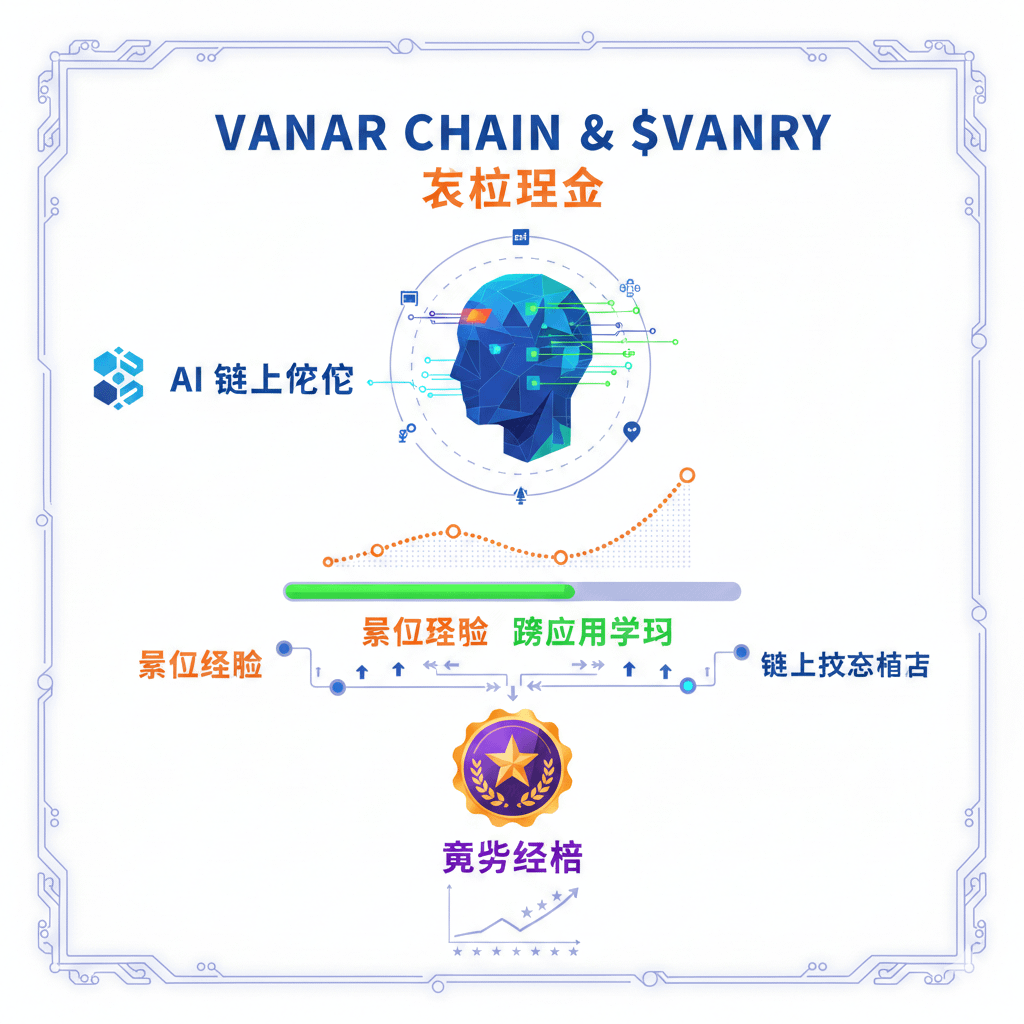
 If you want to truly understand the direction of Vanar, you need to step outside the framework of traditional blockchain metrics. TPS, gas fees, and throughput are certainly important, but they are not the core variables.
The real change lies in:
In the next phase of AI competition, the value of memory may exceed speed.
Currently, most AI systems still operate in a 'conversational mode.' They complete answers, generate content, perform tasks, and then reset. The so-called 'learning' is often temporary or stored in centralized databases. This means trust, ownership, and the accumulation of long-term capabilities are limited.
The mindset is different:
What would happen if AI interactions and experiences were directly recorded on-chain?
From computational power competition to experience accumulation.
In early AI economic models, value often revolves around:
Model scale.
Training data volume.
Inference speed.
But in a more mature AI ecosystem, 'accumulated interaction history' may be the real moat.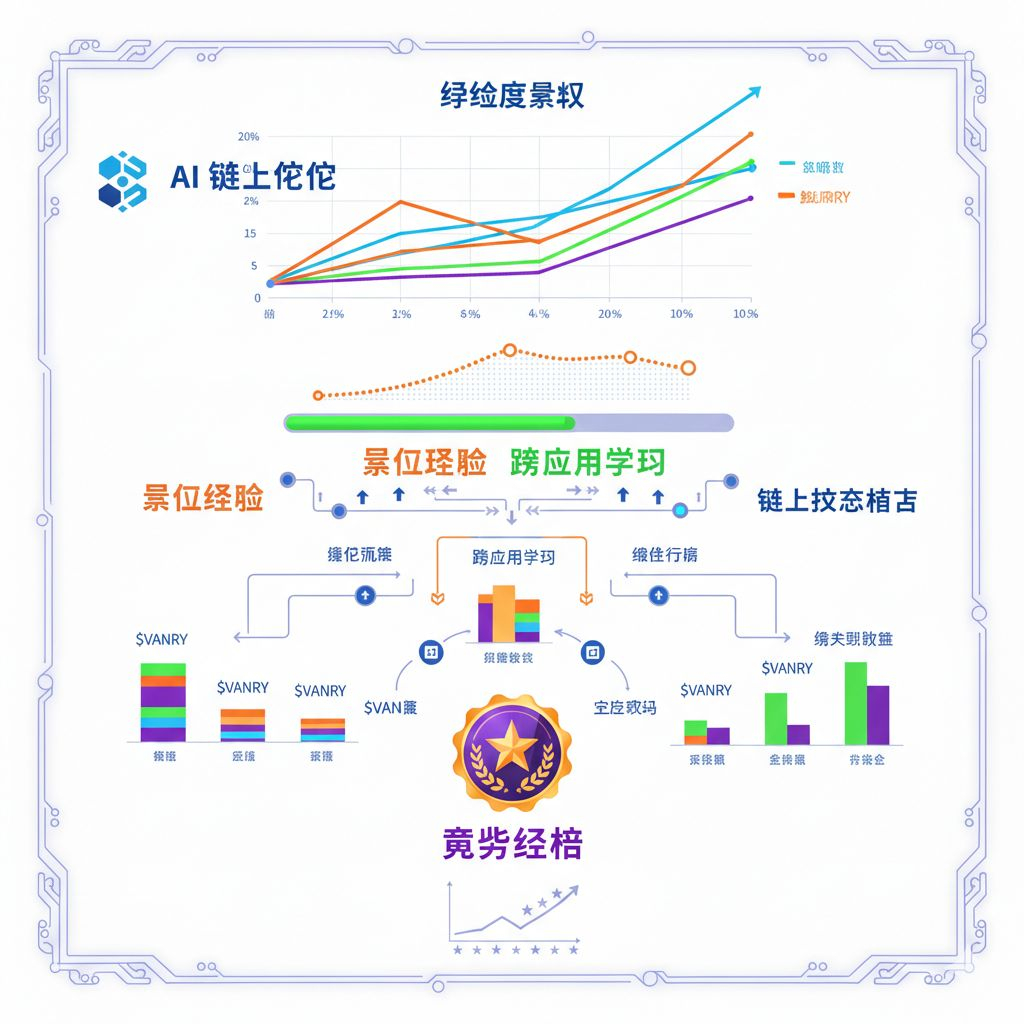
Imagine two AI agents:
A technology that is advanced but just launched.
Another has completed thousands of on-chain verifiable interactions, covering multiple scenarios such as gaming, finance, business, and content creation.
Which one would you trust more to execute high-value tasks?
Experience can be compounded. When experience is structured and verifiably recorded on-chain, it becomes a measurable asset.
On-chain memory: from data to economic weight.
When AI interactions are recorded on-chain, a new level emerges:
Persistent AI identity.
Cross-application learning capability.
Verifiable performance records.
Composable digital reputation.
This is not just 'storage,' but programmable memory.
AI is no longer just a temporary tool, but a digital entity with a traceable growth path.
Its history can be priced by the market, trusted by users, and invoked by other agents.
In this model, reputation is no longer an abstract concept, but on-chain data.
$VANRY 's role.
As a functional token within the ecosystem, providing underlying power for network transactions, smart contract execution, and AI applications.
If future AI agents:
Storing structured memory on-chain.
Automatically executing contracts.
Cross-application interactions.
Conducting autonomous transactions.
Then network demand will expand with the growth of agent activities.
Historical experience shows that what truly has long-term value is often the infrastructure layer that supports sustained usage demands, rather than short-term narratives.
When AI agents begin to directly participate in the digital economy (trading, collaborating, creating value), the underlying network becomes their 'settlement layer' and 'memory layer.'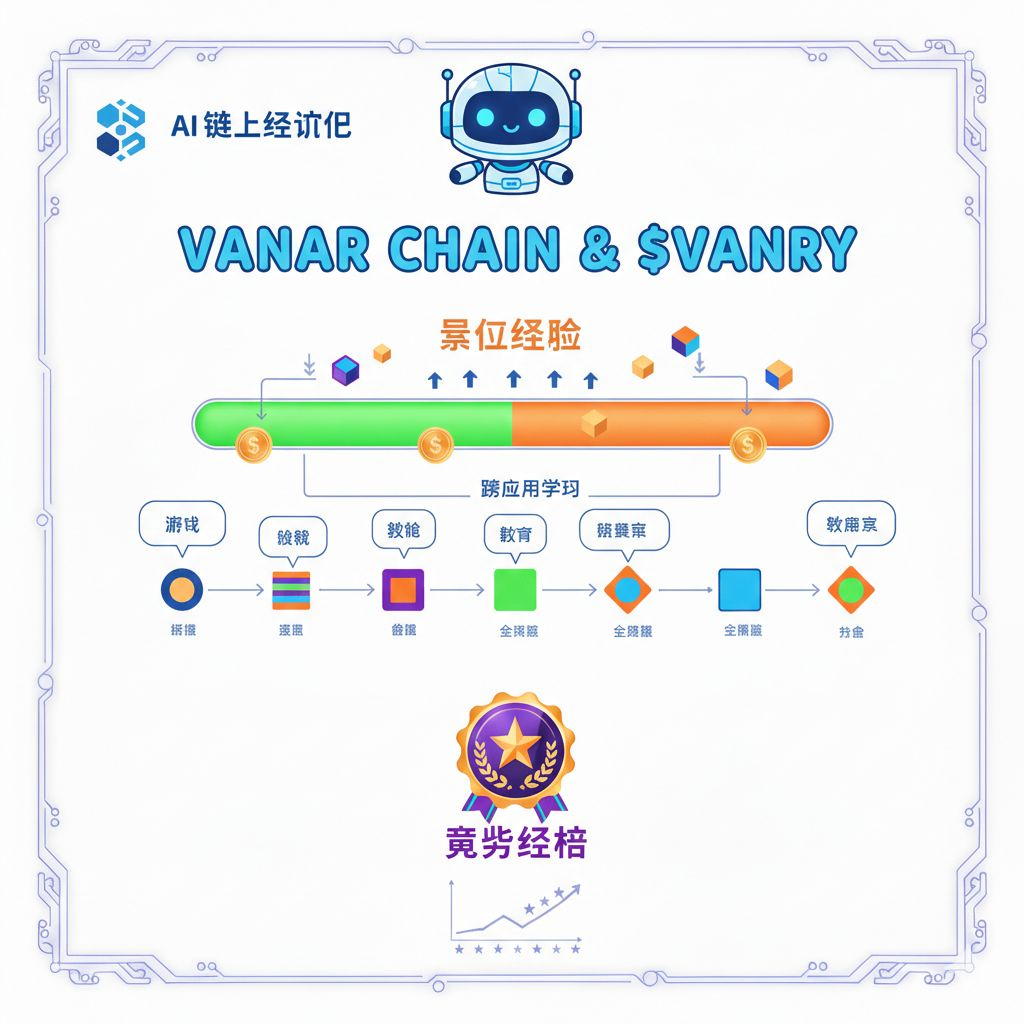
The shift in AI economic models I.
We may be entering a new phase:
Memory = Reputation
Reputation = Influence
Influence = Economic Value
In such an environment, a network capable of storing, verifying, and structuring AI experiences will become key infrastructure.
This is not just about building a faster public chain.
Rather, it is about building the underlying framework for 'AI systems that accumulate experience.'
Speed can be replicated.
Liquidity can rotate.
Narratives can be replaced.
But once verifiable experiences accumulate, they will generate a compounding effect.
And true long-term value often emerges from this 'compounding layer.'