A Clear Look at the Current Structure and Implications for Traders
The cryptocurrency market is going through a phase that requires more finesse than enthusiasm. We are neither experiencing explosive euphoria nor widespread capitulation. We are operating in an environment where liquidity, macroeconomics, and institutional positioning play a decisive role.
To understand the dynamics of February 15, 2026, three main areas must be analyzed: market structure, the macroeconomic context, and investor behavior.
1. Current Market Structure
Bitcoin: The Pillar of the Trend
Bitcoin remains the structural benchmark. As is often the case, the dominant market direction largely depends on its behavior.
Currently, several factors define the situation:
Moderate but unpredictable volatility
Liquidity concentrated around key technical levels
Strong presence of institutional players
Rapid movements triggered by macroeconomic announcements
The market appears to be in a phase of broad consolidation. This type of setup generally reflects either accumulation or redistribution—two very different scenarios that only become clear in retrospect.
Ethereum: Increased Sensitivity to Capital Rotation
Ethereum exhibits a slightly stronger correlation with speculative capital movements.
When the market becomes more aggressive, risk appetite increases, and Ethereum tends to outperform.
Conversely, when uncertainty rises, capital flows toward Bitcoin or stablecoins.
This alternation reflects a reality: the crypto market operates through internal rotation cycles.
Altcoins: Dispersion and Selectivity
The altcoin market is currently fragmented:
Certain sectors (AI, blockchain infrastructure, RWA) are attracting attention.
Other projects remain under pressure due to a lack of liquidity.
Increased selectivity is observed: investors are no longer massively funding the entire market as they did during periods of euphoria. Capital is concentrated on specific narratives.
2. Macroeconomic Context
The crypto market no longer operates in isolation.
Key factors to monitor currently:
Central bank decisions on interest rates
Inflation data
The dollar exchange rate
Geopolitical tensions
Financial regulations
Rising interest rates or monetary tightening tend to reduce risk appetite. Conversely, easing can support speculative assets.
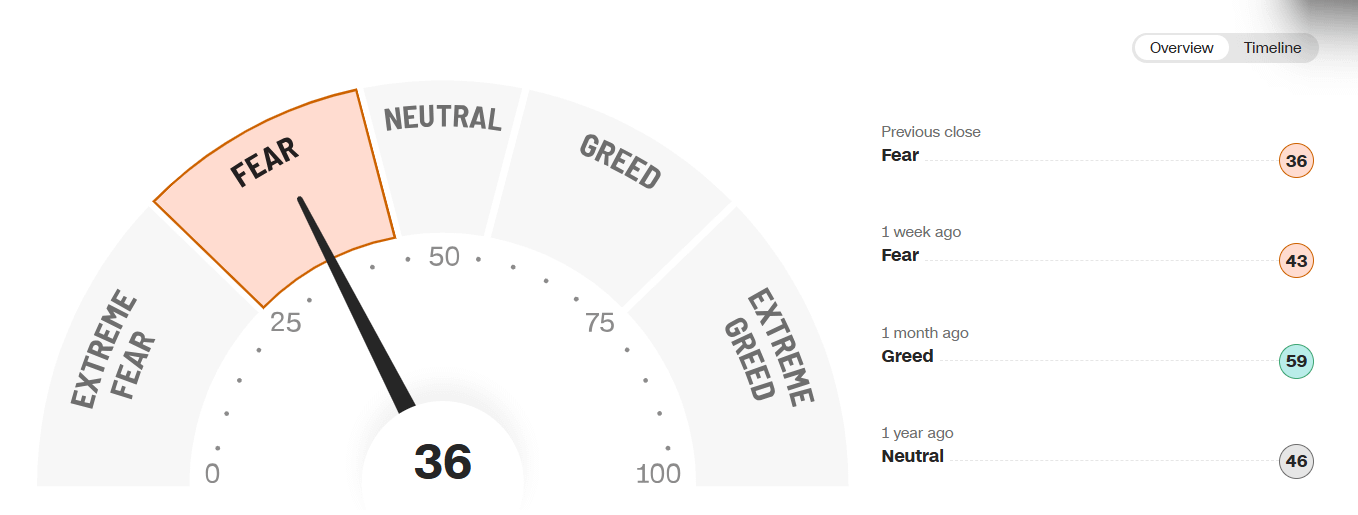
Currently, the global environment remains cautious. Investors are not panicking, but they are not euphoric either.
3. Market Sentiment
Current sentiment is characterized by:
High vigilance
Strong sensitivity to news
Distrust of overly rapid movements
Periods where everything seems “obvious” are rare. We are more in a technical market, dominated by risk management and the search for specific opportunities.
4. General Technical Analysis
Without going into specific levels, the current structure shows:
Support zones that have been tested repeatedly
Resistance that is blocking upward impulses
A gradual compression of volatility
Historically, this type of setup can precede an impulsive move.
But the direction will depend on the triggering catalyst.
5. Possible Short-Term Scenarios
Scenario 1: Bullish Breakout
If liquidity flows in strongly and a positive macroeconomic catalyst emerges, the market could trigger a rapid upward surge.
Scenario 2: Rejection and Correction
A lack of volume or negative macroeconomic news could trigger a pullback to lower levels.
Scenario 3: Prolonged Consolidation
The market could continue to move sideways, gradually exhausting impatient traders.
My Advice for Traders
February 15, 2026, is not a day where maximum aggression is rewarded. It is an environment that favors discipline.
1. Prioritize Risk Management
Before entering a position, ask yourself a simple question:
"Where is my stop-loss point?"
If this point is unclear, the position is also unclear.
2. Reduce leverage if volatility increases
Leverage can destroy an account faster than it grows it, especially in a compressed market that can explode in either direction.
3. Avoid trading every move
Not every move is an opportunity.
Trading is not a daily obligation.
4. Don't confuse conviction with stubbornness
A disciplined trader accepts that they will be wrong.
An emotional trader defends their ego.
5. Monitor liquidity, not just price
Breakouts without volume are often traps.
Real moves are supported by clear flows.
6. Embrace uncertainty
No one knows the next major move for certain.
The goal is not to predict perfectly, but to survive long enough to capture the right opportunities.
7. Protect your mental capital
The current market can be exhausting. Taking a break, reducing exposure, or remaining neutral is sometimes the most cost-effective decision.
Conclusion
The crypto market on February 15, 2026, is in a phase of fragile equilibrium. The structure is neither euphoric nor catastrophic. It demands patience, clear thinking, and risk management.
In this type of market:
Impulsive traders burn out.
Disciplined traders build their edge.
The key is not to be right every day.
The key is to still be there when the next major move occurs.