

Gold vs Bitcoin: Which one is a better store of value? (2:59)
Billionaire investor Ray Dalio says the post–World War II global order has officially broken down.
In a recent post on X, the Bridgewater Associates founder argued that both internal and external disorder are accelerating simultaneously. He described the world entering a “law of the jungle” phase in which power determines outcomes instead of rules.
According to Dalio, major powers are now trapped in a persistent “prisoner’s dilemma,” forced to escalate across trade, technology, capital markets, and even military tensions.
The danger, he warned, is that these dynamics make what he calls “stupid wars” frighteningly easy to trigger.
Related: Billionaire Ray Dalio warns banks are losing confidence in fiat
World is experiencing a new form of warfare
Dalio said leaders at the recent Munich Security Conference openly acknowledged that the post-1945 framework is no longer functioning. In its place, he sees a return to a power rivalry driven less by international law and more by relative strength.
In this environment, tactics such as sanctions, asset freezes, capital market restrictions, and embargoes become central tools of statecraft.
These measures are maybe short of open warfare, but they are economic weapons that expose how dependent traditional savings and payment systems are on political discretion.
Dalio argues that when the most powerful countries can freeze assets or restrict access to financial infrastructure, the global system begins to resemble a fragmented landscape rather than a cooperative order.
Popular on TheStreet Roundtable:
Select Americans receive $1,200 in monthly payments as rents soar
Another company makes a U.S. comeback
Gold, silver, S&P 500, crypto crash again amid extreme fear
Internal stress fuels external conflict
External tensions rarely develop in isolation. Dalio’s framework emphasizes how geopolitical strain often collides with domestic economic stress.
When growth slows and wealth gaps widen, governments tend to respond with higher taxes and large increases in money creation, rather than explicit defaults. Historically, that approach devalues existing claims and weakens purchasing power.
Dalio cited the example of the World Wars, when money and credit were not commonly accepted between non-allied countries. This was because of a "justifiable wariness" about a currency's value.
At that time, precious metals like gold, silver, or, in some cases, barter, were "the coin of the realm."
While highlighting the pains of protecting one's wealth during times of war, he advised,
"As for investing, sell out of all debt and buy gold because wars are financed by borrowing and printing money, which devalues debt and money, and because there is a justifiable reluctance to accept credit."
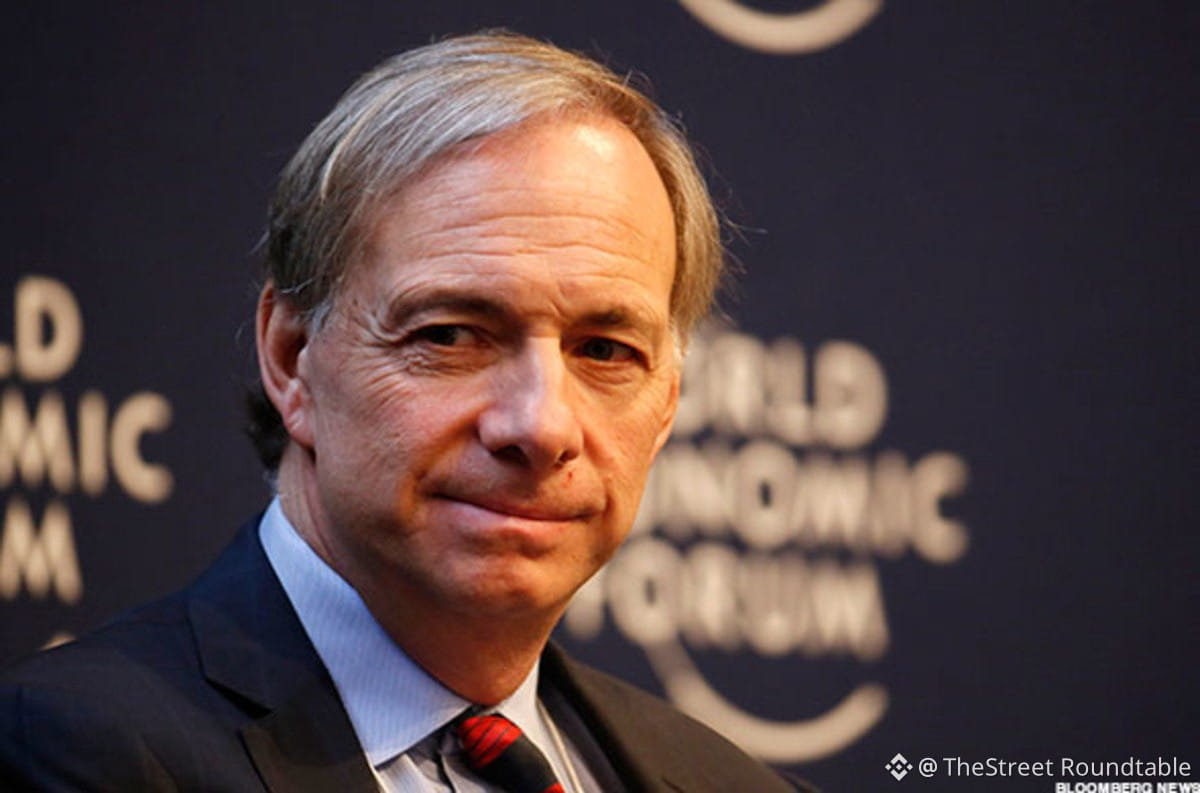 Ray Dalio (Source: Getty Images)
Crypto investors renew the neutral money case
While Dalio openly vouches for gold in such times of crisis, for crypto advocates, his warning reinforces a familiar thesis.
As governments rely more heavily on sanctions, asset freezes, and money creation, investors may increasingly look to assets like gold that can operate outside state control.
Bitcoin (BTC) maximalists vouch for it as the next best candidate. It is often framed as apolitical and borderless, which does not rely on a centralized intermediary like a government or a central bank.
As concerns over dollar debasement intensified last October, Google searches for “Bitcoin” and “dollar debasement” surged to record levels.
At the same time, financial advisors and institutions are increasingly embracing digital assets.
However, in recent years, Bitcoin has also shown volatility to macroeconomic factors like Federal Reserve's rate decisions, geopolitical tensions, and even elections.
At press time, Bitcoin was trading at $67,685.37, still reeling from the ripples of the massive liquidation on Oct. 10.
Disclaimer: The information provided here is for general informational purposes only and should not be considered financial advice. Consult with a licensed financial advisor before making any investment or financial decisions.
Related: Ray Dalio: If Bitcoin Is Successful, Government Will ‘Kill It’