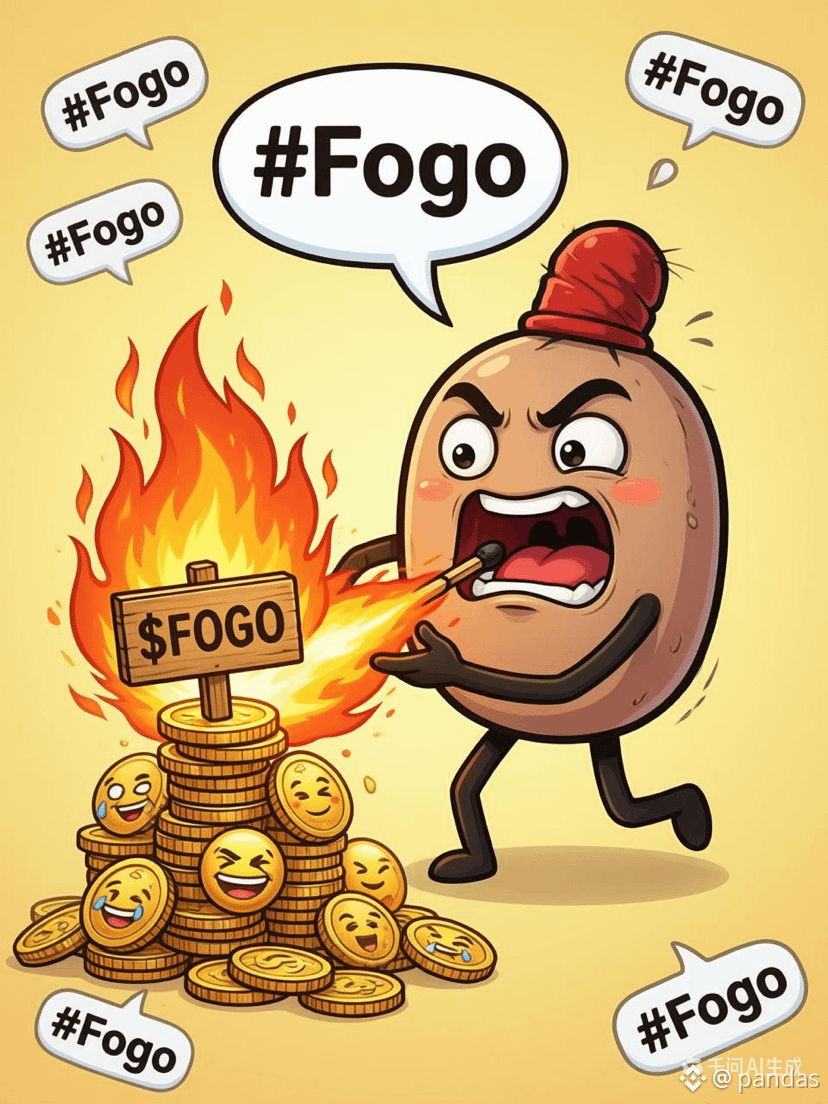
FOGO is a high-performance Layer 1 blockchain based on the Solana Virtual Machine (SVM) that will go live on the mainnet in early 2026. It specializes in institutional-level DeFi and high-frequency trading with extreme performance, forming significant differentiated competition with Solana, BNB Chain, and enterprise-level Hedera (HBAR) that target the mass ecosystem.
The following is #Fogo a detailed comparison with core competitors:
⚙️ Performance and architecture: Pursuing the ultimate 'trading machine'
FOGO's core advantage lies in its architecture optimization designed for trading, with very bright technical indicators. Please note that performance data from different sources may vary (e.g., TPS claims of 48,000 and 136,866), which may reflect differences between testnet peaks and mainnet data, but all point to its top performance level.
· #fogo : Based on SVM and Firedancer validator architecture optimization, it focuses on ultra-low latency. Block time <40 milliseconds, with a maximum claimed transaction throughput of 136,866 TPS. Composed of 19-30 selected nodes forming the validator set, prioritizing performance.
· Solana: High-performance general-purpose public chain. Theoretical peak value is high, but the stability under pressure and history of outages are the main concerns of the market.
· Hedera (HBAR): Adopts innovative Hashgraph consensus, fast and energy-efficient (>10,000 TPS). Features enterprise-level applications and governance committees, pursuing a balance between security and compliance.
🎯 Market positioning: Institutions, the public, or enterprises?
The three represent three different paths: FOGO chooses the narrowest and deepest institutional trading track; Solana covers the widest developer ecosystem; HBAR deeply cultivates the traditional enterprise market.
· FOGO: Positioned as 'the Wall Street version of Solana'. Precisely serves institutional investors, high-frequency trading, and DeFi protocols requiring rapid settlement, serving as a bridge between traditional finance and on-chain trading.
· Solana: Positioned as a general high-performance ecosystem. It has a large developer community and diverse ecological applications (DeFi, NFT, payments, etc.), leading in market share.
· BNB Chain: Positioned for retail applications and communities. Relying on the exchange ecosystem, it has a broad user base in fields such as GameFi and Meme.
· Hedera (HBAR): Positioned as an enterprise-level distributed ledger. Managed by a governance committee composed of large global enterprises, focusing on B-end scenarios such as supply chain management and asset tokenization.
📊 Market data and potential
· Market size: FOGO's market capitalization is approximately $147 million (ranked about 288th), still in the early stage; Solana has a huge market capitalization (about 30 times that of FOGO), with a solid leading position; HBAR's market capitalization exceeds $5 billion (ranked 28th), having entered a mature and stable period.
· Growth path:
· FOGO: The key is whether it can attract real high-frequency trading volume and liquidity with its performance advantages. The positive aspect is that regulations such as the 2026 (Responsible Financial Innovation Act) provide clarity and clear obstacles for institutional funds to enter. The main risk is that the ecosystem is still immature, and token unlocks may bring selling pressure.
· Solana: Is consolidating its performance advantage through paths such as the Firedancer upgrade, while expanding into new areas such as DePIN and RWA.
· HBAR: With continuous enterprise adoption and stable network upgrades, it has strong defensiveness and more stable growth expectations.
⚖️ Risk comparison
· @Fogo Official : As an emerging project, the technical and ecological risks are relatively high. The development team is anonymous, and there have been outages during the testnet phase. Whether its performance can withstand the test of the mainnet's real environment remains to be seen. At the same time, the volatility and liquidity risks brought by the small market capitalization are also higher.
· Solana: Needs to continuously address network stability, centralization controversies, and fierce competition from other high-performance public chains.
· Hedera (HBAR): Its unique governance model and consensus mechanism have a certain tension with the completely decentralized native crypto philosophy. The compliance path is clear, but it may also face risks from regulatory policy changes.
FOGO is a very distinctive 'specialized' dark horse. It is not a comprehensive alternative to Solana, but relies on extreme performance to challenge general public chains in the 'institutional-level high-frequency trading' niche with differentiated strategies.$FOGO