


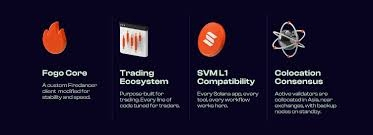
I literally overwhelmed by this with fogo.
Most new chains try very hard to impress you.
Big numbers. Big words. Big promises.
Fogo didn’t.
And weirdly, that’s what made me take a second look.
It wasn’t trending. It wasn’t attached to whatever narrative was hot that week. No AI pivot. No RWA announcement. No “we’re the future of everything.” Just a fairly simple proposition: high-performance SVM, optimized for latency-sensitive markets.
At first, that sounds too narrow and thin to matter.
But the more I thought about it, the more that narrowness felt intentional.
I’ve used enough chains during peak volatility to know the difference between theoretical speed and usable speed. There’s a specific kind of anxiety you develop when submitting transactions during heavy traffic. You start anticipating failure. You instinctively add mental buffers. You click with hesitation.
That’s not a UX problem. That’s a coordination problem.
What Fogo seems to understand — and this took me a while to internalize — is that most latency issues aren’t about execution engines being slow. They’re about validators being too far apart and too loosely coordinated.
Multi-Local Consensus is their way of addressing that.
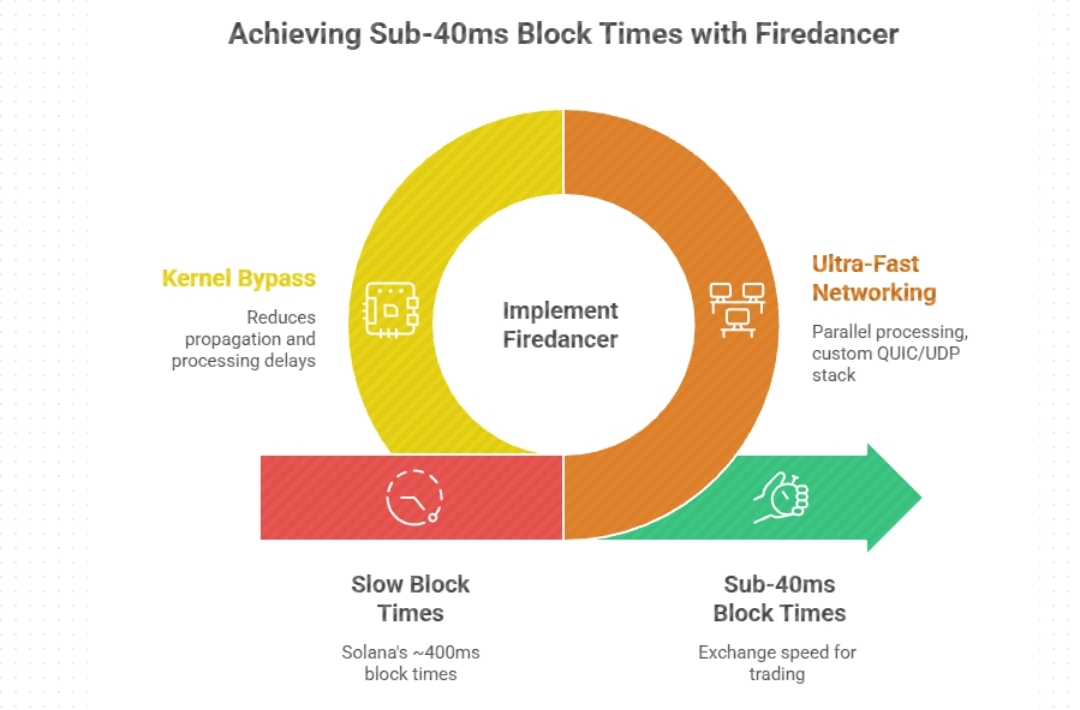
Instead of forcing global synchronization at every moment, validators operate in tightly coordinated zones. Communication loops are shorter. Agreement is faster. And importantly, variance is lower.
That last part is what actually matters.
Average block time is a vanity metric. Worst-case block time defines experience.
And when things get messy — liquidations, arbitrage waves, bots spamming — worst-case behavior becomes the norm.
Fogo’s architecture feels like it was built by people who’ve experienced that mess firsthand.
Then there’s the Firedancer decision.
Going all-in on a single high-performance validator client is not a “play it safe” move. It’s a statement. It says performance discipline matters more than client diversity optics — at least for now.
I’m not saying that’s universally correct. But I respect that it’s a conscious tradeoff instead of a hidden one.
Another thing I’ve noticed and felt is how Fogo doesn’t seem obsessed with being culturally dominant. It’s not trying to outshine Solana or compete with Ethereum on ideology. that's where I think it gets more better because it know that it can't. It feels more like a specialized environment carved out for a specific kind of workload.
That’s harder to market.
But it might be easier to defend.
What I’m still unsure about is timing.
Modular ideas, coordination tweaks, performance optimization — these tend to be appreciated after pain. I’m not convinced the broader SVM ecosystem has felt enough sustained pain yet to demand alternatives.
But I’ve also learned that infrastructure bets are rarely validated immediately. They’re validated slowly, under stress, over time.
Right now, Fogo feels like a chain built for stress before stress arrives.
It’s not glamorous.
It’s not loud.
But it’s coherent.
And coherence — especially in crypto — is usually worth more than hype.