

For years, blockchain speed has been treated like a headline metric, but raw throughput means nothing if execution cannot remain perfectly reproducible across validators.
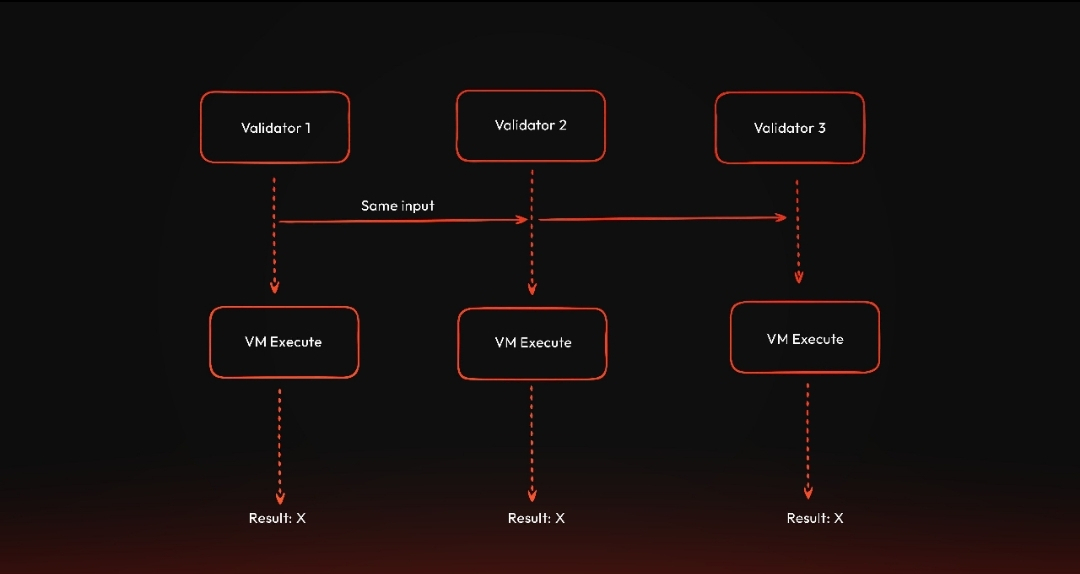
The validator model shown in the architecture highlights a simple but brutal constraint: identical inputs must always produce identical outputs, no matter where they are executed. At scale, even minor runtime inconsistencies multiply into systemic instability.
For @Fogo Official , performance is not about faster blocks alone, but about compressing latency while preserving strict deterministic behavior across distributed nodes.
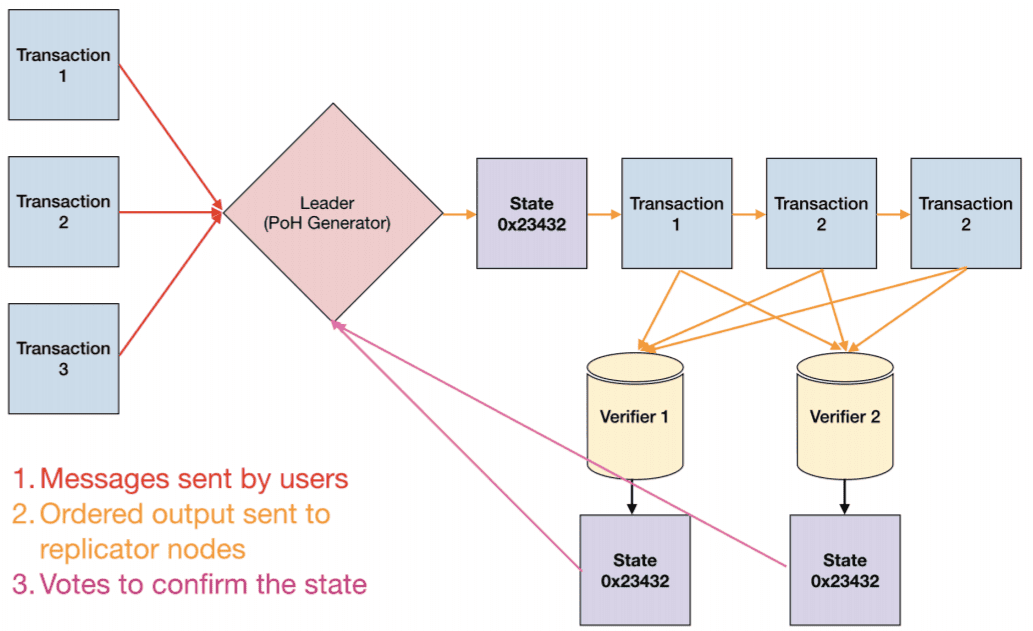
The ordered pipeline design introduces another layer of structural intent. Transactions enter, a leader sequences them into a coherent stream, and verifiers confirm the resulting state.
By establishing temporal structure early, the system reduces consensus friction and avoids redundant negotiation over transaction order. However, ordering only improves performance if execution can process that stream without creating state contention.
For $FOGO , this implies a deeper optimization strategy focused on memory locality, parallel execution control, and minimizing write conflicts rather than relying solely on shorter block times.
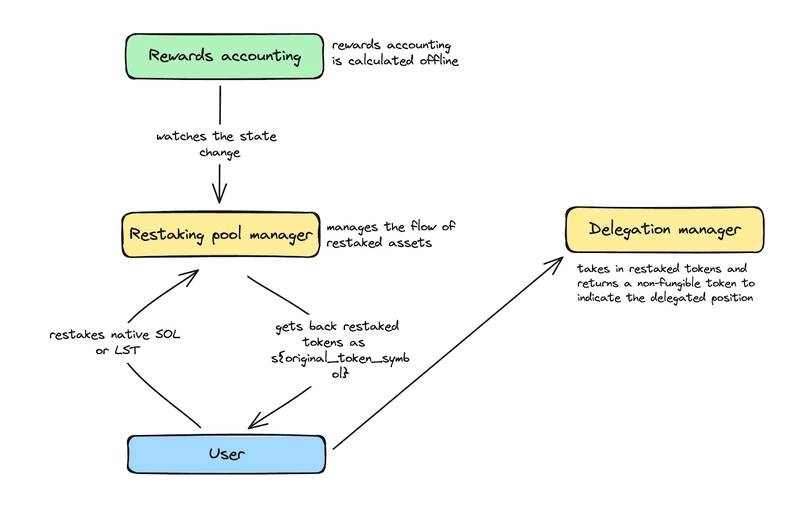
The restaking and delegation architecture suggests an attempt to decouple economic coordination from execution latency. Rewards accounting occurring outside the critical path reduces the computational burden on block production, while pool and delegation management abstract user participation from validator mechanics.
This separation is subtle but important because tightly coupling incentive logic to consensus transitions can gradually inflate state complexity. In the context of #fogo , modular capital flow appears designed to enhance flexibility without contaminating the deterministic core of the runtime.
Ultimately, infrastructure maturity is revealed under stress rather than in benchmarks. Volatility spikes, synchronized trading activity, and sudden state growth test whether execution, ordering, and validator communication remain stable under pressure.
If deterministic replay holds, propagation delay remains predictable, and staking logic stays synchronized without bloating consensus, then Fogo is not simply pursuing speed but engineering structural coherence. The real evaluation of $FOGO will come from sustained composure when throughput, capital flow, and concurrency intensify simultaneously.