The rise of generative AI can be described as explosive; within just a few months, it has leaped from a niche technology to a foundational industry globally. However, as we unveil the veil of this revolution, we discover a huge, almost paradoxical problem: the bottleneck of computational infrastructure.
Today, the entire AI economy operates on a fragile, highly centralized model. Tech giants like Google, Amazon, and Microsoft have locked billions—soon to be trillions—of dollars into specialized hardware: GPUs, data centers, and cooling systems. This capital is effectively in a frozen state, inaccessible, and extremely inefficient. It's a gold rush, but only a few can afford the shovels. This massive capital lock-in not only stifles innovation for 99% of the developer community but also creates single points of failure and centralized control at the core of our technological future.
This is the core problem GAIB set out to solve from the beginning. We are not just optimizing a small piece of the Web3 puzzle; we are proposing and building a fundamental shift: bringing the entire trillion-dollar AI computing industry onto the blockchain.
⛓️ On-chain revolution: From idle assets to productive capital
Imagine a world where every idle GPU—from data center racks to gaming PCs—can be immediately tokenized, verified, and leased in real-time to AI model developers. This is not a daydream; it is the foundation of the on-chain AI economy.
GAIB's vision is both simple and profound: to transform AI infrastructure from locked, proprietary cost centers into a liquid, verifiable, globally accessible asset class. By integrating blockchain technology, we have achieved three revolutionary goals:
1. Liquidity of hardware: We have created a verifiable digital twin (RWA token) for physical computing power. This token can be traded, financed, and used as collateral to unlock capital trapped in AI infrastructure. Hardware owners can earn returns, while developers can seamlessly access computing resources on demand.
2. Verifiable decentralization: Blockchain provides an immutable ledger for computing power, uptime, and usage. This eliminates the need for trusted intermediaries, ensuring developers receive precise computing power that matches what they pay for, while providers receive fair and transparent compensation.
3. Global accessibility: By dismantling centralized walls, we have democratized access. A developer in Southeast Asia can leverage idle computing resources from European data centers, all settled on-chain instantaneously and without permission. This has given rise to an AI innovation boom that centralized models could never support.
GAIB is building a decentralized settlement layer for the world's most valuable resource—creating intelligent computing power. This is not just about cryptocurrency mining; it is about transforming the real economy into a new, efficient digital ecosystem for liquidity.
🗺️ The path to a decentralized AI future
To visualize this paradigm shift, consider the contrast between traditional, opaque models and decentralized, liquid models:
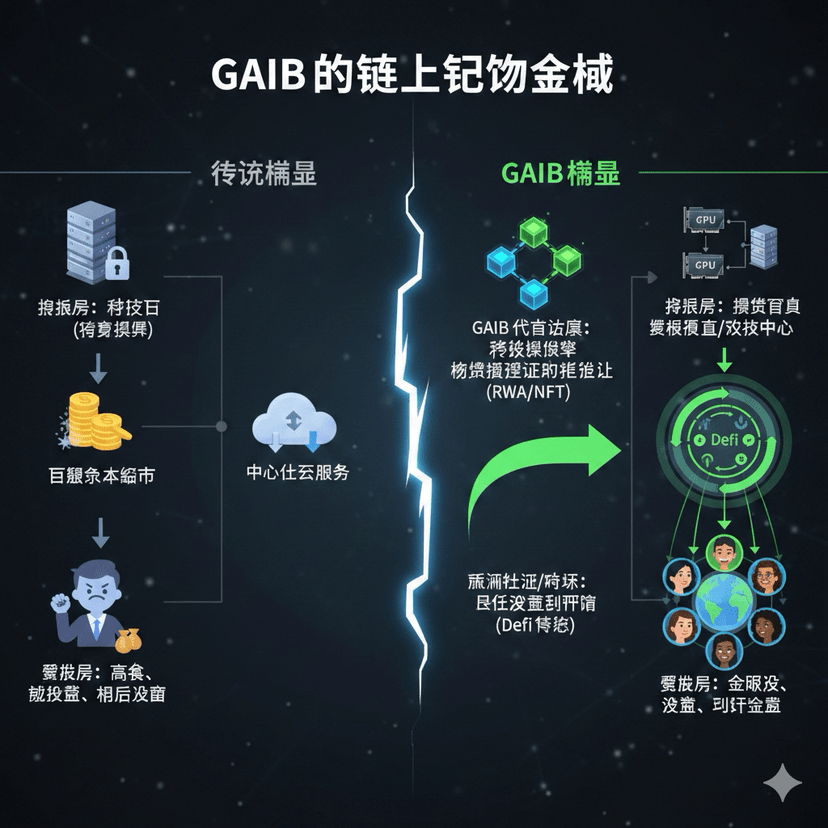
GAIB is not just another DeFi protocol chasing TVL; it is building the foundational economy for the next technological era. We are transforming the supply chain crisis (GPU shortage) into a prosperous market driven by tokenized, liquid assets. This is not just about making AI cheaper, but also about making innovation freer, unlocking billions in efficiencies, and paving the way for truly decentralized, open-source intelligence.
What do you think about the concept of transforming physical AI hardware into a liquid asset class? Will this become the ultimate catalyst for breaking the monopoly of tech giants? Share your thoughts below!