
For decades, Japan has been one of the world's largest capital-exporting countries. This is backed by a unique economic and financial context: after the bubble economy burst in the 1990s, Japan fell into prolonged deflation and sluggish domestic demand. To stimulate the economy, the Bank of Japan continuously lowered interest rates, bringing rates down to zero around 1999, and even implemented negative interest rate policies in 2016, initiating yield curve control (YCC) to pin the 10-year government bond yield close to 0%. In this ultra-low interest rate environment, domestic bonds and deposits in Japan offer almost no returns, yet institutional investors such as insurance companies and pension funds face long-term payment obligations and confront the dilemma of 'asset returns nearly zero while liabilities rigidly grow'. As a result, a significant portion of Japan's savings had to 'go out' in search of higher yields, creating a trend of long-term foreign investment by Japanese capital. Consequently, the scale of overseas assets held by Japanese investors has dramatically expanded. As of 2024, Japan's net external assets exceeded $3 trillion, with holdings of U.S. Treasury bonds peaking at $1.13 trillion, ranking alongside China as one of the largest foreign holders of U.S. government bonds. In addition to U.S. Treasury bonds, Japanese funds have also significantly purchased various overseas assets such as European bonds, corporate bonds, and emerging market bonds. This outflow of Japanese funds has had a profound impact on global financial markets: the continued buying by Japanese investors has provided an 'invisible support' for the global bond market, lowering long-term interest rates in developed countries and reducing borrowing costs for governments, businesses, and households. It can be said that Japan's domestic deflation and low interest rates have 'imported' low interest rates globally through capital outflows, effectively subsidizing global borrowers in a significant way. It is precisely because Japanese funds have continuously flowed overseas that the U.S. has been able to incur debt at relatively low interest rates for a long time without fiscal chaos, Europe has been able to maintain stability in the eurozone amidst structural imbalances, and emerging market countries have been able to access dollar funding at historically low costs.
Current changes: The emergence of a turning point in interest rates
However, this global low-interest rate pattern has recently begun to show signs of reversal. On November 19, 2025, the yield on Japan's 10-year government bonds rose to 1.77%, the highest level since 2008. This rare high yield has been referred to by some market participants as 'the most dangerous number in today's financial world'—it signifies that the nearly thirty-year trend of low-interest rate capital outflow from Japan has reached an inflection point, and the 'invisible buying' of Japanese capital in global markets is fading. Several factors have driven the surge in Japanese government bond yields: firstly, the Bank of Japan ended its long-standing negative interest rate policy in March 2024 and began gradually raising the policy interest rate, which is now about 0.5%.
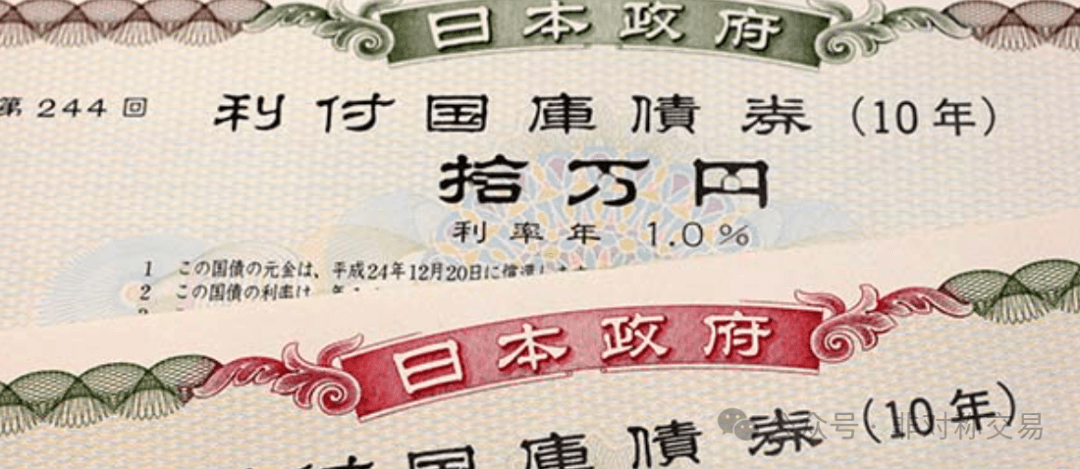
Secondly, the Japanese government announced a new round of fiscal stimulus exceeding 17 trillion yen to combat deflation risks and invest in strategic areas such as semiconductors and artificial intelligence, which heightened market concerns regarding Japanese government debt and deficits. Thirdly, market expectations suggest that the Bank of Japan may further raise interest rates—derivatives markets once priced in about a 50% probability that the Bank of Japan would raise rates again in December 2025. These factors collectively pushed up Japanese government bond yields. For those in the know, the importance of the 1.77% yield lies in its indication that the critical point for Japanese capital to begin repatriating to the domestic market has arrived: this moment is vividly likened to the 'key building block' supporting the global financial system being pulled out. In other words, the era of global reliance on Japan's cheap capital is undergoing a transformation.
Capital repatriation mechanism
The intrinsic mechanisms of capital repatriation in Japan mainly include the following aspects:
Increased attractiveness of domestic interest rates: With the rise in Japanese government bond yields, the attractiveness of yen assets to Japanese investors has significantly increased. When the 10-year Japanese government bond yield reaches around 1.7%, it is already comparable to the yields of some overseas bonds. The strategy team at Royal Bank of Canada (RBC) pointed out that this is the first time since 2020 that Japanese investors have obtained such attractive yields domestically, which may encourage them to keep their funds in the domestic bond market rather than being fixated on overseas assets. In simple terms, Japanese investors previously had a clear interest rate advantage when buying U.S. Treasury bonds, but this advantage is rapidly narrowing or even disappearing.
Rising hedging costs: Japanese investors typically hedge against exchange rate risks when investing in overseas bonds to avoid fluctuations in yen exchange rates. However, with changes in the interest rate differentials between Japan and the U.S., hedging costs have surged. Currently, the short-term interest rate differential between Japan and the U.S. remains significant (U.S. rates are several percentage points higher than Japanese rates), resulting in a premium for the forward exchange rate of the yen against the dollar. Japanese investors face significant costs to hedge dollar assets. Now, hedging costs have reached a turning point: after hedging against exchange rate risks, the yields on U.S. Treasury bonds held by Japanese investors often turn negative. In other words, continuing to hold U.S. Treasury bonds post-hedging means losing money! When investing in overseas bonds results in negative returns after hedging, the rational choice is to reduce such investments.
Adjustment of institutional asset allocation: The combination of rising domestic interest rates and the inversion of overseas hedging yields is prompting various institutional investors in Japan to reassess their asset allocations. The latest movement of the Government Pension Investment Fund (GPIF) is a typical example: due to high hedging costs and negative returns from hedged overseas bonds, GPIF has reduced its allocation to overseas bonds in fiscal year 2023 and instead invested more funds in domestic bonds and stocks with better cost-effectiveness. This move indicates that large institutional investors have realized that continuing to hold substantial overseas assets is 'not worth the cost'. The same logic applies to Japanese insurance companies, banks, and others—if Japanese bond yields continue to rise and the returns on hedged overseas assets are unsatisfactory, these institutions are motivated to gradually redirect funds back to the domestic market.
Exchange rate expectations and hedging considerations: It is worth mentioning that when Japan begins to raise interest rates and domestic rates rise, the market's expectations for the yen exchange rate will also change. If the yen is expected to strengthen, Japanese investors holding dollar assets will face increased risks of exchange losses, prompting some to withdraw overseas investments early and convert back to yen assets. This exchange rate factor also accelerates the trend of capital repatriation.
In summary, after the reversal of the domestic and foreign interest rate structure, every increase in domestic interest rates in Japan will reduce the relative attractiveness of overseas assets and enhance the competitiveness of domestic assets. This mechanism has started to operate, and Japanese investors are gradually reducing their holdings of overseas bonds and repatriating capital, with a very clear direction and accumulating momentum. It is important to emphasize that this adjustment will not be completed dramatically overnight, but will be a gradual process—just as a large ship takes time to turn, the asset reallocation of large institutions will also unfold in phases. But regardless of the speed, the trend has quietly changed.