

If you understand trends, trading becomes much easier.
If you fight them, the market will punish you.
This concept comes straight from Richard Wyckoff — and it’s simpler than most people think.
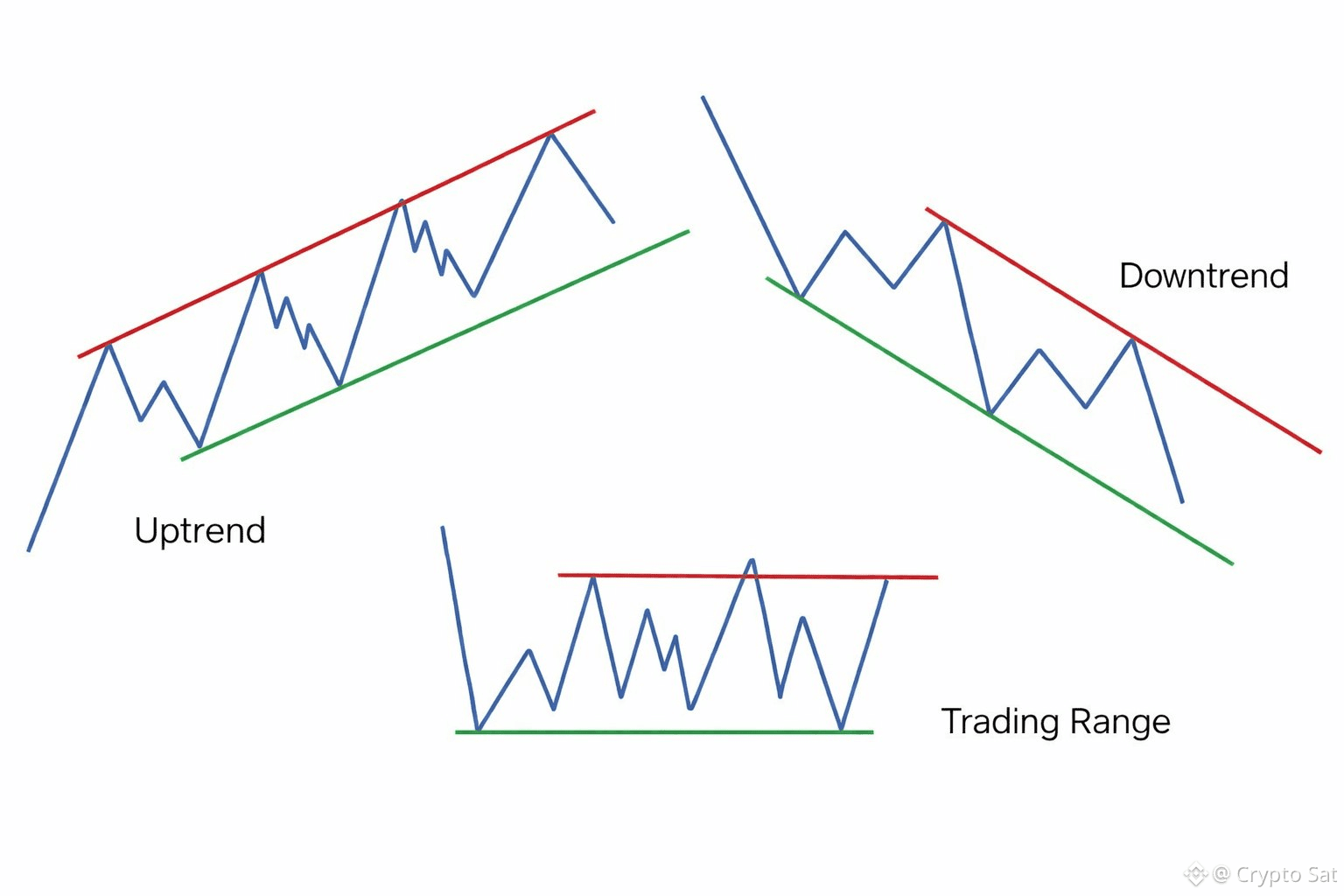
🧠 What Is a Trend?
A trend is nothing complicated.
👉 A trend is the path of least resistance for price.
Price moves through waves:
• Waves moving with the trend → impulses
• Waves moving against the trend → pullbacks
Your job as a trader is not to predict,
but to identify this direction and trade with it.
🔄 How Trends Are Formed
Price keeps moving until it meets resistance.
• In an uptrend → resistance comes from sellers
• In a downtrend → resistance comes from buyers
At these points:
✔️ Price either breaks through
✔️ Or reverses direction
These turning points are called pivots —
and they are some of the best areas to trade.
3 Types of Trends
🟢 1. Uptrend (Bullish)
• Higher highs
• Higher lows
• Strong upward impulses
• Pullbacks fail to break structure
📌 Buyers are in control.
🔴 2. Downtrend (Bearish)
• Lower highs
• Lower lows
• Strong downward impulses
• Bounces fail to continue
📌 Sellers are in control.
🟡 3. Sideways (Range)
• Highs and lows stay within a zone
• No clear direction
• Buyers and sellers balanced
📌 Best avoided by beginners.
⏱ Trends Exist on ALL Timeframes
There are three trend levels:
• Long-term trend
• Medium-term trend
• Short-term trend
Important rule 👇
👉 A short-term trend exists inside a medium-term trend
👉 A medium-term trend exists inside a long-term trend
This is why timeframes can show different stories at the same time.
🎯 Why This Matters
If the trend is up:
✔️ Look for buys
❌ Avoid shorts
If the trend is down:
✔️ Look for sells
❌ Avoid longs
Trading against the trend means fighting market structure.
🧩 Final Takeaway
Trends are not opinions.
They are visible in price waves.
Once you learn to spot:
• Impulses
• Pullbacks
• Pivots
You stop guessing — and start trading with the flow.
📌 The trend is your ally. Respect it.