
If you live in the EU, you've likely already noticed this regulation.
It started subtly. At the turn of 2024/2025, it began with the delisting of USDT and a few other unlicensed stablecoins, followed by a gradual, step-by-step restriction of Futures, options, and copy trading for EU users
What is MiCA actually
MiCA are the first unified rules for cryptocurrencies in the European Union. They replace the chaos of 27 different national laws with a single common framework. Official goal: protect users, increase transparency, and at the same time enable innovation.
So let's take a look together at what these changes have brought us over the year.
What's changing – PLUSES
✅ For beginners and holders:
Exchanges must have a license → fewer fraudulent platforms
Your funds must be protected separately
Clear accountability for losses
Standardized project information
✅ For the market in general:
Unified rules instead of 27 different laws
Official status of cryptocurrencies in the EU
Easier access for institutions
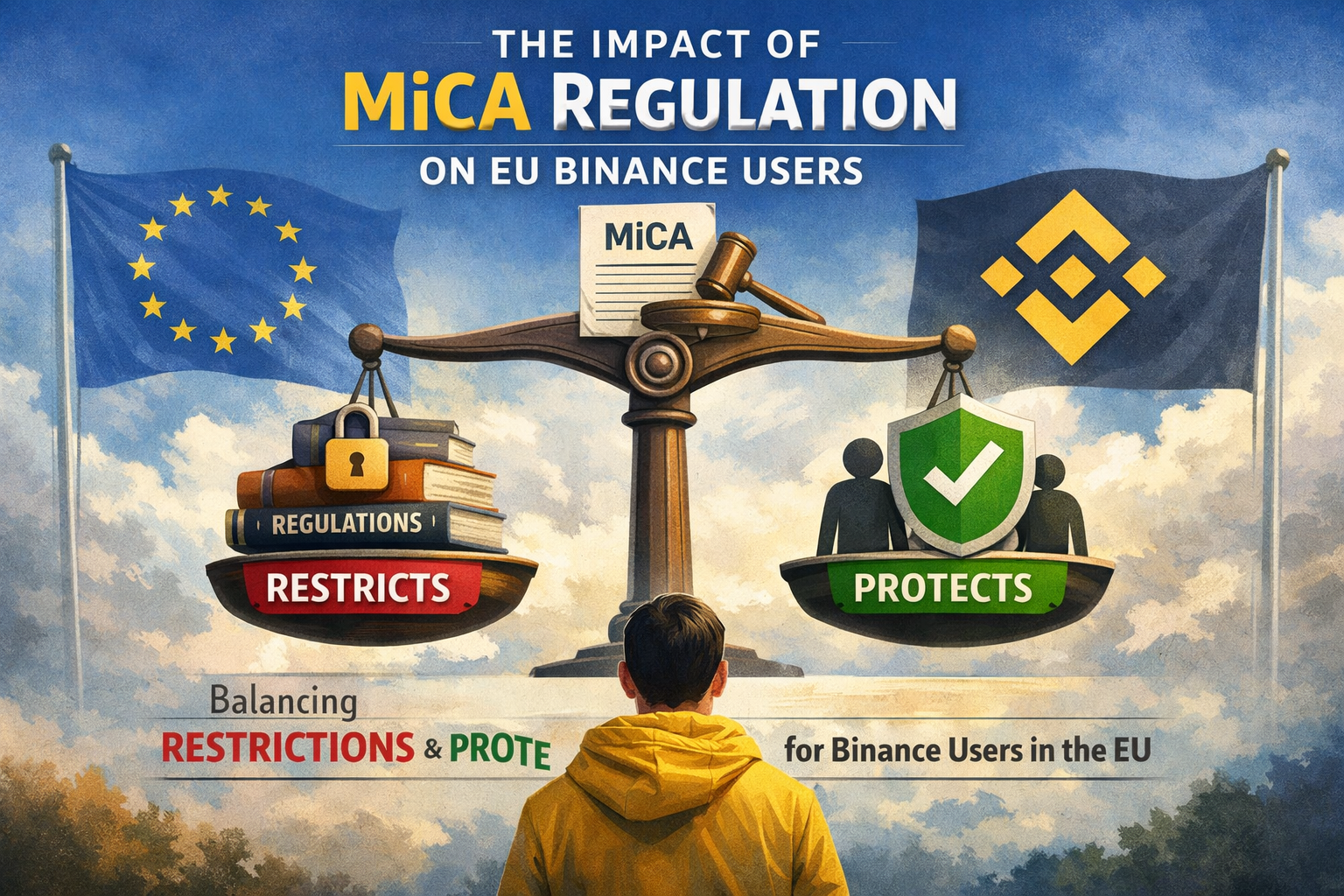
What's changing – MINUSES (Binance EU)
For Binance users in the EU, MiCA has one major impact:
derivatives have been broadly restricted.
⚠️ Derivatives are not available for EU users
Futures: ❌ not available
Options: ❌ not available
Copy trading based on derivatives: ❌ significantly restricted
Binance has decided to apply the rules conservatively and suspended the entire derivatives interface for EU users, not just specific pairs or stablecoins.
Why Binance likely chose this approach:
MiCA regulation introduces strict requirements for derivatives and consumer protection. Binance has decided to minimize regulatory risk and, instead of gradual restrictions, chose a broad suspension of derivatives for EU users. This approach is the simplest from the regulator's perspective, but for advanced users it means a significant limitation of features.
CONCLUSION
MiCA moves cryptocurrencies in the EU into a regulated environment.
This brings higher protection and transparency, but also limits advanced tools.
Unfortunately, every step forward brings some discomfort. But I believe Binance will eventually solve this, and regulated alternatives to derivatives products will emerge over time—aligned with MiCA and still preserving the functionality users are accustomed to.