

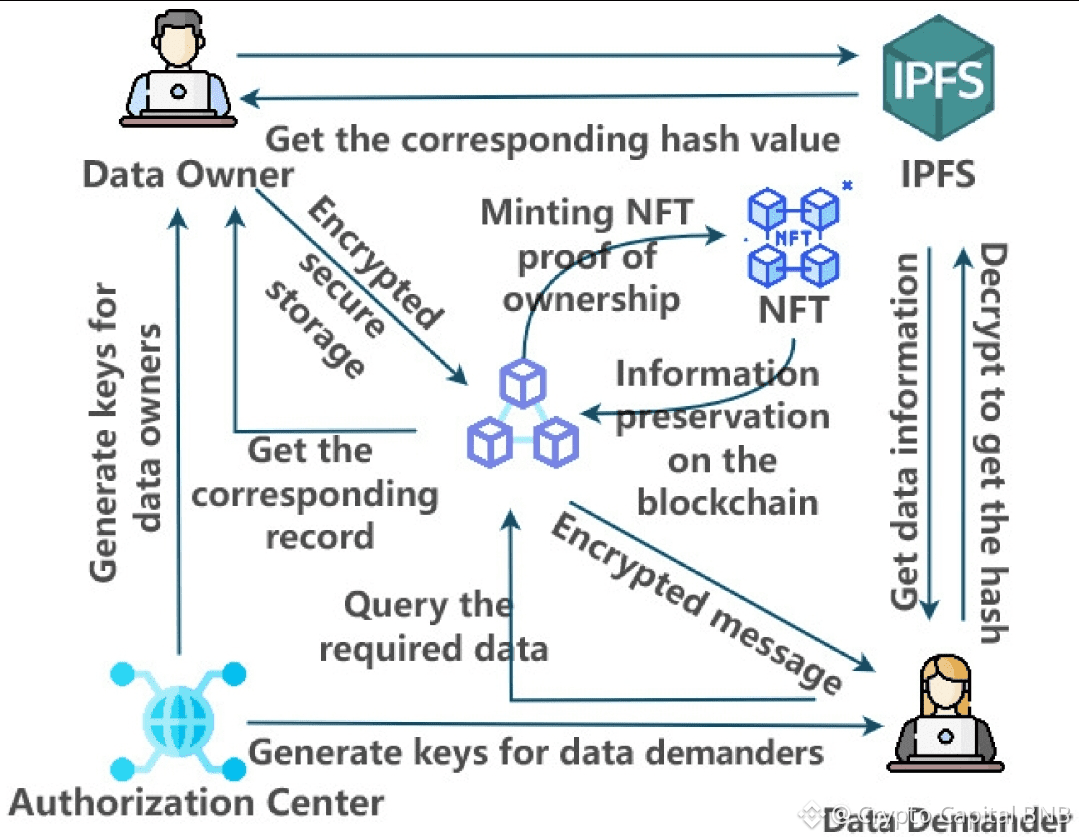
 I was backing up some files—old work stuff, personal notes, random folders I never clean properly—and I realized I didn’t actually know where any of it was going. I clicked “upload,” trusted the process, and moved on. That’s what we all do. But the thought stuck: I don’t own this space. I’m just allowed to use it. And if the rules change, I don’t get a say.
That thought made me pay more attention when I came across @Walrus 🦭/acc .
Not because it was trending. It wasn’t. No flashy threads, no “next big thing” energy. I stumbled into it while looking into decentralized storage projects built on newer chains. At first, I was skeptical. I’ve been around crypto long enough to know how often words like “private” and “decentralized” get stretched thin. Still, I kept reading. And then reading some more.After spending time digging into Walrus Protocol, one thing became clear pretty quickly: this project isn’t trying to impress you. It’s trying to work.At a very human level, Walrus is about not putting all your digital life in one place. Instead of storing files on a single server owned by one company, Walrus breaks data into pieces and spreads them across a decentralized network. No single node holds everything. No single failure wipes it all out. It’s not a shiny idea—it’s a practical one.I’m not a hardcore infrastructure engineer, so I won’t pretend I understand every technical detail. There’s talk of erasure coding and blob storage, and yeah, some of that goes over my head. But I don’t think you need to grasp every mechanism to understand the value. The takeaway is simple: your data doesn’t belong to one gatekeeper, and that changes the power dynamic.What really made it click for me was how Walrus positions itself. It’s not trying to replace cloud storage for everyone overnight. It feels more like an alternative for people who actually care about data ownership and censorship resistance—and are willing to accept a different model to get it. That honesty matters.Walrus runs on Sui, which, from what I’ve seen, is a smart pairing. Sui was designed with speed and scalability in mind, especially for applications that handle large amounts of data. I’ve used a few Sui-based apps before, and while the ecosystem is still young, performance hasn’t been the issue. Walrus seems to take advantage of that instead of forcing Sui to be something it’s not.
Now let’s talk about the $WAL token, because that’s usually where things fall apart.
I’ll be upfront: I don’t love tokens that feel unnecessary. Too many projects treat tokens like decoration. WAL didn’t give me that immediate feeling. It’s used for staking, governance, and paying for storage-related actions inside the protocol. That doesn’t mean it’s flawless, but it does mean the token is woven into how the system actually functions.Governance is a big part of that. WAL holders can influence decisions about the protocol’s future. In theory, that’s empowering. In reality, it depends on participation. And this is where one of my real concerns comes in. I’ve seen plenty of decentralized protocols slowly drift toward de facto centralization simply because most people don’t vote. If only a small group stays engaged, power concentrates whether anyone intended it or not. #Walrus won’t magically avoid that problem.Another thing I keep thinking about is adoption outside the crypto bubble. Developers who already believe in decentralization will probably understand Walrus immediately. But enterprises? That’s tougher. They like privacy until something breaks. Then they want support tickets, guarantees, and someone clearly responsible. Decentralized systems don’t work like that, and bridging that mindset gap won’t be easy.Competition is also real. Walrus isn’t the only decentralized storage project out there. Some competitors have bigger war chests, louder communities, and more visibility. Walrus feels intentionally low-key. Personally, I appreciate that. I’ve grown tired of projects that spend more energy marketing than building. But attention still matters in this space, whether we like it or not.What I do like is that Walrus feels like infrastructure, not a narrative. It’s the kind of thing developers build on quietly. Users might not even know it’s there—and that’s kind of the point. The most important systems often fade into the background once they’re working properly.From what I’ve seen so far, Walrus feels like a slow-burn project. It’s not chasing hype cycles or promising insane returns. It’s focused on a specific problem and trying to solve it in a way that actually scales. That doesn’t guarantee success. Nothing does. But it earns a certain level of respect.I’m not all-in. I don’t think blind conviction is healthy in crypto. But I am paying attention. I’m following updates, testing things when I can, and trying to understand where Walrus fits into a broader shift away from centralized control of data.Maybe decentralized storage never fully replaces traditional cloud services. Maybe it only serves a niche. But even having a real alternative changes the conversation. It reminds us that convenience isn’t the only thing that matters—and that ownership, even in digital form, is worth thinking about.And for me, any project that makes me pause and question assumptions I’ve been living with for years is at least worth that much attention.