


Tokenizing real-world assets is one of the most promising developments in blockchain, but it is also one of the most demanding. Assets such as equities, bonds, funds, and real estate operate within strict legal and regulatory frameworks. They require confidentiality, compliance, and clear ownership rules—conditions that most public blockchains were never designed to meet. Dusk Network was built specifically to bridge this gap, offering blockchain infrastructure that aligns with the realities of institutional finance.
Traditional public blockchains emphasize full transparency, where every transaction and balance is visible to anyone. While this model works for open cryptocurrencies, it is unsuitable for regulated markets. Financial institutions cannot expose sensitive information such as ownership structures, transaction values, counterparty relationships, or contractual terms. Dusk addresses this limitation by making privacy a native feature of the blockchain rather than an optional add-on.
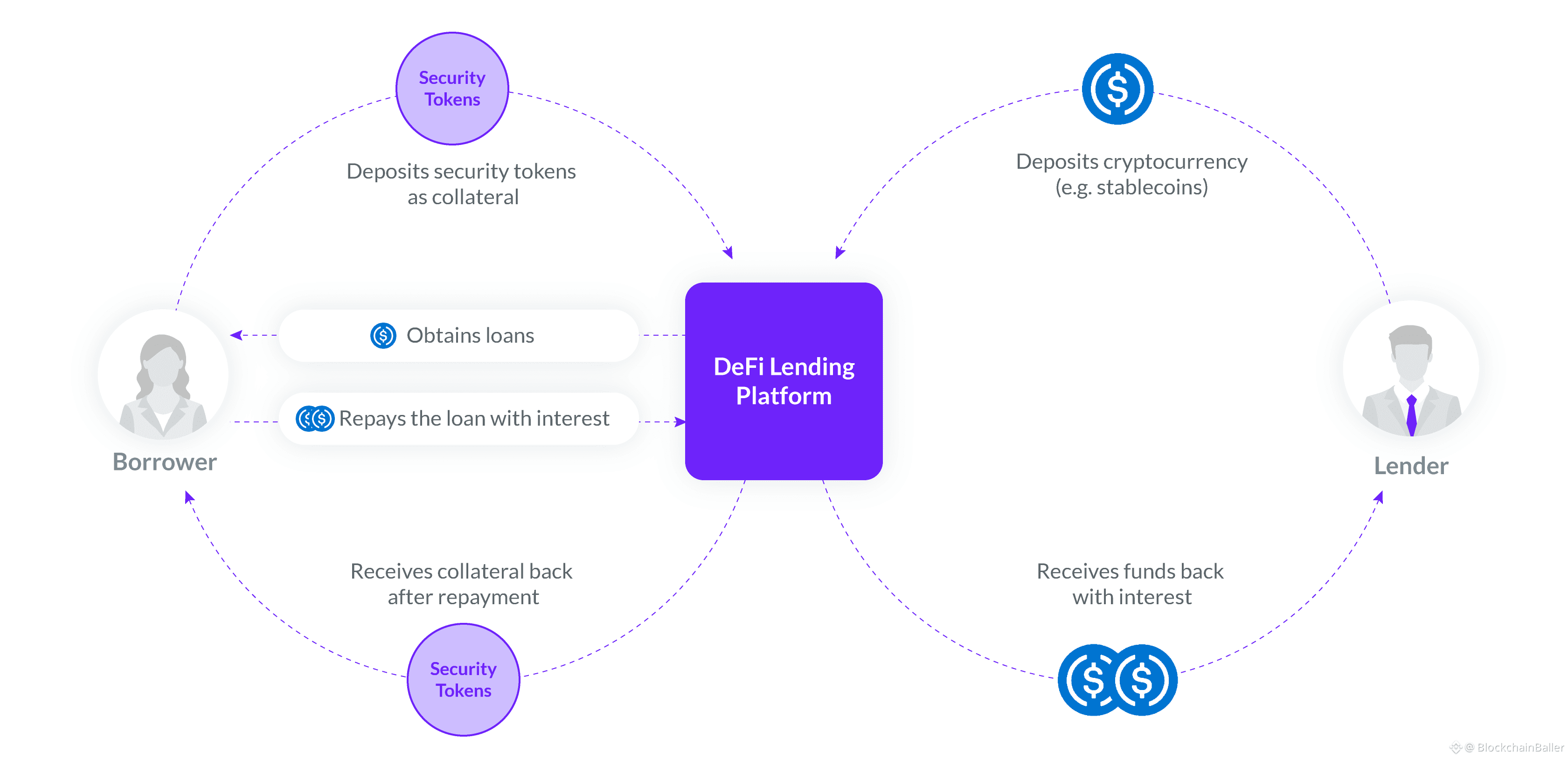
At its foundation, Dusk Network is a privacy-focused Layer 1 designed for compliant financial assets. It enables confidential ownership and private transactions while still allowing verification when required. This balance between confidentiality and auditability is essential for institutions that must satisfy regulators without compromising client privacy or competitive information.
A central innovation of Dusk is selective disclosure. Asset holders can prove compliance, ownership, or transaction validity without revealing underlying private data to the public. Regulators, auditors, or authorized entities can access specific information when legally required, while everyone else sees nothing. This mirrors how traditional financial systems operate, but with cryptographic guarantees instead of reliance on intermediaries.
Dusk achieves this through advanced cryptography, including zero-knowledge proofs. These techniques allow the network to verify transactions and smart contract execution without exposing sensitive data on-chain. As a result, privacy and security coexist without trade-offs, making blockchain viable for serious financial use.
The network is purpose-built for tokenized real-world assets. Dusk supports the issuance, transfer, and lifecycle management of security tokens, equity instruments, debt products, and other regulated assets. These tokens can represent real legal rights while benefiting from on-chain automation, faster settlement, and reduced operational overhead—without breaking existing legal structures.
Regulatory alignment is treated as a design constraint, not an obstacle. Compliance requirements such as KYC, AML, jurisdictional rules, and transfer restrictions can be embedded directly into assets and smart contracts. This ensures that transactions only occur when regulatory conditions are met, significantly reducing legal and operational risk for issuers and participants.
Another defining capability of Dusk is its support for private smart contracts. On most blockchains, smart contracts execute publicly, exposing all inputs and outcomes. Dusk allows contracts to operate on encrypted data, enforcing logic without revealing confidential terms. This makes it possible to deploy complex financial agreements on-chain while keeping sensitive details private.
For institutions, this changes the adoption equation. Banks, asset managers, and financial service providers can use blockchain technology without exposing proprietary strategies, client data, or internal processes. Dusk provides an environment that behaves like professional financial infrastructure rather than an experimental public ledger.
The DUSK token serves a functional role within the ecosystem. It is used for network security through staking, transaction and execution fees, and decentralized governance. Validators stake DUSK to help secure the network, while token holders participate in decisions around upgrades and long-term development. The token is designed to support utility, security, and alignment rather than pure speculation.
Dusk’s network architecture prioritizes finality and resilience—two non-negotiable requirements for financial markets. Institutions need certainty that once ownership changes, it is irreversible and legally reliable. Dusk is engineered to provide this level of settlement assurance, making it suitable for high-value assets and regulated environments.
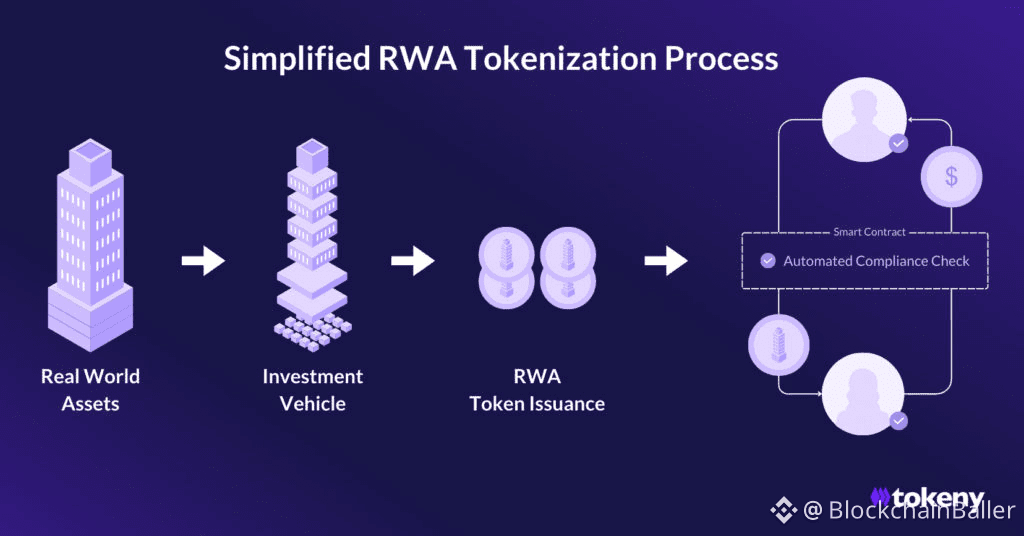
While its primary focus is finance, Dusk’s infrastructure can extend to other areas where privacy and controlled disclosure are essential. This includes private markets, real estate registries, intellectual property, identity systems, and permissioned marketplaces. Still, Dusk remains focused on doing one thing exceptionally well: enabling compliant, privacy-preserving finance on blockchain.
What sets Dusk apart is its pragmatic approach. It does not expect regulators or institutions to change how they operate to fit blockchain. Instead, it adapts blockchain technology to meet regulatory, legal, and operational realities. This realism is what positions Dusk as infrastructure that can move beyond pilots and into production.
As tokenized real-world assets shift from concept to implementation, the quality of infrastructure will matter more than narratives. Platforms that ignore privacy or compliance will struggle to attract institutional capital. Dusk positions itself as the layer where traditional finance and decentralized technology can converge without compromise.
In essence, Dusk Network is not trying to bypass financial rules—it is embedding them into the blockchain itself. Through confidential ownership, selective disclosure, private smart contracts, and regulation-aware design, Dusk provides the missing foundation for real-world assets on-chain. It represents blockchain infrastructure built for practice, trust, and long-term institutional adoption rather than short-term experimentation.