


The internet runs on data, but for most of its history, that data has lived in places users don’t control. Photos, health records, app data, AI datasets, all of it ends up inside centralized systems that can change rules overnight. We got convenience, but we gave up ownership. Walrus entered 2025 with a very clear belief that this tradeoff was no longer acceptable.
When Walrus Protocol launched Mainnet in March 2025, it wasn’t framed as a flashy moment. It was framed as infrastructure finally becoming real. Walrus became a core part of the Sui stack, designed to store large files in a decentralized, high-performance way, with ownership and privacy built in by default. That single step shifted Walrus from an idea into something developers could actually rely on.
What followed Mainnet was not noise, but usage. Builders started doing what they always do when constraints are removed. They explored.
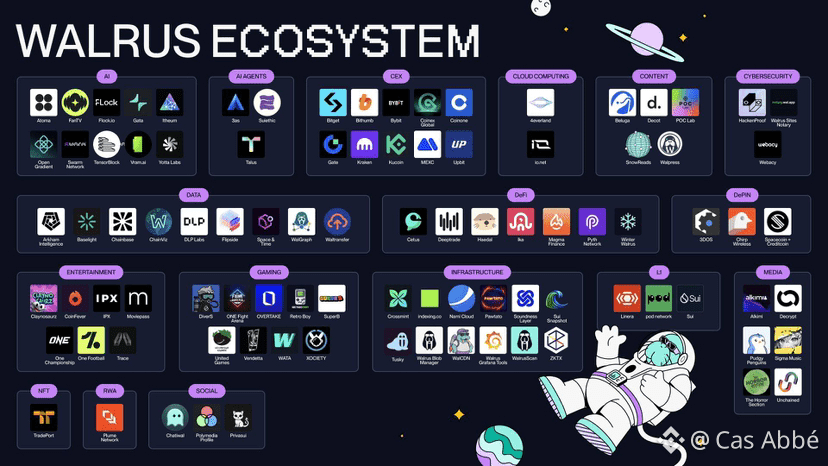
Projects across different sectors began using Walrus because centralized storage simply didn’t fit their needs anymore. Health platforms like CUDIS gave users full control over deeply personal data, allowing them to keep it private or monetize it on their own terms. Advertising systems like Alkimi made every impression verifiable in real time instead of relying on opaque reporting. DLP Labs gave electric vehicle drivers ownership over their car data, opening new paths for rewards tied to carbon credits, energy markets, and insurance efficiency.
AI builders also leaned in. Talus showed what becomes possible when autonomous agents can rely on persistent, verifiable data rather than fragile APIs. Myriad brought transparency to prediction markets, storing real-time market data directly on Walrus in an industry where weekly volume reaches into the billions. Since launch, Myriad alone processed millions in transactions with all data verifiable at the storage layer.
What stood out throughout 2025 was the pattern. These weren’t copy-paste use cases. They were responses to a simple shift: data was no longer owned by platforms. It was owned by users and enforced by infrastructure.
As usage grew, Walrus itself evolved quickly. Privacy became enforceable through Seal, which introduced onchain access control. This meant developers could encrypt data and define exactly who could read it, with the rules enforced by the network itself. For sectors like healthcare, DeFi, and AI, this wasn’t optional. It was a requirement.
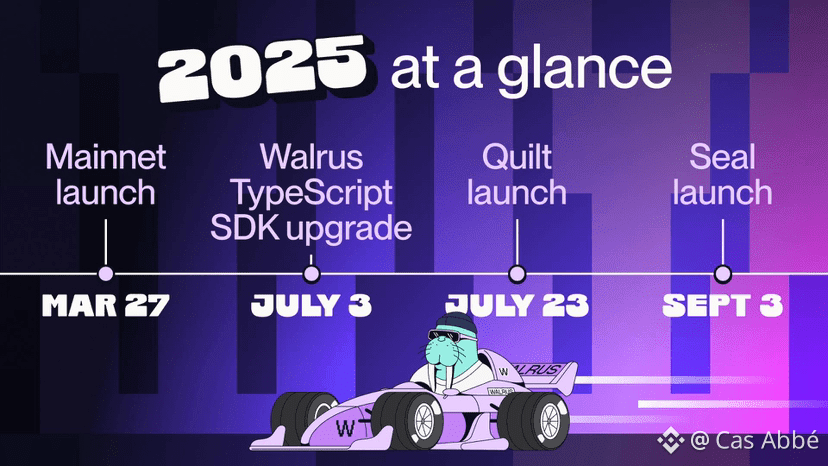
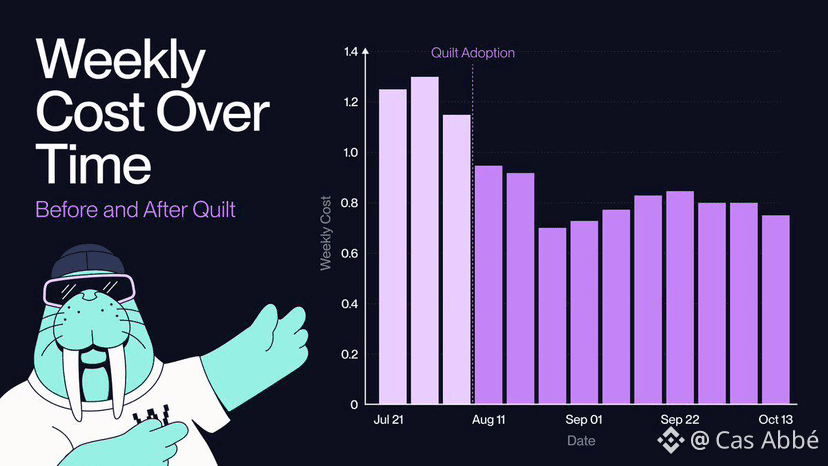
Efficiency followed privacy. Quilt changed how small files were handled by grouping hundreds of them into a single unit, saving partners millions of WAL in storage costs. Upload Relay simplified the upload process, letting applications send data through a reliable relay instead of managing complex distribution themselves. This mattered especially for mobile users and real-world environments where connections aren’t perfect.
By the second half of the year, it was clear Walrus wasn’t just functional, it was maturing.
The broader industry noticed. In June 2025, Grayscale Walrus Trust launched, giving accredited investors exposure to WAL through a traditional investment vehicle. This removed friction for institutions that wanted access without managing tokens directly. WAL also became available across many exchanges, increasing accessibility and staking participation.
Token design evolved alongside usage. WAL was positioned as deflationary by design, with tokens burned as network activity increased. This tied long-term value directly to real demand rather than speculation. More data stored meant more value captured by the system itself.
By the end of 2025, Walrus had quietly done something difficult. It proved that decentralized data storage could be fast, private, programmable, and usable at the same time. Not in theory. In production.
Looking ahead, the direction feels deliberate. Make Walrus effortless to use, like familiar Web2 tools, without losing Web3 guarantees. Make privacy the default instead of an option. Integrate even deeper with Sui so developers don’t think in layers, they think in capabilities.
2025 was about proving that decentralized data ownership works. The infrastructure held. The developers showed up. The ecosystem responded.
Walrus didn’t just ship features this year. It shifted expectations around who should own data on the internet, and that shift is likely to define what gets built next.