Please scroll down to the bottom of the page for the English content.---Issue 18
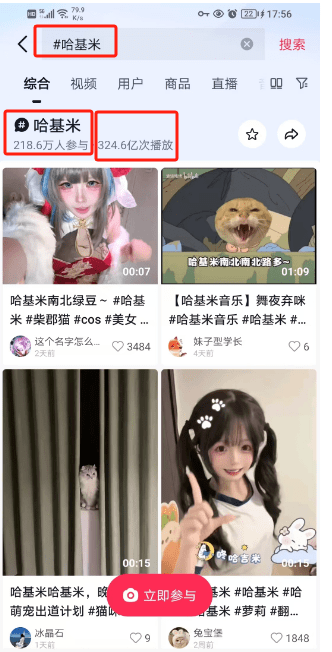
The "Hakimi" pet, "Hakimi" music, "Hakimi" deconstructed imagery, and more—conservative estimates suggest their total online views have surpassed 150 billion, a feat that is undoubtedly no accident.
The reason why "Hakimi" has led Chinese people, especially hundreds of millions of Gen Z youth, to affectionately refer to cats as "Hakimi," is not coincidental but rather natural and seamless.
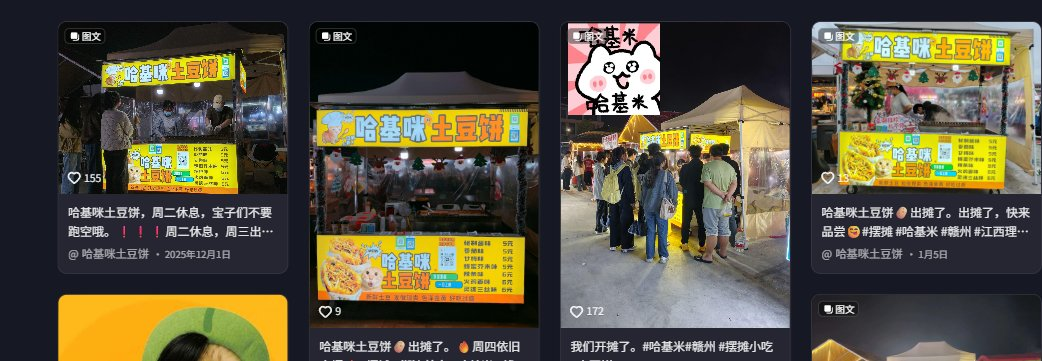
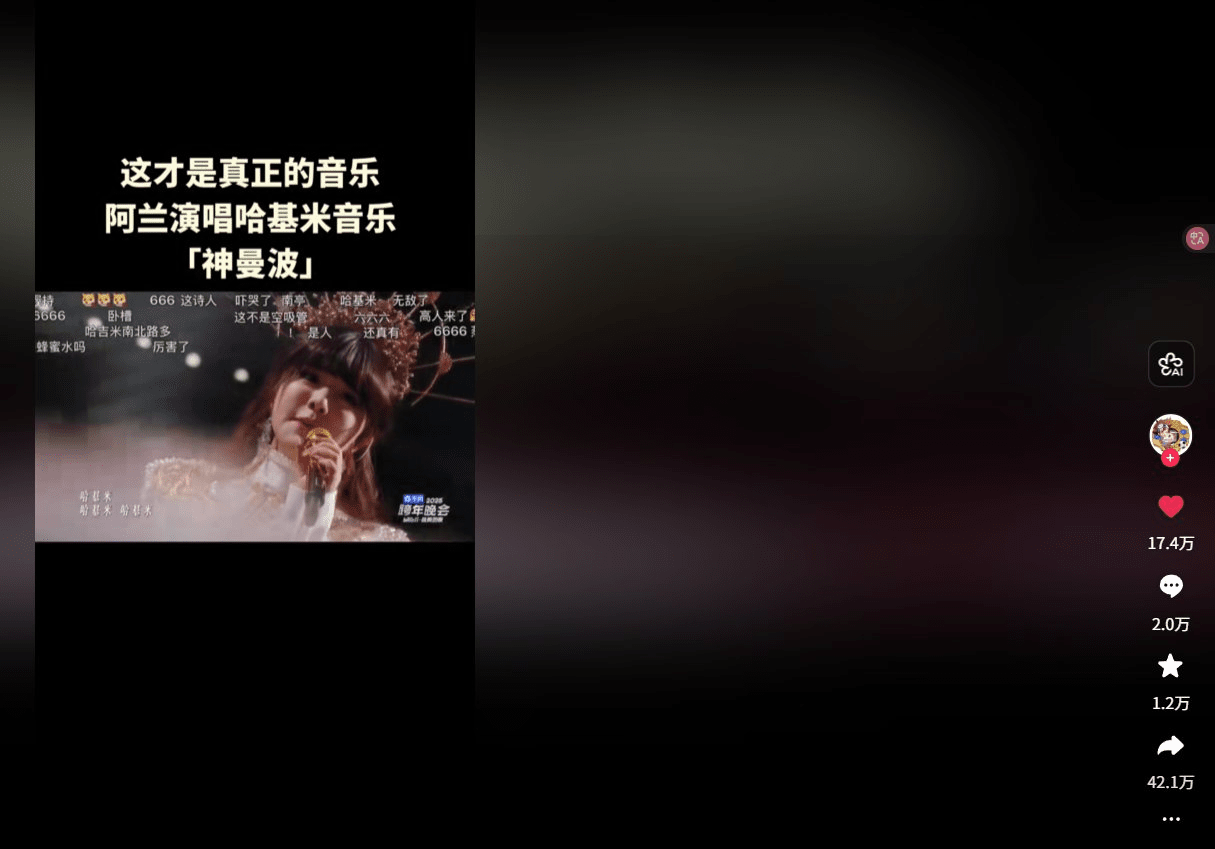
"Hakimi" can be turned into a 5-yuan street vendor snack—Hakimi potato pancake—or even take the stage at the Bilibili 2026 New Year's Eve gala for a 6-minute musical performance.
"Hajimi" feels a bit vulgar and lowbrow — yet men, women, old and young across the streets and alleys are happily humming it and flooding their screens with it.
"Hajimi" feels trendy and classy, you can see its name and adorable image in fashion circles and high-end CBD spaces.
"Hajimi" spreads among the grassroots without the push of capital VC companies, with over 150 billion instances of dissemination in China. This is the love of the grassroots and the consensus of the people.
This article will analyze from 3 aspects why "Hajimi" is appreciated by both refined and popular tastes and how it has become a phenomenon across China.
Part One ---- Why is Hajimi so down-to-earth?
① Lightweight expression form, extremely low participation barrier.
"Hajimi" three-syllable structure "hā-jī-mǐ" (long-short-short), similar to "la-bu-bu", has a crisp, bright pronunciation reminiscent of baby talk or affectionate cat-calling sounds. It naturally carries a cute tone and brings auditory pleasure without requiring any complex understanding.
Repeated "Hajimi" syllables + simple melody, no professional skills required; ordinary people can create content just by editing on their phones or doing covers, forming a "everyone can do derivative creation" diffusion network.
At the same time, the threshold for related content creation is extremely low: ordinary users only need to pair cute pet footage with the addictive "Hajimi" BGM to finish a piece — simple, easy, and fun.
② Infinite deconstruction and evolution of the Hajimi imagery.
Binding cute pet content, triggering nationwide emotional resonance: The adorable cat image of "Hajimi" serves as a high-heat internet content carrier. The perfect beat-matching between the "Hajimi" melody and cat videos has strengthened the association "cute pet = Hajimi", reaching both cat lovers and the general public.
For "involution inside and outside" stress relief: In fast-paced, high-pressure lives, the healing imagery of "Hajimi" provides instant emotional value — like an emotional pressure-release valve. No deep thinking required, just instant lightness and joy — perfectly matching young people's need for small pleasures.
Social currency attribute: As a community symbol, using "Hajimi" imagery allows quick identity confirmation within circles with zero argument cost. It has become a low-cost emotional bonding method among young people.
③ This world is a giant Hajimi
Semantic flexible migration: From the original meaning of "honey water", to referring to cats/cute pets, then to anything adorable, and even extending into an emotional expression symbol — its vague meaning allows it to adapt to countless scenarios.
Cross-content fusion: Adapted into Peking opera, rock, suona versions, or combined with popular songs (e.g. "Blue Lotus Hajimi", "You Can't Not Hajimi"), forming an "everything can be Hajimi" creative ecosystem that covers different interest groups.
Cultural translation is natural: The mondegreen pronunciation is inherently fun, bypassing language barriers, allowing users from different backgrounds to quickly accept and spread it.
Part 2 ---- Why does Hajimi have such strong human touch?
"Hajimi" has the warmth of human life; students use it as social glue on campus, vendors use it as a traffic catalyst in the marketplace, and ordinary people gain healing and belonging through playing with the meme.
This "nationwide co-creation, scene adaptation, emotional resonance" logic of spread has allowed it to evolve from a meme into real life, becoming a part of mass culture — in China, cat = Hajimi.
Examples of "human touch" data:
Student group — Campus short-video platforms (Douyin campus accounts, Bilibili campus zone) related videos frequently exceed 100k+ views. "Hajimi" BGM appears at high frequency in university club activities, sports meets, and dorm daily life; derivative works account for over 30%.
Using dormitories, class breaks, and campus events as dissemination scenes, mostly for group covers and dance adaptations, serving as tools for social ice-breaking and stress relief.
Vendor group — In wet markets, snack streets, night markets etc., vendors use "Hajimi" as calling-out BGM (e.g. "Hajimi skewers", "Hajimi milk tea"). Related stall videos on Douyin and Kuaishou have accumulated over 100 million views with high comment interaction.
Due to its lack of copyright, many "Hajimi" products have appeared on e-commerce platforms like Pinduoduo, Taobao, and JD. Combining product naming with addictive music attracts foot traffic, creating a "street stall + meme" traffic combo that lowers communication cost with customers.
Ordinary grassroots people --- frequently appear in square dance adaptations, community event background music, and family gathering entertainment segments. Even middle-aged and elderly groups participate through sharing by family members, forming a true "all-age meme-playing" trend.
Examples of real-life cases of warmth and humanity:
Campus case: At a certain university sports meet, the student formation entered with a "Hajimi" dance adaptation; the video gained 500k+ likes on Douyin and triggered copycat trends in many universities, forming a "campus Hajimi wave".
Vendor case: A Chengdu night market stall owner used "Hajimi" as roast skewer calling BGM with the slogan "Hajimi skewers, one skewer heals a thousand worries" — daily sales increased 30%, related video on local life account exceeded 100k views.
Community case: A Beijing community held a neighborhood festival, and residents spontaneously organized a "Hajimi Square Dance Competition", attracting participants of all ages; the video was forwarded over 2000 times on the community official account, becoming a hot format for community cultural activities.
Part 3 --- Why is Hajimi also trendy high-culture?
① Cultural certification on mainstream authoritative stages, completing the "entering the hall" process.
Top gala entrance: The 2026 Bilibili Spring Festival Gala included "Hajimi" in the program list, presented in chorus, dance, or crossover adaptation form — upgrading it from a mere internet buzzword to an officially recognized annual cultural symbol, gaining dual recognition from mainstream media and the public, achieving the identity leap from subculture to mainstream culture.
Official media dissemination: CCTV, People's Daily and other mainstream media reported on its healing value and nationwide participation, defining it as "an emotional outlet for contemporary young people", granting it cultural legitimacy, breaking prejudices, and establishing its trendy & elegant positioning.
Cross-boundary authoritative collaborations: Collaborations with intangible cultural heritage projects (Peking opera, Kunqu, shadow puppetry) and national-level art troupes to launch "intangible heritage version Hajimi" (suona, erhu adaptations), empowering it with the elegant attributes of traditional arts, elevating cultural texture and artistic value.
Big companies participating: Hajimi is no longer limited to street vendors — big companies are also participating: Joyoung Hajimi soy milk, Huawei Hajimi smart door lock, QQ Music Hajimi song contest, QQ Doudizhu Hajimi sound effects & avatars, Douyin chubby baby Hajimi & electronic Hajimi, Weilong Hajimi spicy strips, Mengjinyuan Hajimi gold pendant, etc.
② Deep artistic re-creation in professional art circles, building high-aesthetic dimensions.
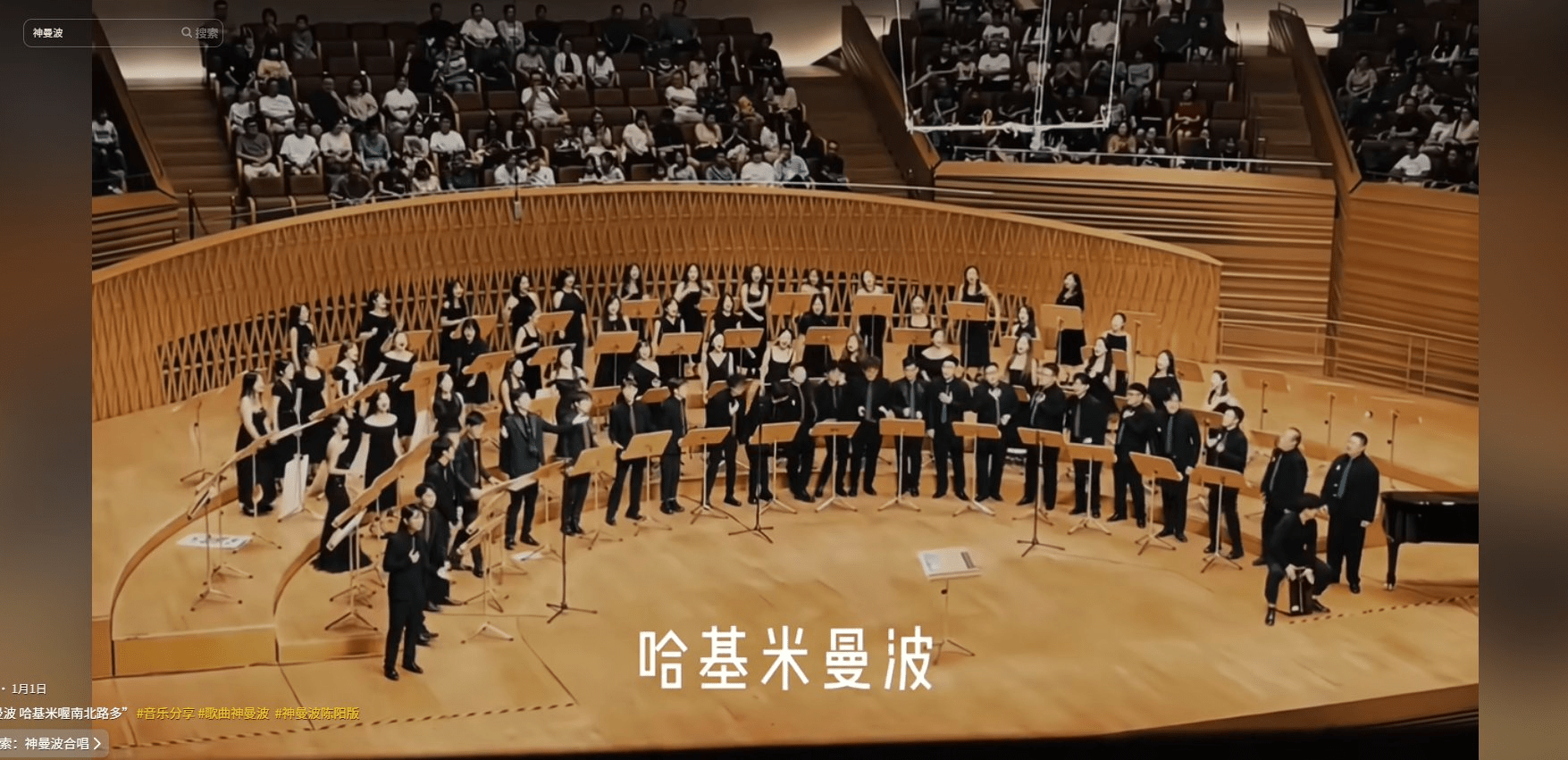
Professional music adaptations: Rearranged into symphonic, jazz, classical piano versions — e.g. symphony orchestra performance of "Hajimi Fantasia". Complex arrangements and orchestration raise the artistic level, moving it beyond the single label of "addictive BGM" into professional music aesthetics.
Visual art fusion: Illustrators and designers incorporate "Hajimi" into oil paintings, sculptures, fashion design — luxury brands launch "Hajimi limited edition" accessories, combining cute elements with premium materials to achieve trendy + elegant visual fusion.
Drama and stage performances: University drama clubs and professional theater troupes adapt it into musical theater segments, giving "Hajimi" emotional depth through narrative — e.g. "The Fantastic Journey of Hajimi", enhancing cultural substance through the completeness of stage art and breaking free from the limitations of fragmented communication.
Summary:
"Hajimi" culture originated from China's Gen Z youth and spread among the general public. It is grassroots culture, full of everyday human touch, yet it also resonates in big corporations and golden halls.
"Hajimi" has no distinction between high and low; it can contain everything. It is the meme of ordinary people. Anyone can find their own deconstructed imagery in Hajimi; it is cute and healing.
Everything can be Hajimi, it is the people's Hajimi.
From the down-to-earth "getting real" vibe of the masses to the refined elegance of high culture, why can "Hajimi" fit every scene — what exactly is its core advantage that made it sweep across all of China?
--- Episode 18
"Hajimi" pets, "Hajimi" music, "Hajimi" deconstructed imagery, etc. — even by the most conservative estimate, its total views/playbacks across the entire internet have exceeded 150 billion. This is absolutely not a miracle that could happen by accident.
"Hajimi" has made Chinese people — especially hundreds of millions of Gen Z young people — affectionately call cats "Hajimi". This is not a coincidence; it feels completely natural and effortless.
"Hajimi" can be a 5-yuan roadside potato pancake sold by street vendors, and it can also appear in a 6-minute song-and-dance theater piece at the Bilibili 2026 New Year's Gala.
"Hajimi" feels a bit vulgar and lowbrow — yet men, women, old and young across the streets and alleys are happily humming it and flooding their screens with it.
"Hajimi" also feels trendy and classy — you can see its name and adorable image in fashion circles and high-end CBD spaces.
"Hajimi" spreads among the grassroots masses without any promotion from capital, VCs, or corporations. More than 150 billion instances of dissemination across China — this is the love of the grassroots and the consensus of the people.
This article analyzes from 3 aspects why "Hajimi" is appreciated by both refined and popular tastes, and how it became a nationwide phenomenon.
Part 1 — Why is Hajimi so down-to-earth / relatable?
① Lightweight expression form, extremely low participation barrier.
The three-syllable structure of "Hā-jī-mǐ" (long-short-short), similar to "la-bu-bu", has a crisp, bright pronunciation reminiscent of baby talk or affectionate cat-calling sounds. It naturally carries a cute tone and brings auditory pleasure without requiring any complex understanding.
Repeated "Hajimi" syllables + simple melody — no professional skills needed. Ordinary people can create content just by editing on their phones or doing covers, forming a "everyone can do derivative creation" diffusion network.
At the same time, the threshold for related content creation is extremely low: ordinary users only need to pair cute pet footage with the addictive "Hajimi" BGM to finish a piece — simple, easy, and fun.
② Infinite deconstruction and evolution of the Hajimi imagery.
Bound to cute pet content, triggering nationwide emotional resonance: The adorable cat image of "Hajimi" serves as a high-heat internet content carrier. The perfect beat-matching between the "Hajimi" melody and cat videos has strengthened the association "cute pet = Hajimi", reaching both cat lovers and the general public.
Stress relief for "involution inside and outside": In fast-paced, high-pressure lives, the healing imagery of "Hajimi" provides instant emotional value — like an emotional pressure-release valve. No deep thinking required, just instant lightness and joy — perfectly matching young people's need for small pleasures.
Social currency attribute: As a community symbol, using "Hajimi" imagery allows quick identity confirmation within circles with zero argument cost. It has become a low-cost emotional bonding method among young people.
③ The whole world is one giant Hajimi
Flexible semantic migration: From the original meaning of "honey water", to referring to cats/cute pets, then to anything adorable, and even extending into an emotional expression symbol — its vague meaning allows it to adapt to countless scenarios.
Cross-content fusion: Adapted into Peking opera, rock, suona versions, or combined with popular songs (e.g. "Blue Lotus Hajimi", "You Can't Not Hajimi"), forming an "everything can be Hajimi" creative ecosystem that covers different interest groups.
Natural cultural translation: The empty-ear (mondegreen) pronunciation itself is inherently fun, bypassing language barriers and allowing users from different backgrounds to quickly accept and spread it.
Part 2 — Why does Hajimi have such strong "human touch / everyday life energy"?
"Hajimi" carries the smoke and fire of real life. Students use it as social glue on campus, street vendors use it as a traffic catalyst in the marketplace, and ordinary people gain healing and belonging through playing with the meme.
This "nationwide co-creation + scene adaptation + emotional resonance" logic of spread has allowed it to evolve from a pure internet meme into a part of real daily life and mass culture — in China, cat = Hajimi.
Examples of "human touch" data:
Student group — Campus short-video platforms (Douyin campus accounts, Bilibili campus zone) frequently see single videos exceed 100k+ views. "Hajimi" BGM appears at high frequency in university club activities, sports meets, and dorm daily life; derivative works account for over 30%.
Main spread scenes: dorms, class breaks, campus events — mostly group covers and dance adaptations, used as icebreakers and stress-relief tools.
Street vendor group — In wet markets, snack streets, night markets etc., vendors use "Hajimi" as calling-out BGM ("Hajimi skewers", "Hajimi milk tea"). Related stall videos on Douyin and Kuaishou have accumulated over 100 million views with high comment interaction.
Due to zero copyright issues, massive "Hajimi" products appeared on Pinduoduo, Taobao, JD, etc. Combining product names with the addictive music attracts foot traffic, creating a "street stall + meme" traffic combo that lowers communication cost with customers.
Ordinary grassroots people — Frequently appears in square dance adaptations, community event background music, and family gathering entertainment segments. Even middle-aged and elderly groups participate through sharing by family members — forming a true "all-age meme-playing" trend.
Core of "human touch": healing + interaction, fitting everyday leisure scenes, becoming an entertainment symbol with no generational gap.
Real "human touch" cases:
Campus case: At a certain university sports meet, the student formation entered with a "Hajimi" dance adaptation; the video gained 500k+ likes on Douyin and triggered copycat trends in many universities, forming a "campus Hajimi wave".
Vendor case: A Chengdu night market stall owner used "Hajimi" as roast skewer calling BGM with the slogan "Hajimi skewers, one skewer heals a thousand worries" — daily sales increased 30%, related video on local life account exceeded 100k views.
Community case: A Beijing community held a neighborhood festival and residents spontaneously organized a "Hajimi Square Dance Competition", attracting participants of all ages; the video was forwarded over 2000 times on the community official account, becoming a hot format for community cultural activities.
Part 3 — Why is Hajimi also trendy high-culture / elegant?
① Cultural certification on mainstream authoritative stages — completing the "entering the hall" process.
Top gala entrance: The 2026 Bilibili Spring Festival Gala included "Hajimi" in the program list, presented in chorus, dance, or crossover adaptation form — upgrading it from a mere internet buzzword to an officially recognized annual cultural symbol, gaining dual recognition from mainstream media and the public, achieving the identity leap from subculture to mainstream culture.
Official media dissemination: CCTV, People's Daily and other mainstream outlets reported on its healing value and nationwide participation, defining it as "an emotional outlet for contemporary young people", granting it cultural legitimacy, breaking prejudices, and establishing its trendy & elegant positioning.
Examples: Xinhua Net repost "Hajimi light-off artifact" received over 4.75 million likes; multiple official media heavily promoted "Hajimi Crab Chicken Noodles" which reached over 12 million heat on the same day.
Cross-boundary authoritative collaborations: Collaborations with intangible cultural heritage projects (Peking opera, Kunqu, shadow puppetry) and national-level art troupes to launch "intangible heritage version Hajimi" (suona, erhu adaptations), empowering it with the elegant attributes of traditional arts, elevating cultural texture and artistic value.
Big corporations joining the fun: Hajimi is no longer limited to street stalls — big companies are also participating: Joyoung Hajimi soy milk, Huawei Hajimi smart door lock, QQ Music Hajimi song contest, QQ Doudizhu Hajimi sound effects & avatars, Douyin chubby baby Hajimi & electronic Hajimi, Weilong Hajimi spicy strips, Mengjinyuan Hajimi gold pendant, etc.
② Deep artistic re-creation in professional art circles, building high-aesthetic dimensions.
Professional music adaptations: Rearranged into symphonic, jazz, classical piano versions — e.g. symphony orchestra performance of "Hajimi Fantasia". Complex arrangements and orchestration raise the artistic level, moving it beyond the single label of "addictive BGM" into professional music aesthetics.
Visual art fusion: Illustrators and designers incorporate "Hajimi" into oil paintings, sculptures, fashion design — luxury brands launch "Hajimi limited edition" accessories, combining cute elements with premium materials to achieve trendy + elegant visual fusion.
Theater & stage performances: University drama clubs and professional theater troupes adapt it into musical theater segments, giving "Hajimi" emotional depth through narrative — e.g. "The Fantastic Journey of Hajimi", enhancing cultural substance through the completeness of stage art and breaking free from the limitations of fragmented communication.
Summary:
"Hajimi" culture originated from China's Gen Z youth and spread among the general public. It is grassroots culture, full of everyday human touch, yet it also resonates in big corporations and golden halls.
"Hajimi" never had any distinction between high and low. It can contain everything.
It is the meme of ordinary people.
Everyone can find their own deconstructed imagery in Hajimi.
It is cute, it is healing.
Everything can be Hajimi.
It belongs to the people.