There is nothing new under the sun; this morning, Bitcoin experienced another flash crash. I have shifted from being a dead short to a dead long after the surge in Pippin and Bitcoin's rebound, with all positions being long. The hard-earned profits that just started to rise have almost vanished in this wave of flash crash.
As a newcomer, it is necessary to understand the ins and outs of the flash crash event and possible coping strategies.
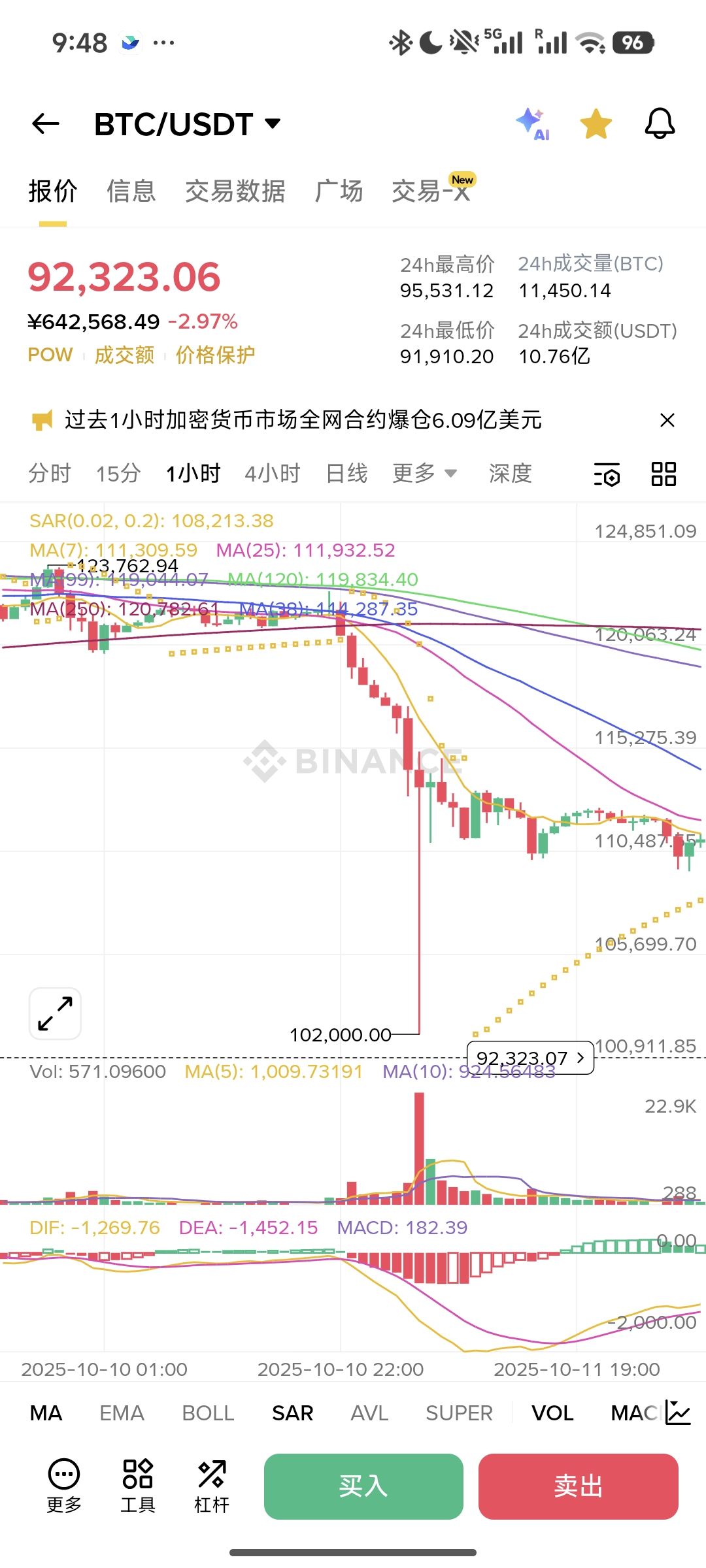
From October 10 to 11, 2025, the crypto circle experienced one of the largest flash crash events in history, with nearly all cryptocurrencies experiencing a sharp decline. Below are the details of the event and insights for traders:
Event situation
- Price crash: Bitcoin's price plummeted from around $115,000 to nearly $86,000 within hours, with a maximum drop of over 25%; mainstream assets like Ethereum dropped even more, by 40%-50%.
- Massive liquidation: The total liquidation amount across the network reached $19.1 billion within 24 hours, involving 1.62 million accounts, setting a new historical record.
- Triggering factors: US President Trump announced the restart of 100% tariffs on China and other trade policies, causing great unease in global markets, leading to pressure on risk assets. The high leverage effect of the cryptocurrency market as a risk asset was amplified under these circumstances.
- Other impacts: Multiple exchanges triggered automatic position reduction (ADL) mechanisms, and some stablecoin derivatives experienced severe de-pegging.
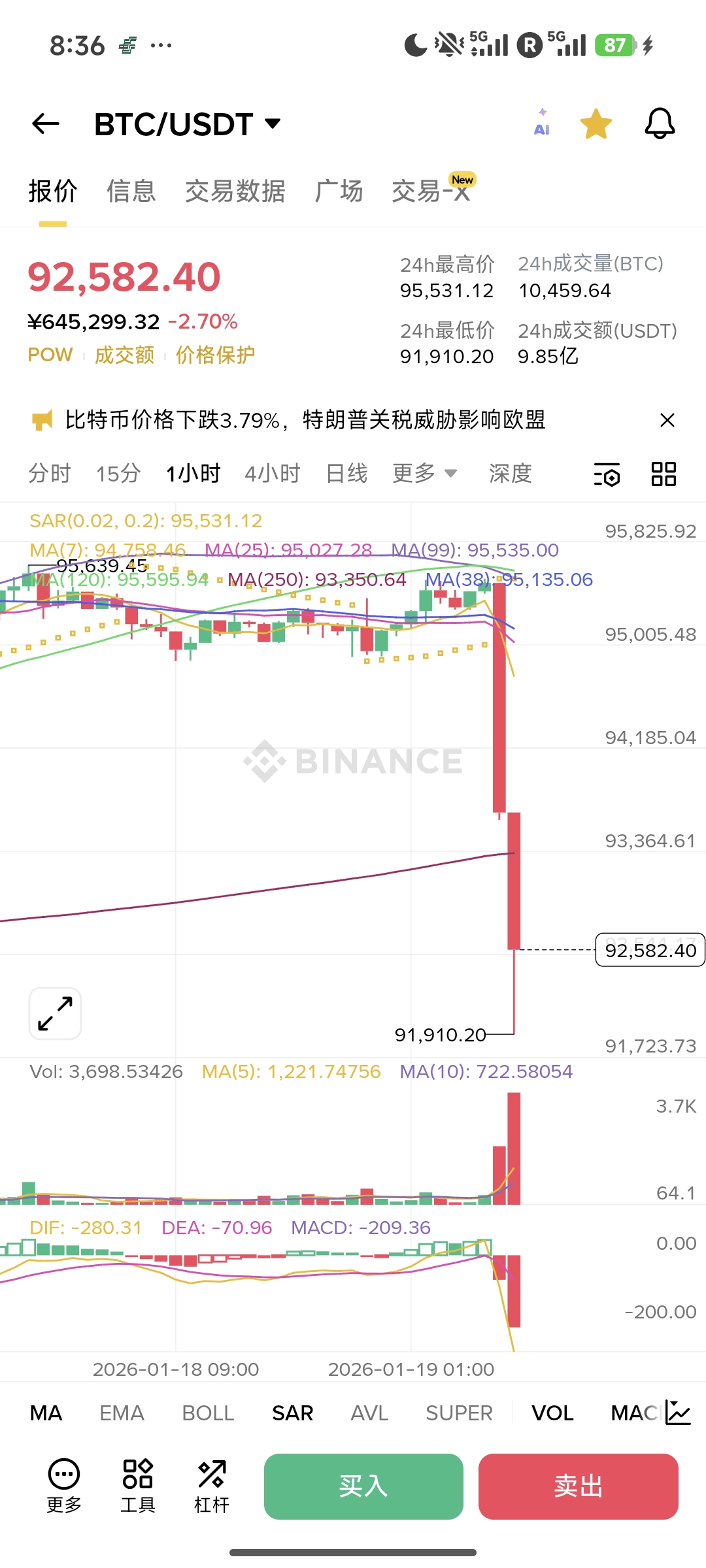
On the morning of January 19, 2026, Bitcoin flash crashed again, leading to a significant flash crash of altcoins.
Summary of reasons
1. US-EU tariffs: On January 17, Trump announced that due to the opposition of eight European countries (Denmark, Norway, Sweden, France, Germany, the UK, the Netherlands, Finland) to the US acquisition of Greenland, a 10% tariff will be imposed on their exports to the US starting February 1, increasing to 25% on June 1 until an agreement is reached. The Trump administration issued tariff threats regarding the issue of Greenland, and multiple EU countries are considering imposing tariffs on US goods. This escalation of trade protectionism has raised market concerns about the global economic outlook, leading to a decline in investor risk appetite, and cryptocurrencies, as risk assets, were sold off.
EU countermeasures: On January 19, an emergency meeting of ambassadors from the 27 EU countries decided to impose tariffs on US goods worth €93 billion (about $107.7 billion) or restrict US companies from entering the EU market. This countermeasure was originally scheduled to be implemented on February 6 but may take effect earlier.
2. Spread of market panic: Since Bitcoin is a high-beta risk asset, it is correlated with traditional tech stocks and safe-haven assets. When there is uncertainty in the market, investors quickly reduce their exposure to risk assets like cryptocurrencies and instead flock to safe-haven assets like gold and government bonds.
3. The impact of leveraged funds and quantitative trading: There is a large amount of leveraged funds and quantitative trading programs in the cryptocurrency market that quickly capture and amplify traditional market sentiment fluctuations, leading to 'flash crash' events.
4. US stock index opened sharply lower, triggering panic.
Insights for traders
- Pay attention to macro policy risks: The cryptocurrency market is closely related to macroeconomic policies. Traders need to closely monitor global macroeconomic conditions and policy changes, such as trade policies and monetary policies, to make risk predictions in advance.
- Reasonably control leverage risk: This incident highlighted the risks of high-leverage operations. Traders should reasonably control the leverage ratio according to their own risk tolerance to avoid forced liquidation due to market fluctuations.
- Focus on risk management: Establish a comprehensive risk management system, including setting stop-loss and take-profit points, diversifying investment portfolios, etc., to reduce losses caused by the sharp decline of a single asset.
- Maintain a cautious investment mindset: The cryptocurrency market is highly volatile, and traders need to remain calm and rational, avoiding blind following of trends and excessive trading, while maintaining composure during market panic.
Insights from trading strategies
It is easy to associate a trading strategy from the flash crash; I call it the flash crash trading strategy, which is to place a long order that you think is impossible to reach to take advantage of the rebound after the sharp drop. For example, placing a long order of 80,000 when Bitcoin is at 100,000. Of course, this strategy requires adding a time difference and a price difference.
Rough formula
Limit order price = current price x 61.28% + time-based movement
Take profits on rebounds without being greedy
Of course, the probability of this strategy triggering is very low, but it happens once or twice a year.
The only lesson humanity learns from history is that it never learns any lessons.
In the face of unclear interest rate cuts in the US and a complex and changeable international situation, blindly shorting or blindly going long is no different from gambling.
As a trader, what to learn is the trading method of being adaptable like water, not stuck in dead positions, able to respond and benefit from all things and positions.
I am a novice, learning, and the above arguments are for reference only.