

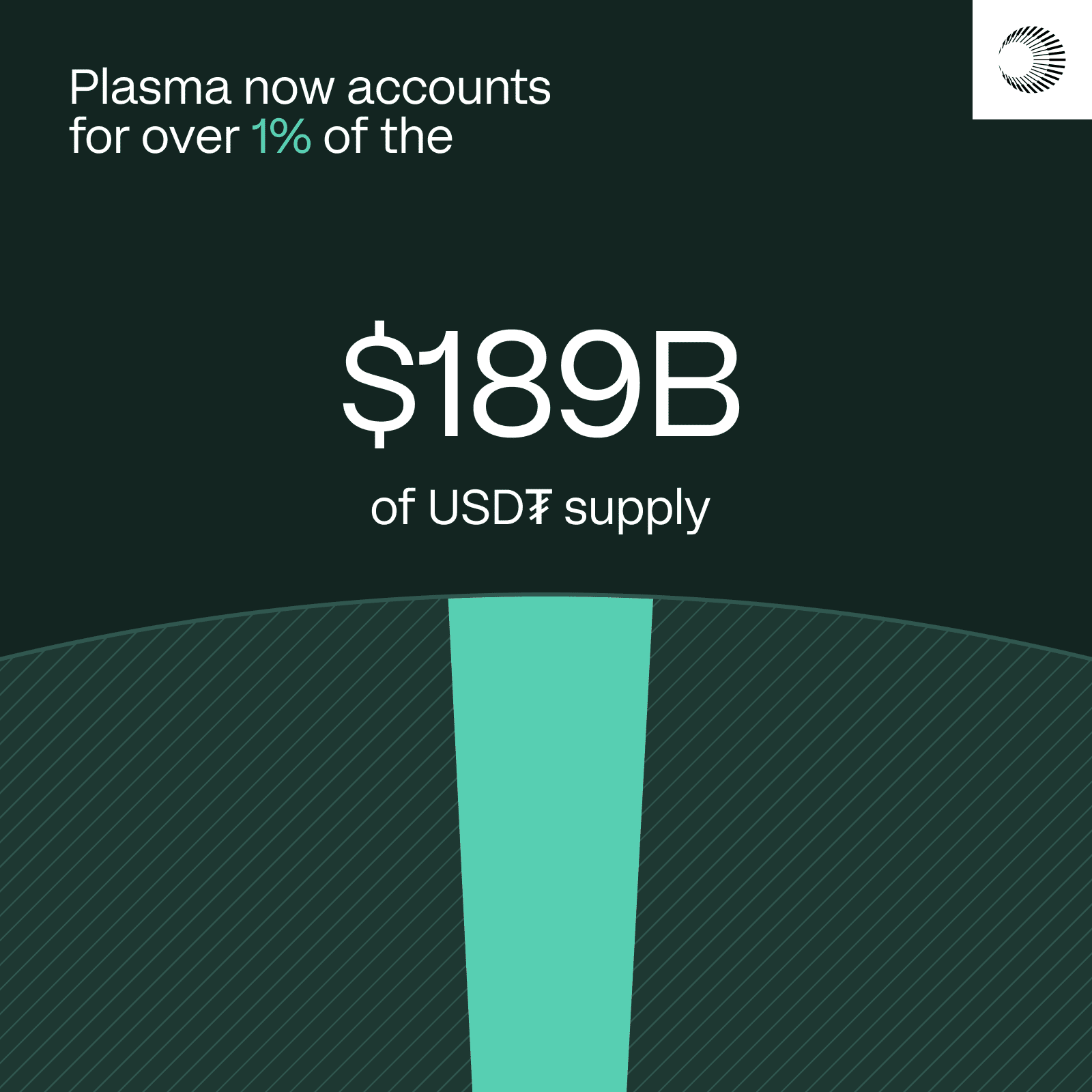
Today I am writing this piece, deliberately not following the format of 'Project Introduction', 'Advantages', 'Risks', because that kind of writing feels to me like submitting homework, and it tends to be repetitive. The Plasma line (@plasma) has increasingly made me feel that it is not the kind of project that can be 'clearly explained'; it is more like a system that needs to be 'used'. If you ask me to summarize it in a slogan, I would actually be cautious, because once things like stablecoin settlement are turned into slogans, they can easily become 'sounds right but is actually empty'. I prefer to think of it as a long-term channel for testing: can it really transform stablecoins from 'on-chain assets' to 'on-chain tools' under real pressure, allowing people to transfer, borrow, exchange, provide liquidity, and then transfer again, rather than just making a transfer and leaving.
Let me first express my own bias. In recent years, there has been a strange phenomenon in the stablecoin track: everyone acknowledges that stablecoins are one of the most realistic demands on-chain, but there are not many projects that are truly willing to design a chain around stablecoins from the ground up. More often, it is 'I also support USDT' or 'I also have a stablecoin pool', treating stablecoins as just one module in the ecosystem. Plasma is taking a narrower path: it looks more like it is building a 'stablecoin settlement network' rather than a 'general-purpose chain that can run anything'. The advantage of a narrower path is that the goal is clear, but the downside is that the fault tolerance is extremely low. If a general-purpose chain fails in a certain direction, it can still tell a next story; if a stablecoin settlement layer fails, it is not just 'a little off', but 'meaningless'.
So when I look at Plasma, I will first pull my mind out of 'public chain narratives' and force myself to switch to the perspective of 'settlement networks'. What is most valuable in settlement networks is not the flashy tricks, but the certainty. Certainty is not written in white papers; it is built from a pile of unappealing details: will fees suddenly change, will confirmations be erratic, will failures during congestion feel like a lottery, and will there be hidden slippage when transferring across protocols? Stablecoin users are extremely sensitive to these factors because they are not transferring NFTs, not emotions, but cash equivalents. If you get a person managing funds stuck at a critical moment once, they will return to exchange ledgers next time, even if it costs a bit more, because what they want is 'not to have a problem'.
I will think of Plasma in a very straightforward way: I will consider myself someone who only cares about the efficiency of stablecoins, running through financial actions from dawn to dusk, to see what this chain relies on to retain people. Don't laugh; this 'treating the project as a tool' mindset is, in fact, fairer to Plasma.
For example, the first thing I ask myself in the morning is: Why should I transfer stablecoins to this chain? Not 'because it's new', but 'because it can help me avoid pitfalls'. If Plasma wants to become the main road for stablecoin settlement, it must provide a stable intuition: transferring stablecoins should be smooth, stable, and have predictable costs. The most critical point here is not 'the lowest fees', but 'the volatility of costs and experiences'. Many chains have low average fees, but high volatility; many chains are fast most of the time, but suddenly very slow during peak times. Stablecoins are most likely to be used in peak times, so 'peak period experience' is the hard indicator. If Plasma is only smooth most of the time but breaks down during peak periods, then it is disqualified for stablecoin users. The value of the stablecoin settlement layer lies in the fact that when you need certainty the most, it can also provide you with certainty.
But I won't just focus on 'transfers'. Stablecoin transfers are just the entry point; what truly determines whether a chain is a settlement layer is whether funds can immediately continue working after they are transferred. In reality, most stablecoin behaviors are not 'just transfer and that's it', but after transferring, you need to borrow, exchange, market-make, manage margins, and even quickly switch funds between different risk exposures. If a chain cannot accommodate these actions, it is at most a transfer station, not a settlement layer. The fate of a transfer station is clear: there is traffic during the activity period, but once the activity stops, it becomes empty. The fate of a settlement layer is also clear: it may not always be trending but will be used by default.
So when I look at Plasma, I'm not most concerned with how many 'ecosystem partners' it has named, but whether it has the capability to accommodate the 'next actions' of stablecoins sufficiently naturally. The term 'natural' is crucial here. Many projects claim, 'We also have lending, we also have DEX', but the experience is awkward: the bridge is troublesome, liquidity is thin, slippage is high, interest rates fluctuate wildly, and funds feel like they're being experimented on. The stablecoin settlement network cannot make users feel like they're experimenting; it must be as handy as a tool. After you transfer USDT, can you actually borrow in the lending market, are the interest rates stable and predictable, can the market-making depth support large transactions, and is the slippage during exchanges within a reasonable range? These are the factors that retain users.
Here, I regard 'liquidity' very coldly. Many people like to take screenshots of TVL to make points, but stablecoin settlement doesn't care about screenshots; it cares about 'transaction quality'. What is transaction quality? It means whether you can actually exchange when you need to, whether the cost of exchange is stable, and whether the pool does not thin out when you need it. The biggest fear of a stablecoin settlement layer is not that no one discusses it normally, but that it becomes as thin as paper at critical moments. What are critical moments? They are times of severe market fluctuations, concentrated inflows and outflows of funds, and when everyone is moving money at the same time. If slippage explodes, failure rates are high, and lending interest rates go out of control during those days, users will remember for a long time because that is when they need this channel the most. What Plasma has to compete for is not 'being useful most of the time', but 'being useful at critical moments too'.
Writing to this point, I need to bring $XPL into the discussion, otherwise the whole piece would feel like praising a 'free channel', which is unrealistic. I have always been cautious about the low-fee narrative; it's not that I don't like low fees, but there must be a ledger behind low fees. Network security costs money, verification costs money, incentives cost money, order requires money, and market-making depth also costs money. If you push the costs of the stablecoin path very low, then where does that money come from? In the long term, it either relies on the system token to bear the security budget and incentives, or depends on some other mechanism, or it is just continuously subsidized. I don't believe in continuous subsidies because once the subsidies stop, the data collapses, and habits cannot be retained. The stablecoin settlement network needs 'sustainability', not 'subsidy period prosperity'.
So I understand $XPL as more like the screw that aligns the costs and benefits of this system. Many people like to describe tokens as 'value capture', and the more they talk, the more it sounds like a template. I am more inclined to ask a simple question: when stablecoins are increasingly being used on Plasma, are there some key links within the system that must rely on $XPL to maintain order and security? If they are necessary, then $XPL is part of the system; if not, then $XPL easily becomes a 'bystander', and no matter how busy the system is, it may not be able to transmit value to it. This question is brutal, but it is the most useful for long-term judgments. Because the final competition of the stablecoin settlement network is not about who can speak well, but about who can remain stable as the scale grows, and stability definitely requires a security budget and participant incentives. How to design budgets and incentives will ultimately reflect on the token.
I will also test $XPL from another angle: can it escape the fate of being an 'emotional asset'? The characteristic of emotional assets is that everything is fine when it's hot, but when it's cold, everything is meaningless; while the characteristic of system assets is that they remain in use regardless of heat or cold because the system cannot function without them. If Plasma is following the main road of stablecoin settlement, then its ideal state is: you don't need to discuss $XPL every day, but the system will naturally need it to operate. This state is very difficult to achieve, but only by achieving it can Plasma resemble 'infrastructure'; otherwise, it resembles a 'story chain'.
I'm not saying these things to nitpick, but because the path of Plasma does not allow for self-comfort. Its most real competitors are often not other chains, but those 'more convenient' alternatives. Why are internal transfers within exchanges strong? Because they are fast, stable, and users do not need to learn new things. Why are stablecoin paths on mainstream chains strong? Because liquidity is deep, tools are comprehensive, and pitfalls have been treaded through. To steal a portion of settlement behavior from these default options, Plasma absolutely cannot rely on 'we can transfer too', but rather on 'we resemble a complete financial pipeline in stablecoin settlement'. The key to a financial pipeline is not showcasing skills, but having lower comprehensive costs, stronger certainty, smoother turnover, and not breaking down under pressure.
I will repeatedly write the term 'comprehensive cost' in my mind. Comprehensive cost is not just about transaction fees; it includes the time cost of transaction failures, the opportunity cost during congestion, the hidden costs of slippage, cross-platform friction, and how many steps you need to take to utilize your money. Many chains like to keep fees very low, and then users lose their money in slippage, leading them to feel they have been played. If Plasma truly wants to follow the main road of stablecoin settlement, it should pursue predictable comprehensive costs; even if not the absolute lowest, it should be stable, transparent, and replicable. Stablecoin users accept 'a bit more expensive but certain', but do not accept 'cheap but like a lottery'.
I will also pay special attention to Plasma's attitude towards 'turnover'. The ultimate goal of the stablecoin settlement network is not to suck in money but to get money moving and not wanting to leave. Here, I am very wary of seeing a kind of false prosperity: large stablecoin balances, great-looking data screenshots, but a low turnover rate with funds sitting there like a parking lot. Parking lots are easiest to create with subsidies, but settlement layers are hardest to build with subsidies. What settlement layers need is for funds to form habitual workflows: immediately borrowing after transferring, immediately exchanging after borrowing, and immediately market-making or returning to the account for further scheduling. If Plasma positions itself as a workbench for stablecoins, it will slowly become the default option; if it cannot do this, it will appear very empty once subsidies retreat.
I might even use a slightly darkly humorous metaphor to remind myself not to get too carried away: a stablecoin settlement chain is like an airport runway. You typically wouldn't praise how good a runway looks, but when your plane takes off and lands, the runway must be stable. Whether the runway is stable or not doesn't depend on promotional videos, but on whether you can take off and land during heavy rain, peak times, and congestion. What Plasma needs to prove is whether it is a runway, not just another 'theme park'. Theme parks are lively but not essential, while runways are boring but irreplaceable. If it really wants to become the settlement layer for stablecoins, it has to accept the fate of 'boredom is the norm': growth is slow, narratives are restrained, and data must withstand time and pressure.
Writing to this point, I actually want to talk about the one aspect where I hesitate the most. I don't really doubt the correctness of the Plasma path; the demand for stablecoin settlement definitely exists. What I hesitate about more is the difficulty of execution. The challenge of stablecoin settlement does not lie in whether you can run a chain, but in whether you can make a whole set of 'financial pipelines for stablecoin turnover' the default path. The default path means that ecosystem partners are willing to settle in for the long term, market depth is willing to provide for the long term, lending markets are willing to be available for the long term, and users are willing to form habits over the long term. Each link here cannot be solved by a single technical point; it is more like a hybrid of operations, cooperation, risk management, compliance boundaries, and incentive design. You could say it resembles a company doing payment clearing networks rather than a project issuing tokens. For Plasma, this 'company-like' quality is both an advantage and a burden. The advantage is that it is closer to real needs, and the burden is that its fault tolerance is lower, the pace is slower, and the market is more likely to become impatient.
But I won't deny it just because it's 'slow'. On the contrary, I will treat slowness as a filter. The value of a stablecoin settlement network should not rely on short-term emotions but more like a bet on a long-term position: when more stablecoin settlement behaviors migrate from exchange ledgers and fragmented paths to more systematic on-chain pipelines, will Plasma be able to become one of the main roads? Once a main road is established, competition will shift from 'telling stories' to 'the cost of changing paths', and that's when the moat truly emerges.
So if you ask me how I would keep an eye on Plasma next, I won't say 'look at the ecosystem' or 'look at the heat', but I will focus on things that are closer to the lifeblood of the settlement network. I will monitor whether the turnover of stablecoins on-chain is increasing, whether experiences during key periods are stable, whether lending and market-making remain usable even after subsidies decrease, and whether funds form a closed loop on-chain rather than just pausing briefly before leaving. I will keep an eye on whether $XPL is becoming increasingly irreplaceable within the system, and not just needed during events. I will watch if it is becoming more boring, because the more boring it is, the more like infrastructure it becomes.
As I write this piece to the end, I actually want to emphasize one sentence more strongly: Plasma's path cannot win by 'looking correct'; it can only win by 'being smooth to use, stable at critical moments, and convenient after transfers'. Stablecoin settlement is not a dream; it is the sum of details. If details are done right, it may not be discussed every day, but it will be used by default; if details are done wrong, it will not fail spectacularly but will slowly be moved back to other paths, like a channel that seems correct but cannot retain turnover.
I am willing to continue monitoring it, but I will also maintain a very realistic restraint: not treating it as a short-term emotional ticket, but as a candidate for stablecoin settlement that needs to be validated over time. Time will be slow, data will be boring, and conclusions will not change every day, but if it truly emerges, looking back will feel very reasonable because stablecoin settlement does not rely on explosive points to establish itself; it relies on default choices.