

Walrus Hackathons and Developer Events: Building the Sovereign Data Layer of Web3
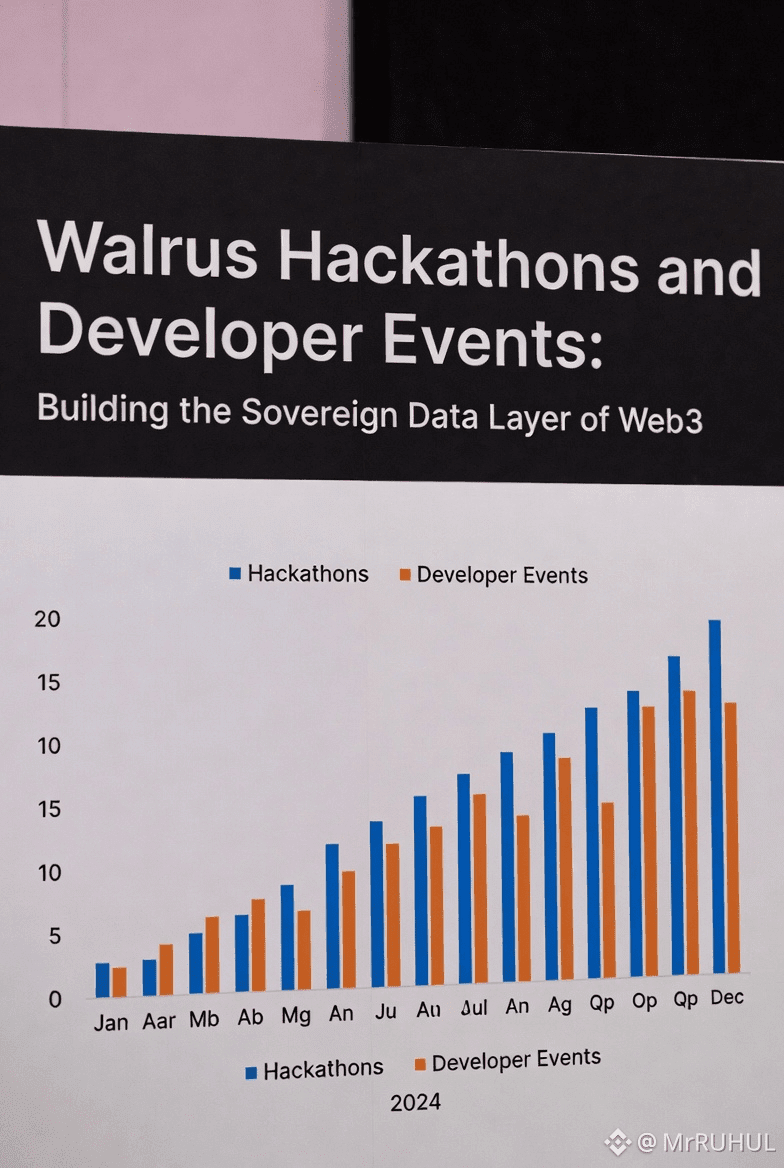
If you want to see real progress in Web3, just drop into a hackathon or a developer meetup. That’s where things actually get built. Forget the hype—these events are where people roll up their sleeves and solve actual problems. For Walrus, a project that’s obsessed with decentralized and verifiable data, hackathons aren’t some PR gimmick. They’re core to everything: testing the tech, finding new ways to use it, and attracting the people who care about the tough, unglamorous work—not just the latest trend.
Here’s the plain truth: Web3 still misses a true data layer. Blockchains nailed moving money and reaching consensus, sure, but most apps still lean on old-school cloud servers and databases you can’t really trust. Walrus hackathons flip the whole idea. Builders come together and start rethinking how data should be stored, accessed, and verified. No middlemen. No hidden tricks.
What makes Walrus hackathons stand out? They go straight for the hard stuff. You won’t run into endless token swaps or another cookie-cutter DEX. People show up to work on the backbone of Web3: middleware, protocols, and tools that everything else depends on. We’re talking about decentralized storage, data availability, verifiable pipelines, privacy-first access—the kind of challenges that pull in people looking for real problems, not just some shiny front-end.
And the problems? They’re real. How do you store massive data sets without putting all your trust in one provider? How do you keep data honest across multiple chains? How can apps handle sensitive info without blowing up privacy? Walrus doesn’t dodge these questions. Builders dive right in and see what they can come up with. The goal isn’t to chase the next buzzword. It’s to build infrastructure that lasts.
Feedback at these events is a two-way street. Developers hammer away at APIs and SDKs, push everything to the limit, and the Walrus team pays attention. They spot what’s working, what’s confusing, what needs tossing out. That feedback loop makes the docs sharper, the tools better, and sometimes leads to changes in the protocol itself. Honestly, these hackathons feel more like wild R&D sessions—messy, hands-on, and full of surprises.
One thing you notice right away: everyone’s collaborating. People show up from every corner—DeFi, NFTs, gaming, DAOs, even some corporate types. You might see a game dev trying to store in-game items on Walrus while a DAO builder tests privacy-first voting. These crossovers spark ideas nobody planned. That’s how Walrus goes from niche experiment to something essential.
Learning’s a big part of the mix. Walrus packs these events with workshops and deep dives. They skip the fluff and get straight to the stuff that matters: data sharding, verification, zero-knowledge proofs. Newcomers get real help, and veterans find enough depth to get excited about what’s next.
For builders, Walrus hackathons just feel different. The judges care about solid architecture, real security, and projects that aren’t going to vanish in a week. Demos are cool, but they want infrastructure, not throwaway hacks. That’s why so many hackathon projects stick around and turn into open-source tools or even new startups inside the Walrus ecosystem.
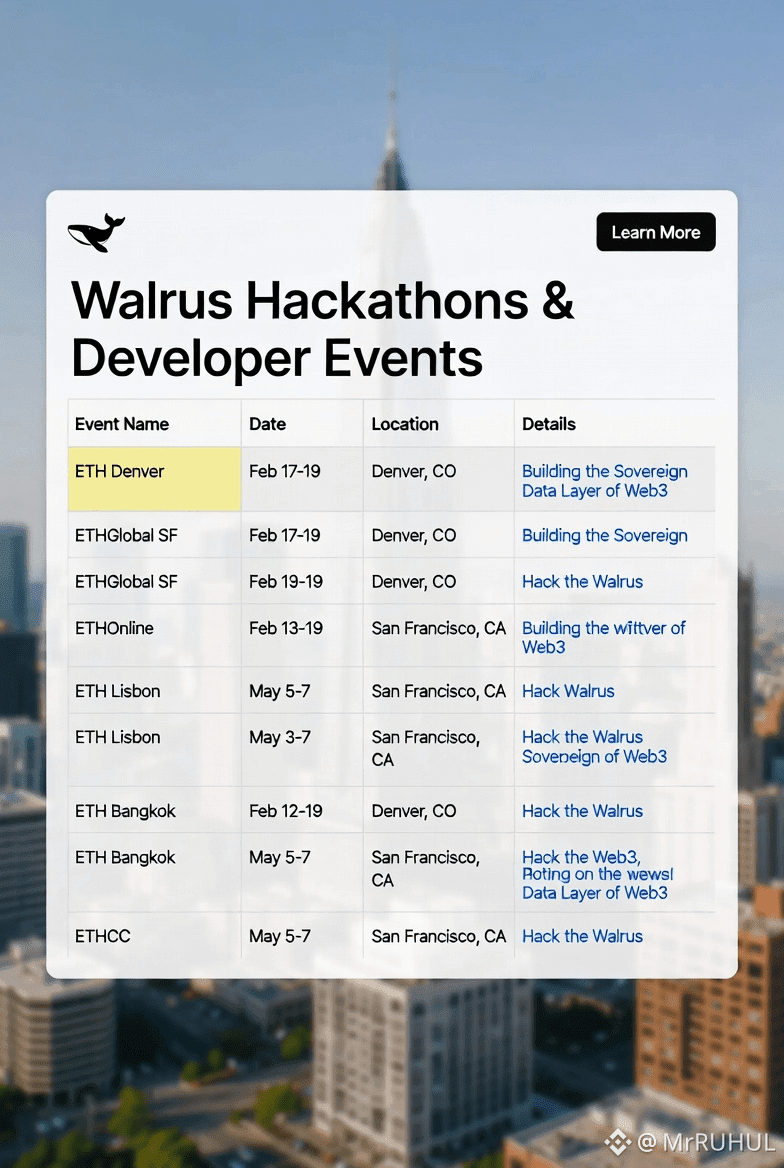
But the best part? It’s the community. These events build real connections—between builders, the core team, and everyone else. Those relationships last, long after the event wraps up. That’s what keeps Walrus moving forward. People don’t adopt Walrus because of hype. They come back to it for their own projects, again and again.
Step back for a second and you’ll see it: Walrus hackathons are pushing Web3 to grow up. Less noise, more real progress. Less speculation, more building. By putting data sovereignty and verifiability front and center, Walrus is helping shape a Web3 where builders get to decide what comes next.@Walrus 🦭/acc #Walrus $WAL