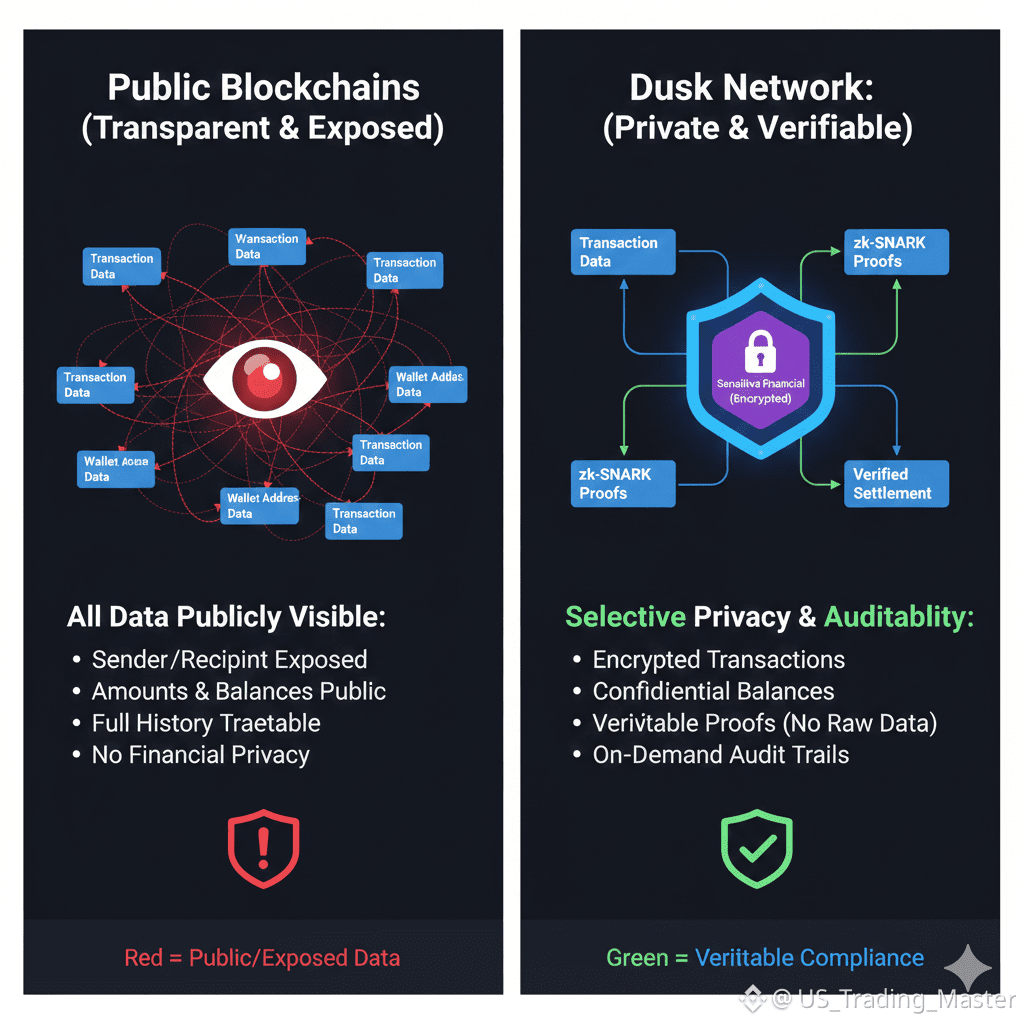
Smart contracts changed how value moves on-chain. But they also introduced a major flaw: everything is visible. Logic, parameters, balances, and execution paths are exposed for anyone to analyze. While transparency supports trust, it also limits what can be built. Dusk Network addresses this limitation by introducing Confidential Smart Contracts (XSC) — a system designed for real financial logic, not just public experimentation.
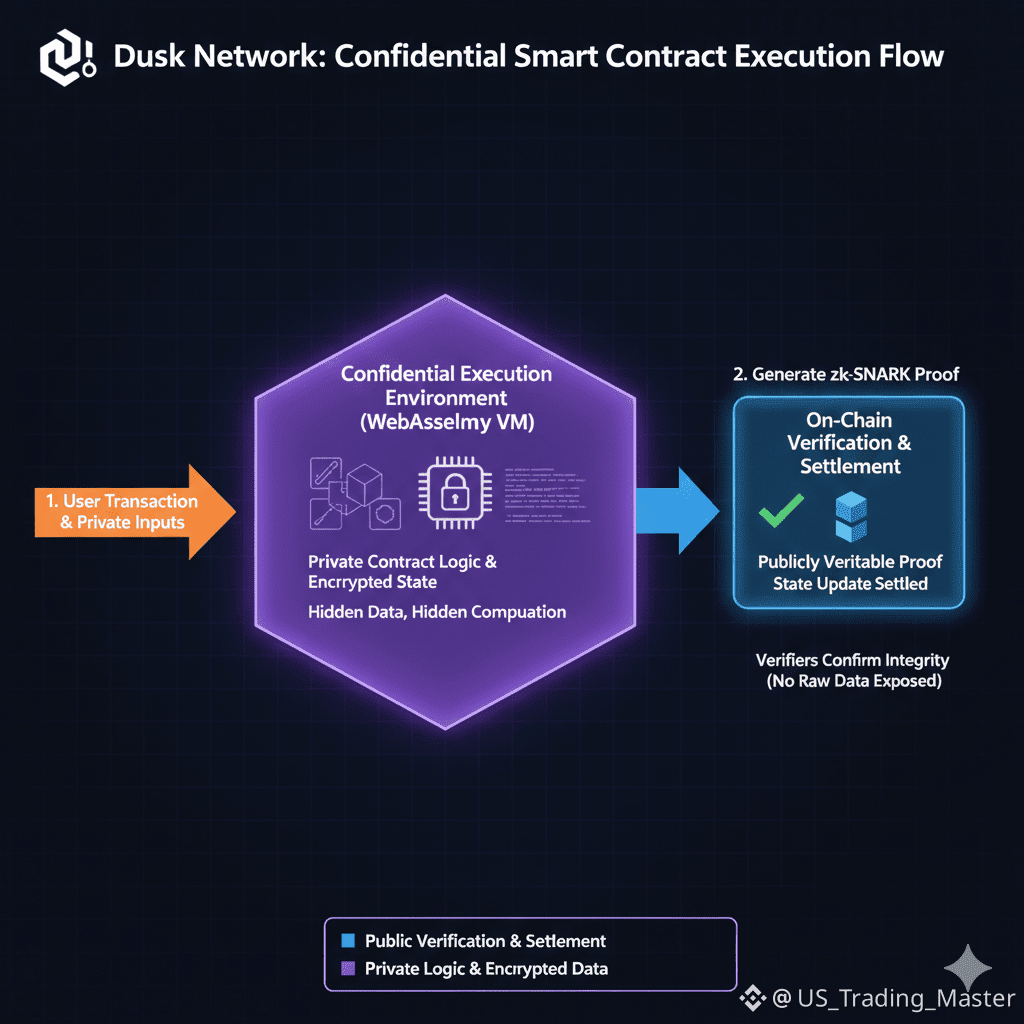
In traditional finance, contracts are private by default. The market trusts outcomes, not exposure. Dusk brings this same principle to decentralized systems. XSC allows smart contracts to execute confidentially while remaining verifiable. This is not secrecy; it is controlled disclosure. Participants can trust results without seeing proprietary logic or sensitive data.
XSC operates alongside the Phoenix transaction model, which ensures transaction-level privacy. Together, they form a complete confidential execution environment. Transactions do not leak balances. Contracts do not expose logic. Yet the network still verifies correctness using cryptographic proofs. This architecture solves a problem that most Layer-1 blockchains have avoided rather than addressed.
From a builder’s perspective, this changes everything. Developers can design financial products without worrying about being copied or exploited. Trading strategies can run on-chain without becoming public signals. Structured products, derivatives, and complex financial instruments finally make sense in a decentralized environment.
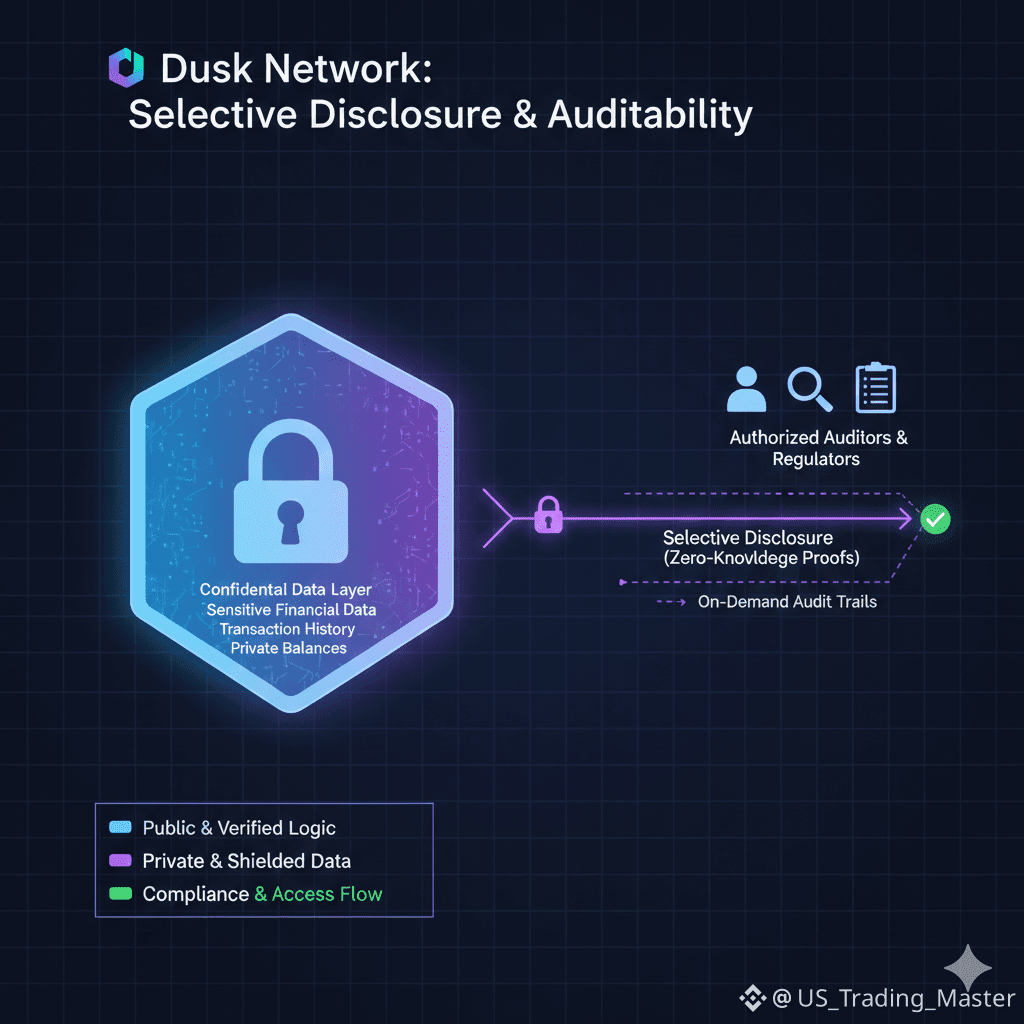
Zedger plays a critical role here. It allows assets and contracts to operate privately while supporting selective disclosure. If an auditor or regulator needs access, proofs can be generated without revealing unrelated data. This makes Dusk uniquely suited for regulated DeFi, where compliance is unavoidable.
The implications extend beyond finance. AI systems interacting with blockchain often require confidential data inputs. NFTs representing sensitive ownership rights need privacy. Tokenized real-world assets demand confidentiality around pricing, ownership, and settlement. Dusk’s architecture supports all of these use cases without forcing trade-offs between privacy and trust.
From a market perspective, confidential execution reduces manipulation. When strategies are hidden, frontrunning becomes harder. Markets become more efficient. Liquidity providers can operate without broadcasting positions. This aligns decentralized markets closer to how professional trading environments function today.
Investors should pay attention to this shift. Infrastructure that supports confidential logic is not a niche feature — it is foundational. As capital moves on-chain, networks that cannot protect sensitive data will struggle to attract serious participants. Dusk is building ahead of this curve.
What stands out most is that Dusk does not sacrifice decentralization to achieve privacy. The network remains public and verifiable. Trust is maintained through cryptography, not secrecy. This balance is what gives Dusk long-term credibility.
In the coming years, decentralized finance will move beyond transparent toy markets into real financial systems. Confidential Smart Contracts will be essential for that transition. Dusk Network is positioning itself as one of the few blockchains truly ready for that future.