
Systems do not usually break at the moment of failure. They weaken slowly through invisible shortcuts. Every shortcut looks harmless at first. A bypass for speed. An exception for urgency. A manual step added to help users move forward. Over time these shortcuts stack. The system still works but it no longer behaves predictably. Outcomes depend on context timing and human intervention. This is how complexity grows silently.
The most dangerous shortcuts are the ones added to protect users. A temporary override becomes permanent. A manual approval becomes standard flow. A fallback path becomes the primary path under stress. Each addition reduces clarity. The system gains flexibility but loses certainty. Eventually no one knows which path an action will take. Reliability becomes an assumption instead of a guarantee.
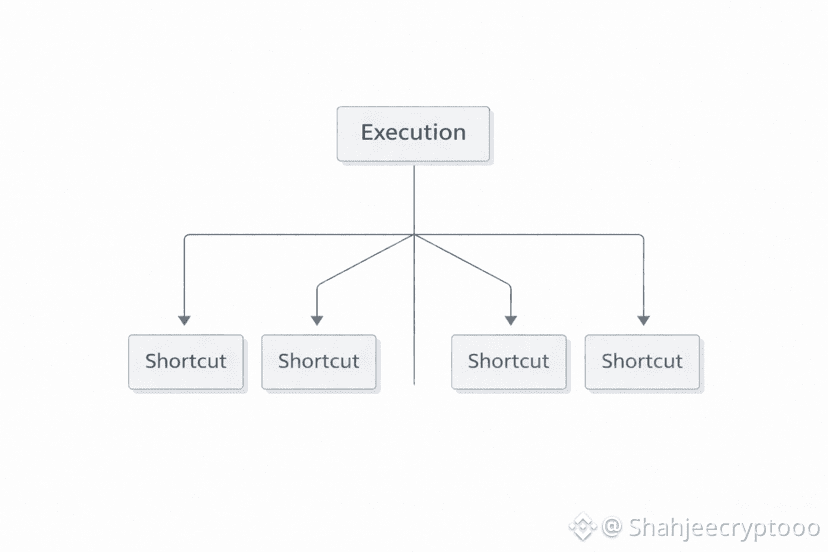
When systems allow shortcuts they transfer responsibility to people. Operators decide what is acceptable. Developers add defensive code. Support teams manage expectations. The platform survives but only through effort. Every outcome requires monitoring. Every update risks breaking hidden dependencies. Growth slows because confidence disappears.
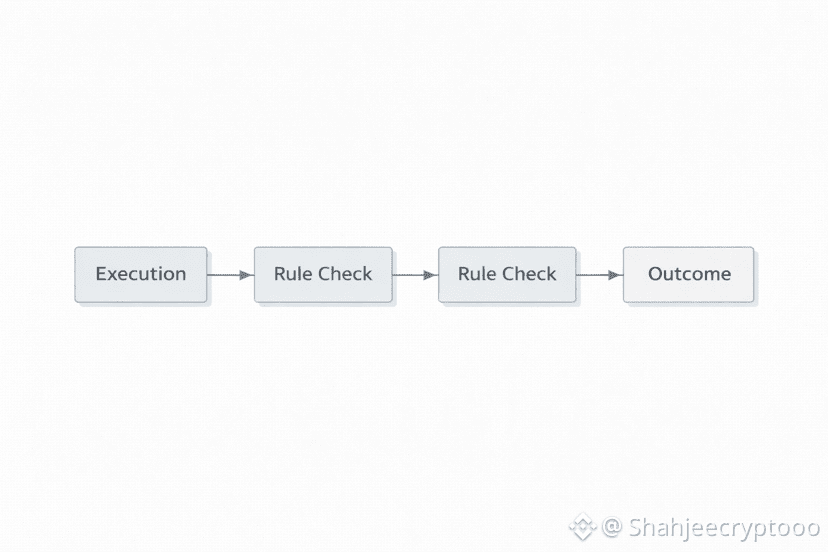
Strong systems remove shortcuts instead of managing them. They do not allow execution unless all conditions are met in advance. There is one valid path and everything else stops. This feels restrictive at first. Teams worry about usability. They worry about edge cases. They worry about speed. In reality the opposite happens. Once shortcuts are removed execution becomes faster because nothing needs interpretation later.
Dusk follows this approach at protocol level. It does not rely on external checks or layered controls. Rules live inside execution not around it. Logic runs confidentially but enforcement is strict. Either an action qualifies or it never happens. There is no partial success. There is no pending cleanup. Finality has meaning.
This design changes how developers think. Instead of asking how to recover from invalid states they ask how to prevent them entirely. Code becomes simpler because defensive layers disappear. Assumptions become explicit. Interfaces become cleaner because outcomes are stable. Developers stop explaining behavior and start trusting guarantees.
Shortcuts also distort incentives. When recovery is possible people push limits. They rely on fixes later. They accept temporary inconsistency. Over time this behavior becomes cultural. Teams normalize instability. They expect alerts. They plan on intervention. Reliability turns into a cost center instead of a foundation.
When shortcuts are impossible behavior changes. Teams design carefully because execution is final. Users adapt quickly because rules are consistent. The system teaches discipline without enforcement. There is no need for warnings. The platform itself rejects invalid behavior silently.
This matters most in financial systems. Trades settlements and permissions cannot afford ambiguity. A shortcut in finance becomes risk. A fallback becomes exposure. A manual override becomes liability. Systems that enforce rules early protect participants without requiring trust or education.
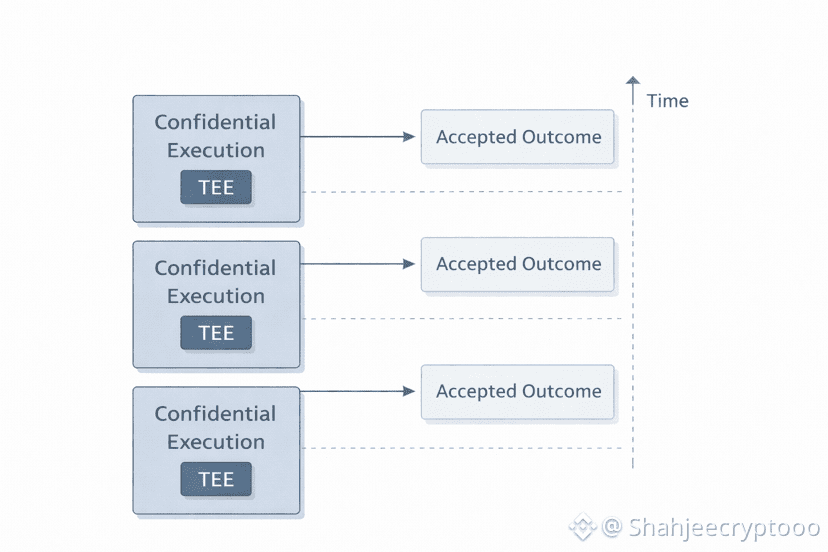
Dusk does not advertise this as a feature. It emerges from execution design. Confidential execution allows logic to run without leaking sensitive details. Deterministic enforcement ensures results are correct. Together they remove the need for shortcuts. There is nothing to bypass because execution itself is the boundary.
Over time this creates calm platforms. Calm systems do not demand attention. They do not require constant explanation. They do not surprise users. Consistency builds confidence without messaging. Participation grows because results are boring in the best possible way.
Most platforms try to grow first and stabilize later. This usually fails. Once shortcuts exist they are hard to remove. Users depend on them. Teams fear breaking behavior. The system becomes fragile through success. Strong systems reverse this order. They stabilize first. Growth becomes safer because constraints are already in place.
Removing shortcuts is uncomfortable at the beginning. It slows initial experimentation. It forces clearer thinking. It exposes weak assumptions early. Over time it accelerates everything else. Development becomes smoother. Operations become lighter. Change becomes safer.
The future belongs to systems that refuse shortcuts. Not because they lack flexibility but because they choose certainty. Dusk represents this philosophy at protocol level. Execution is not a suggestion. It is a contract. What completes is valid. What is invalid never existed.
This is how resilient systems are built. Not by reacting faster but by allowing fewer things to happen at all.