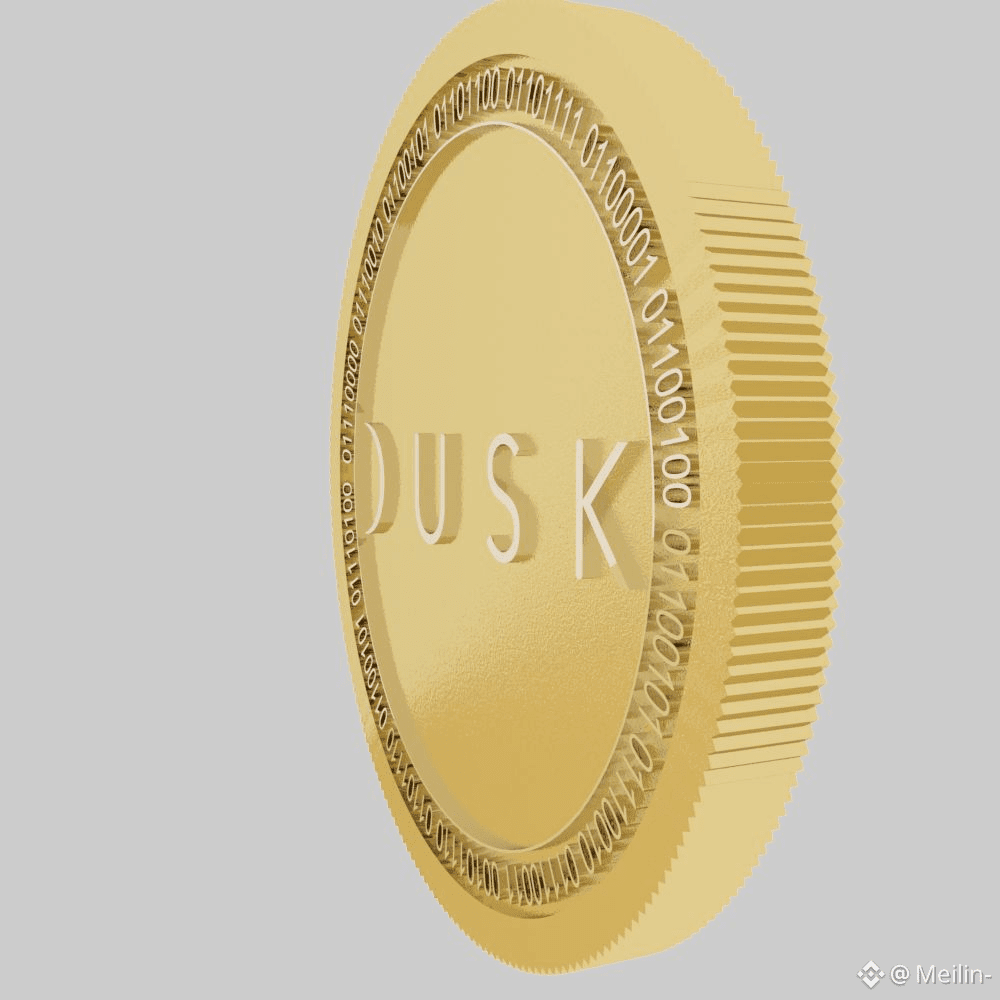
In a world where financial systems are increasingly loud exposed and relentlessly transparent Dusk feels like a deliberate pause a moment of quiet intention. Founded in 2018 Dusk did not emerge to chase hype or mimic existing chains it emerged to solve a problem most platforms avoided confronting directly. How do you build financial infrastructure that respects privacy without sacrificing legality accountability and institutional trust? That question is not glamorous but it is profound and Dusk was shaped entirely around answering it.
Dusk exists for the spaces where finance becomes serious. Not speculative not chaotic but deliberate and regulated. It is a layer 1 blockchain designed not to disrupt recklessly but to integrate thoughtfully. Its architecture acknowledges a simple truth: real capital moves under rules and those rules are not enemies of innovation. Instead of pretending regulation will disappear Dusk embeds compliance into its very structure transforming it from a constraint into a feature. This approach does something rare in the blockchain world — it invites institutions into the conversation without asking them to abandon their principles.
At the heart of Dusk lies a modular design philosophy that feels less like software engineering and more like urban planning. Rather than forcing every application into a single rigid framework Dusk allows systems to be assembled with intention. Privacy modules can coexist with audit layers. Confidential transactions can still be provable. Sensitive financial activity can remain discreet while retaining verifiable integrity. This flexibility gives builders something most blockchains do not: the ability to design financial products that fit real world legal and operational realities rather than fighting against them.
Privacy on Dusk is not about obscurity for its own sake. It is not a curtain drawn to hide wrongdoing but a veil that preserves dignity. Financial privacy is deeply human. It protects businesses from predatory competition individuals from unnecessary exposure and institutions from operational risk. Dusk understands that privacy is not the absence of accountability but the control of information. By allowing selective disclosure and built in auditability it creates an environment where trust is engineered rather than assumed. This is privacy that can stand in a courtroom not just a chat room.
The conversation becomes even more compelling when real world assets enter the picture. Tokenization has promised to bridge physical and digital value for years yet most attempts stumble when confronted with regulation ownership verification and confidentiality. Dusk was built with these obstacles in mind. It provides an infrastructure where assets like equities debt instruments real estate claims and financial contracts can exist on chain without exposing sensitive participant data. Ownership can be proven without being broadcast. Transfers can be validated without public spectacle. This is the kind of infrastructure traditional finance has been waiting for whether it admits it or not.
Compliant decentralized finance is another space where Dusk quietly rewrites expectations. DeFi began as a rebellion against centralized control but rebellion alone cannot sustain an economy. As markets mature compliance becomes inevitable and platforms that fail to adapt fade into irrelevance. Dusk does not dilute decentralization it refines it. It offers a framework where decentralized systems can operate within regulatory boundaries enabling institutions to participate without fear and developers to innovate without legal uncertainty. This balance is not flashy but it is enduring.
There is a maturity to Dusk’s vision that feels almost uncommon in an industry addicted to acceleration. Instead of promising overnight revolutions it builds long term infrastructure. Instead of shouting about freedom it designs responsibility. This restraint is not weakness it is confidence. Confidence that finance does not need chaos to evolve and that progress can be methodical without being stagnant. Dusk feels like a blockchain that expects to still matter decades from now not just during the next market cycle.
What truly distinguishes Dusk is its understanding of trust as a technical problem. Trust is not created by slogans or communities alone it is created by systems that behave predictably under pressure. By merging privacy auditability and compliance at the protocol level Dusk reduces reliance on blind faith. It replaces trust me narratives with verifiable assurances. This is the kind of infrastructure that regulators can inspect institutions can adopt and users can rely on without surrendering their autonomy.
There is something quietly radical about building financial systems that do not force a choice between visibility and vulnerability. Dusk suggests a future where financial activity can be discreet without being deceptive transparent without being invasive. It imagines markets where confidentiality is respected rules are enforced and innovation is welcomed rather than feared. This is not the future of finance as spectacle but as structure.
As the noise around blockchain grows louder Dusk remains composed almost understated confident that the strongest systems do not need to shout. They endure. They integrate. They protect. In the architecture of Dusk silence is not emptiness it is intention. And within that intention lies a vision of finance that is finally grown up private where it must be open where it should be and built to last.