

The modern creator economy runs on speed. Trends move in weeks, algorithms shift in days, and relevance is measured in hours. In this environment, it is easy to believe that only the present matters. However, beneath the surface, long term memory is what separates sustainable creators from disposable ones. Ownership of past work determines future leverage. This is why data sovereignty is not an abstract concept, but a practical necessity.
Most creators begin by trusting platforms with everything. Files, analytics, audience data, and archives all live inside dashboards designed for growth, not preservation. At first, this feels efficient. Over time, it becomes a constraint. When a creator wants to migrate, audit their history, or build independent products, they discover that their data is incomplete, inaccessible, or degraded.
The numbers tell a clear story. Surveys show that over 60 percent of creators have lost access to content at least once due to account issues, policy changes, or platform shutdowns. In many cases, recovery is partial or impossible. For professional creators, this is not just emotional loss. It is financial. A writer losing ten years of articles loses not only past income but future licensing and compilation opportunities.
@Walrus 🦭/acc reframes storage as a strategic asset rather than a convenience. Instead of constantly syncing and backing up data reactively, creators can commit their work to a system built to last. This includes not just media files, but context. Drafts, timestamps, revisions, and supporting materials can all be preserved in a verifiable way.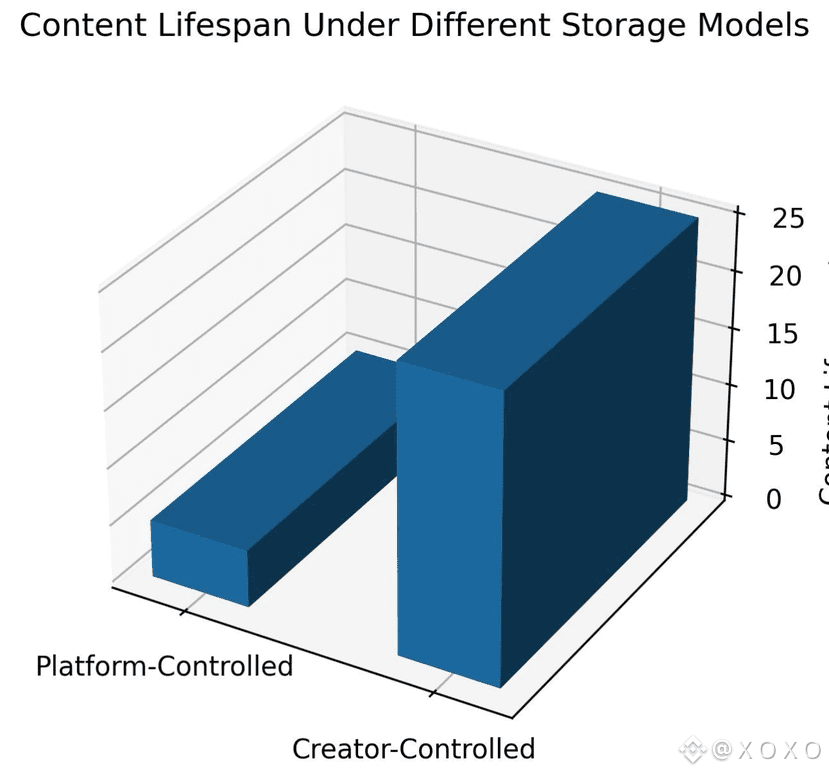
One of the most important benefits here is independence. When creators control their data, they can negotiate from a position of strength. They can license content to multiple platforms without exclusivity traps. They can prove originality in disputes. They can build direct relationships with audiences using their own infrastructure while still benefiting from platform reach.
Cost plays a role, but it is not the only factor. Traditional cloud storage creates a recurring dependency. Miss a payment or lose an account and access disappears. Walrus aligns cost with commitment. Storage is funded with the explicit goal of longevity. This predictability matters for creators planning careers over decades rather than quarters.
There is also a cultural implication. Creators are historians of their time. Vlogs, podcasts, articles, and social commentary form a living archive of how societies think and change. When this data is controlled by platforms optimized for profit, cultural memory becomes fragile. Walrus allows creators to act as stewards of their own history without needing institutional backing.
From a practical perspective, this enables new creative models. A creator can build an archive first and a product later. They can release content gradually without fear of losing originals. They can collaborate across borders without central custodians. They can allow selective access to fans, researchers, or partners while retaining ultimate control.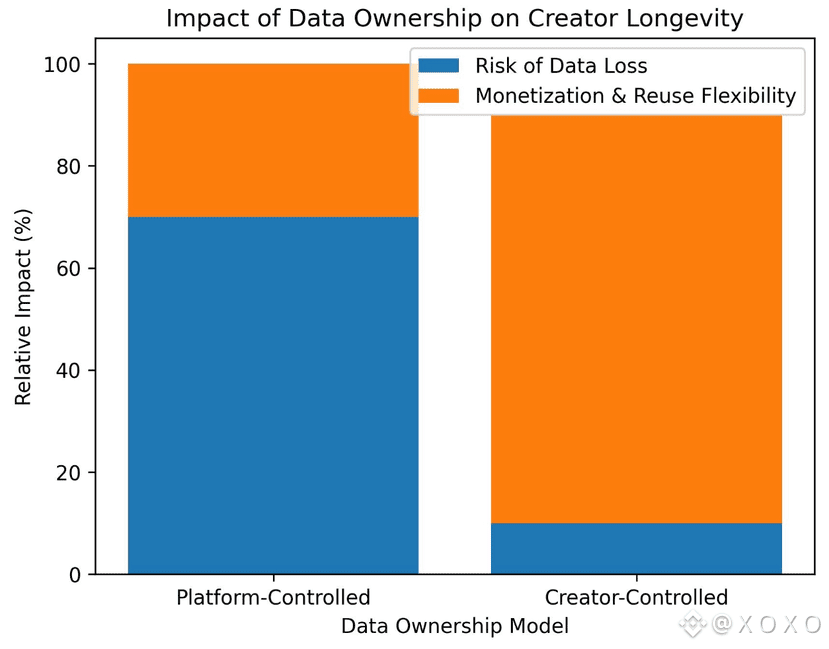
Consider education creators. Courses evolve, but foundational material remains valuable. Being able to store and version content over years allows educators to update without rewriting history. Similarly, investigative creators benefit from immutable archives that protect against accusations of manipulation or revisionism.
What makes Walrus particularly suited to this role is its respect for time. It does not assume constant interaction. Data can exist quietly until needed. This mirrors how creative value actually works. Not everything is meant to be consumed immediately. Some work gains relevance years later.
My perspective is that the creator economy is maturing. As it does, creators will think less like users and more like operators. Ownership, archives, and infrastructure will matter as much as reach. Walrus fits this shift because it does not try to be a platform. It tries to be a guarantee. A guarantee that the work creators produce today will still belong to them tomorrow, regardless of which apps rise or fall. In an internet built on acceleration, that kind of patience is quietly powerful.