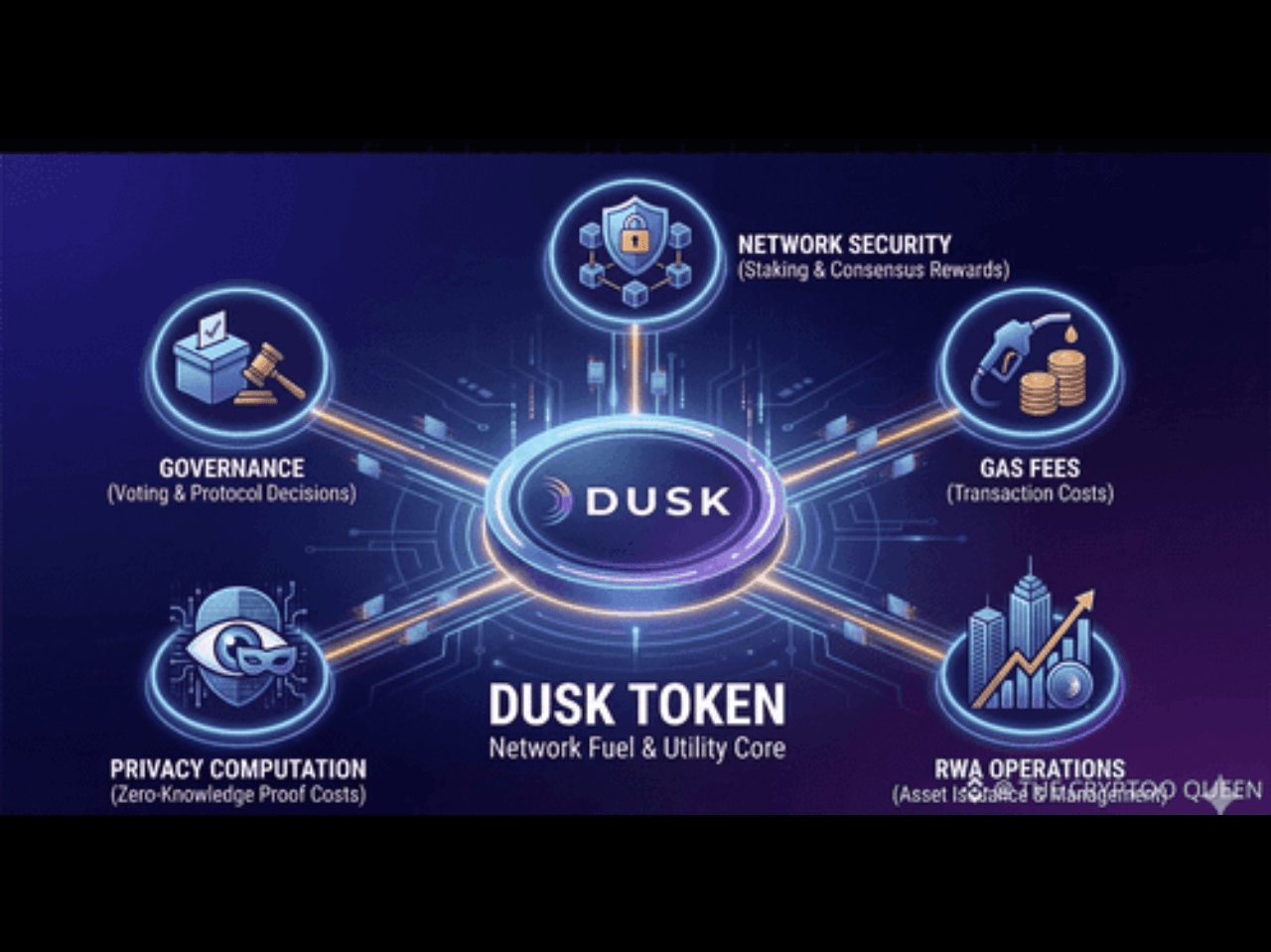
In the current debate on blockchain adoption, one of the most critical points is no longer scalability or speed, but the privacy applied to real and regulated contexts. As governments, financial institutions, and asset issuers begin to explore Web3 solutions, it becomes clear that fully transparent models are not always viable for real-world use cases.
Dusk Foundation proposes a different approach to the problem: a blockchain infrastructure specifically designed for regulated financial assets, where the confidentiality of information does not conflict with auditability or regulatory compliance. This approach is particularly relevant in scenarios such as the tokenization of securities, the issuance of financial instruments, or digital secondary markets.
The use of zero-knowledge proofs allows for validating transactions and rules without revealing sensitive data, opening the door to a new balance between transparency and privacy. Instead of hiding information opaquely, it is cryptographically demonstrated that an operation meets the required conditions. This conceptual shift is key for institutional actors to participate in blockchain without compromising legal or confidentiality obligations.
In a context where regulation progresses unevenly between regions, having infrastructure designed from the outset to coexist with regulatory frameworks can make the difference between an experimental technology and a scalable adoptable solution. The evolution of Web3 seems to be heading towards more specialized models, where not all blockchains attempt to solve all problems.
From that perspective, $DUSK represents an interesting approach within the ecosystem: not as just another general-purpose blockchain, but as a piece designed for a specific segment of the financial market. The development of this type of infrastructure will be crucial for the next phase of maturity of the blockchain ecosystem.
@dusk_foundation
#Dusk #Blockchain #Web3 #Privacy #Regulation #Tokenization #DeFi #ZeroKnowledge #ZeroKnowledgeProofs