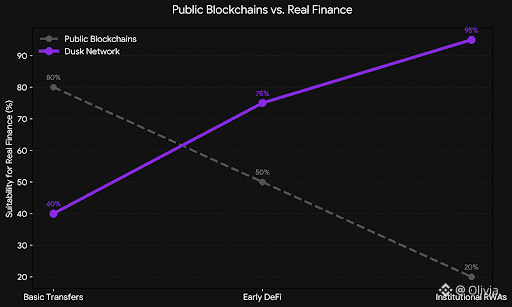
Finance was never designed to operate in public. Confidentiality, controlled access, and regulatory oversight are fundamental to how financial markets function. Yet most blockchains assume full transparency by default. This mismatch is one of the biggest reasons institutions hesitate to adopt on-chain systems and it’s exactly the problem Dusk was built to solve.
Public transparency is often framed as blockchain’s greatest strength. But in regulated markets, full transparency creates more problems than solutions. Financial institutions are legally required to protect sensitive data, customer identities, transaction details, trading strategies. Putting that information on a fully public ledger isn’t innovation, it’s risk. This disconnect is why institutional adoption has moved slowly, and why Dusk takes a fundamentally different path.
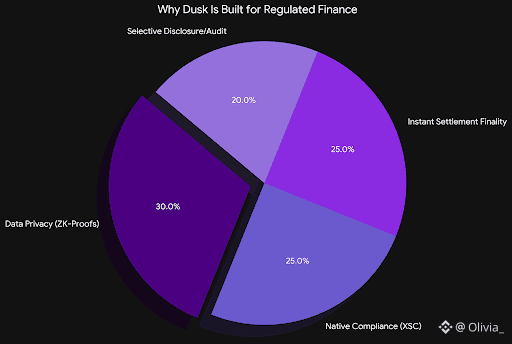
Dusk is built from the ground up for regulated finance. Instead of forcing financial activity into a public-by-default environment, Dusk enables transactions to be verified, settled, and audited without exposing confidential data. Privacy on Dusk isn’t optional or layered on later, it’s a core part of the protocol design.
What makes Dusk stand out is how closely it mirrors existing financial systems. Regulators can access information when required, while the public cannot see private financial activity. Dusk brings this exact model on-chain, making compliance and decentralization compatible rather than conflicting.
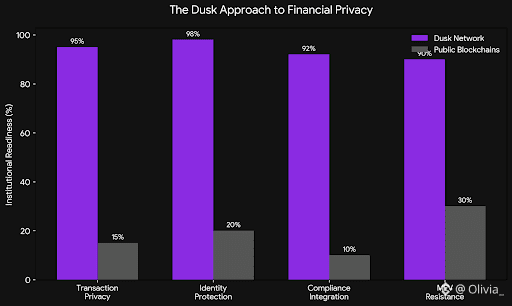
By supporting selective transparency, Dusk removes one of the biggest barriers keeping institutions on the sidelines. It’s not about hiding information or reducing trust. On Dusk, trust is preserved through verifiability, not public exposure.
As regulation tightens across the digital asset space, blockchains that can’t support confidentiality will face clear limits. Dusk is built with that reality in mind, positioning Dusk as infrastructure for the future of regulated finance.