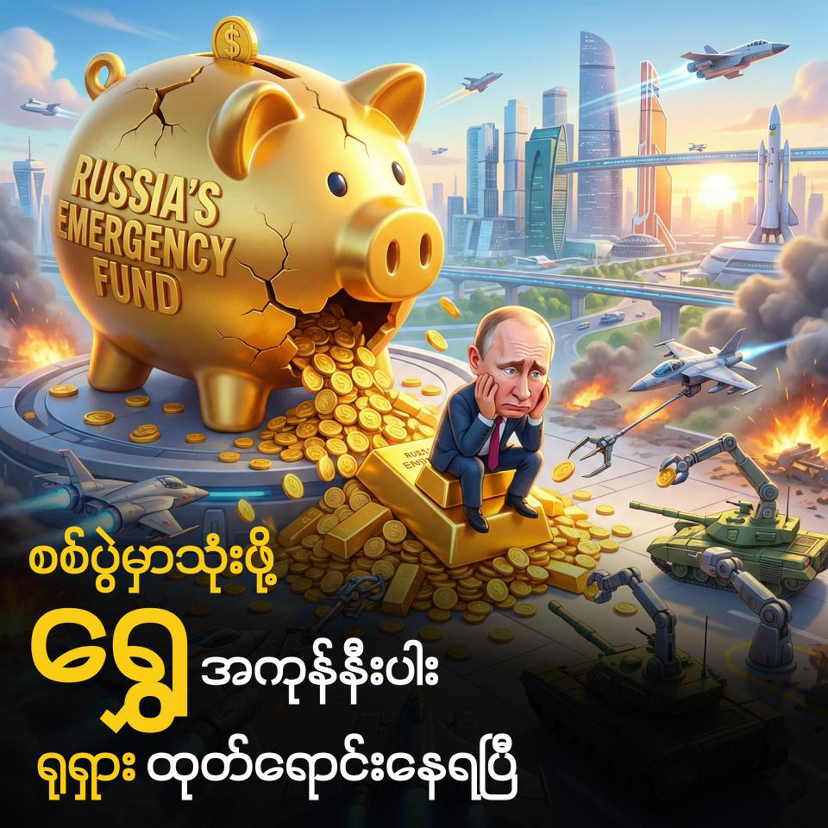
Gold is something to use in emergencies and to rely on in times of hardship, a "last resort" that is saved. However, if you have already sold over 70% of the gold reserves in your home to invest in a war, then the situation is no longer good, and everyone knows that. Right now, this is happening in Russia.
I will briefly explain how Russia, known as a powerful nation, is being hit hard by financial constraints. This is not only political but also how it can affect all of us in our daily living and commodity prices.
1. Why has the amount of gold in the emergency fund decreased?
Russia has a "National Wealth Fund (NWF)" which is a "state emergency reserve fund". The funds gained from oil sales are saved for the future. Before the war, this fund had easily accessible cash and assets worth over $113 billion.
As of January 2026, there will only be about $50 billion left in this fund. This amount represents more than half of their emergency fund. What’s even more alarming is that they have already sold off more than 71% of their gold reserves for military spending.
2. When military expenditures exceed the money gained from oil
For decades, Russia has been fed by oil and natural gas. However, the situation has now drastically changed. The money coming out from oil, which was previously treated like an "ATM," has decreased, and the "military expenditure" has widened significantly.
According to figures, Russia's oil and gas revenues fell by about 22% within 2025. In just one month of November, it dropped to as low as 34%. Why is that?
- Due to international sanctions, oil is being sold at reduced prices.
- Payment and transportation routes have become more complicated.
Previously, income and expenses were balanced, but now the budgeted money is about 5 times higher than expected. Simply put, someone with an income of 10,000 is spending like they have 50,000. Thus, they will have to sell their existing gold.
3. Mid-2026 - Russia's "red line"
If we continue at the current burn rate, economists predict that by mid-2026, all the cash in Russia's emergency fund will be depleted. This is a major "Dead Line" that market players and global leaders are watching.
At that time, there were only 4 options left for elections in Russia.
1. First, military expenses will be reduced. Given the current circumstances, that is the least likely scenario.
2. The second is printing more money. This could be described as the worst-case scenario. It could lead to inflation and uncontrollable price rises.
3. The third will increase taxes. Tax pressure on the public can lead to an economic recession.
4. The last one is borrowing from within the country. This can lead to rising interest rates and economic businesses collapsing.
No matter which path you choose, there will be pain.
4. What does this have to do with us?
Let’s discuss this a bit more. "What does Russia's financial crisis have to do with us?" is a question worth asking. In fact, Russia is a significant "player" in global commodity flows. They still hold valuable resources needed by the world, even as their money reserves decline.
They have
- 40% of the world's uranium purity. (Important for electricity generation)
- 24% of the world's wheat exports. (Directly related to the price of the bread and noodles you consume)
- 18% of the world's fertilizers. (Without this, agriculture will suffer)
- 40% of the world's palladium. (Essential for producing phones, cars)
Therefore, the economic downturn in Russia is more frightening than the "Financial Contagion" that leads to banking collapses; it is the "Supply Shock" where commodities become scarce.
So, Russia is now selling gold because prices are not favorable and continues to wage war. However, gold is a commodity, and an emergency fund can also vanish in a day. The mid-2026 period may not only be crucial for Russia but could also be a significant turning point for the global commodity market.
What we need to be cautious about is that the economic downturn in the world can impact everything from our rice pots to our oil pots in our kitchens. We must keep a close watch on the situation and also be prepared for price fluctuations.
What is important is that even powerful countries can fail to manage systematically, which can lead to the lesson that the "emergency fund" can easily vanish. I would also like you to share your thoughts in the comments below.