
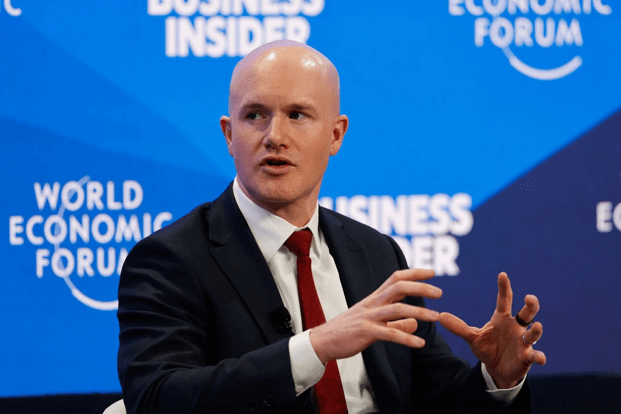

Brian Armstrong, the CEO of Coinbase, expects that initial public offerings will eventually fully transition to the blockchain.
The cost of traditional public offerings can reach up to 300 million dollars and take years to complete.
Listing data on the blockchain could reduce the number of intermediaries and speed up settlement processes.
Adapting to systems and regulations still represents the biggest challenge to the adoption process.
Coinbase CEO Brian Armstrong believes that public offerings in the future will look very different. He states that initial public offerings will gradually shift to being fully on the blockchain, using blockchain technology instead of the traditional systems currently in use.

According to Armstrong, current IPO processes are very slow, costly, and outdated. These issues have led many companies to delay their public offerings or even avoid them altogether.
Why do companies stay private longer?
In the past, companies would go public early after starting their activities. In the 1980s, companies would list their shares after waiting about five years. Today, many companies remain private for up to nearly twenty years.
Armstrong points out that regulation is one of the main reasons for this change. Laws like the Sarbanes-Oxley Act have increased reporting and compliance requirements. Although these laws were established to protect investors, they have made the process more costly and complex.
As a result, startups rely more on private funding, limiting the early investment opportunities for large institutions and venture capital firms.
The high cost of traditional IPOs $BTC
The public offering is also very costly. On average, an IPO can cost around $300 million. These costs include bank fees, legal work, auditing, and all applicable regulations at that time.
The process may also take a long time, as some companies spend years preparing before attempting to go public. This represents an obstacle for fast-growing companies, as it slows innovation and expansion. For this reason, Armstrong believes this system is no longer suitable for the digital economy.
How can blockchain IPOs help $ETH
Blockchain IPOs can provide an easier solution to this problem. Companies can issue shares in the form of tokenized assets on the blockchain, allowing trading and settlement directly on the network. This model could reduce the need for intermediaries, shortening settlement times from days to minutes, enabling investors from around the world to participate more easily.
Smart contracts can automate some complex compliance tasks, reducing paperwork while ensuring transparency and record integrity.
Challenges for blockchain IPOs still exist $SOL
Despite the potential, experts warn of some obstacles. Current laws were not designed for blockchain IPOs, and regulators will have to adapt to them. The issue of privacy and investor safety remains a concern. Nevertheless, Armstrong's statements show that an increasing number of people have begun to believe in the potential of this model.
#BinanceSquareFamily #BinanceSquare #Binance #news #NewsAboutCrypto