Vanar @Vanarchain is a Layer 1 blockchain specifically designed for entertainment, gaming, the metaverse, AI, and real-world applications, with the native token being $VANRY . Originally known as Virtua, it was officially renamed Vanar at the end of 2023 and underwent a 1:1 token swap, refocusing on entertainment + mainstream adoption + AI integration. It is currently promoted as the first AI-native Layer 1 blockchain, aiming to evolve Web3 applications from programmable to intelligent, learnable, and self-adaptive. In 2024, it announced a partnership with Nvidia, and the current price is 0.0077.
What is the true meaning of 'AI-ready'?
Being truly AI-ready is not just about adding AI tools to existing blockchains; it's about designing the entire chain from the beginning to be a native environment for AI, allowing AI agents, applications, and enterprises to operate intelligent tasks directly on-chain, without relying on external oracles, intermediary layers, off-chain computation, or centralized servers. Vanar Chain positions itself around this core principle, embedding intelligence from the ground up through a 5-layer architecture (Vanar Chain → Neutron → Kayon → Axon → Flows), enabling the chain itself to understand the data it holds and support AI-driven real economic activities, such as PayFi, RWA tokenization, gaming, and the metaverse.
⭐️ The core elements emphasized by Vanar as AI-ready
1. Native Semantic Memory and Persistent Context
Being truly AI-ready requires solving the goldfish memory problem of AI, allowing context to be permanently stored and reusable across platforms, rather than starting from scratch with each conversation. Vanar's Neutron layer is at the core of this: by compressing neural + algorithmic data, it transforms raw documents, chat histories, PDFs, etc., into lightweight, queryable knowledge capsules, directly stored on-chain. These Seeds become AI-readable semantic objects, containing meaning, relationships, and context, enabling persistent, portable memory that can be seamlessly reused across different models. The myNeutron tool allows users to generate these Seeds with one click, anchored on Vanar Chain, solving the fundamental bottleneck of traditional AI context loss.
2. Native On-Chain Reasoning and Explainability
An AI-ready chain cannot rely on external LLMs or oracles for reasoning, otherwise, there will be delays, trust, and black-box issues. Vanar's Kayon serves as an on-chain reasoning engine, directly embedding structured AI-native logic, allowing smart contracts and AI agents to instantly query compressed data, analyze context/patterns/relationships, generate insights, predict outcomes, and provide verifiable logical steps. Kayon is not just a wrapper for external models but allows the chain itself to 'understand' the content it stores, for example, automatically checking the compliance of tokenized assets, triggering decisions, or validating proofs. This achieves true on-chain reasoning, making the reasoning process transparent and auditable, rather than an off-chain black box.
3. Intelligent Automation and Action Execution
AI agents not only need to think but also safely convert thoughts into actions, such as automated trading, asset management, or compliance execution. Vanar's Axon layer focuses on intelligent automation, transforming reasoning results into verifiable on-chain actions, allowing agents to operate autonomously 24/7, not just during demo stages. By combining upper-layer memory and reasoning, Axon ensures actions are based on persistent context and reliable logic, eliminating the need for intermediaries, achieving true automation in scenarios like gaming, the metaverse, and PayFi.
4. Decentralized Settlement and Real Economic Rails (Settlement Rails for Agents)
AI agents are not suited for traditional wallet UX; they require globally compliant, verifiable payment and settlement systems. Vanar positions itself as PayFi + RWA infrastructure, allowing gas tokens, staking, and payment tokens to directly support AI-driven economic activities, such as automated payments for tokenized assets, compliance queries, or agent-triggered transactions. This creates a real demand cycle: when AI consumes on-chain functions, it spends $VANRY, supporting the entire intelligent economy rather than pure speculation. The Flows layer targets industry applications, applying these settlement rails to specific scenarios, enabling AI agents to operate in the real world.
5. Prioritizing Intelligence Readiness over TPS Speed
In the old era, L1 competition focused on TPS for fast experiences for human users, but in the AI era, the focus shifts to intelligence readiness: memory persistence, reasoning reliability, automation safety, and verifiability. Vanar has been built as AI-first from day one, avoiding fragmentation and trust issues. TPS is no longer the primary metric because AI workloads place more emphasis on context compounding, on-chain logic, and agent autonomy. This design allows the chain to become an infrastructure that can think, learn, and adapt, with Vanar benefiting from the practical use of these capabilities, creating long-term value.#Vanar #vanar
💰 You can now earn more VANRY by staking on the official website:
Stake $VANRY on the official website to earn rewards. Currently, a total of 36.92M VANRY has been staked, with 7.98M rewards distributed.
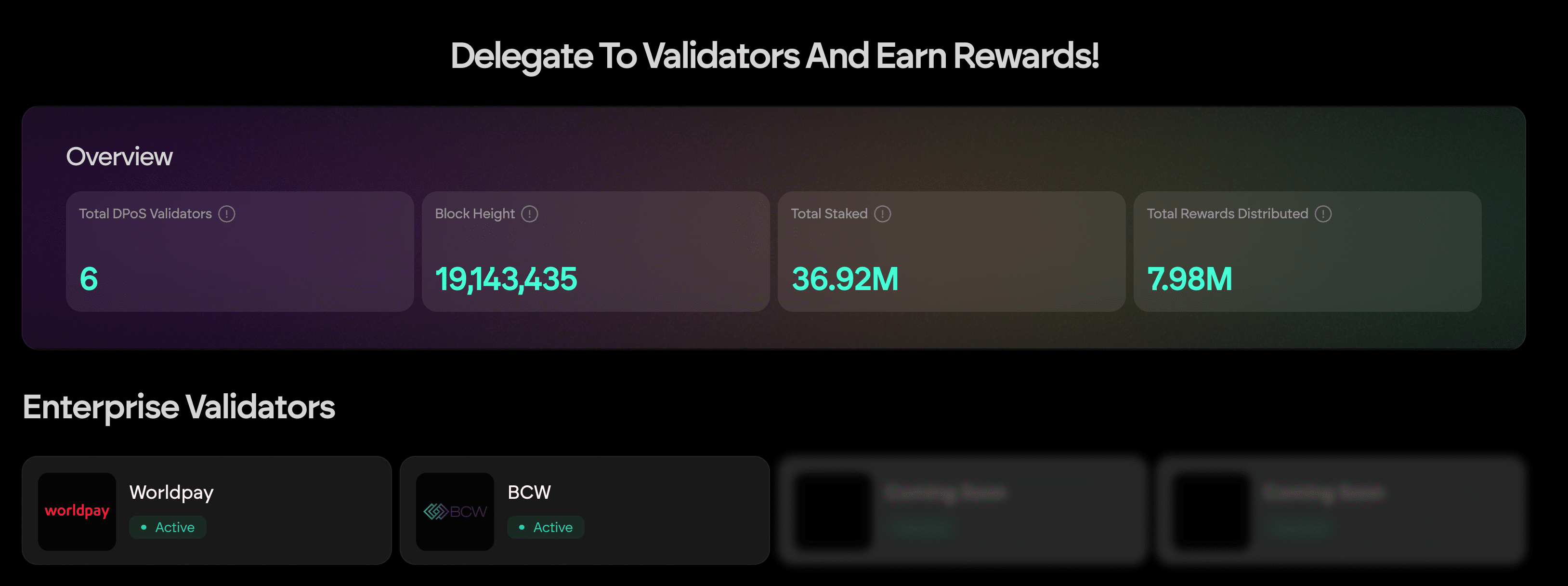
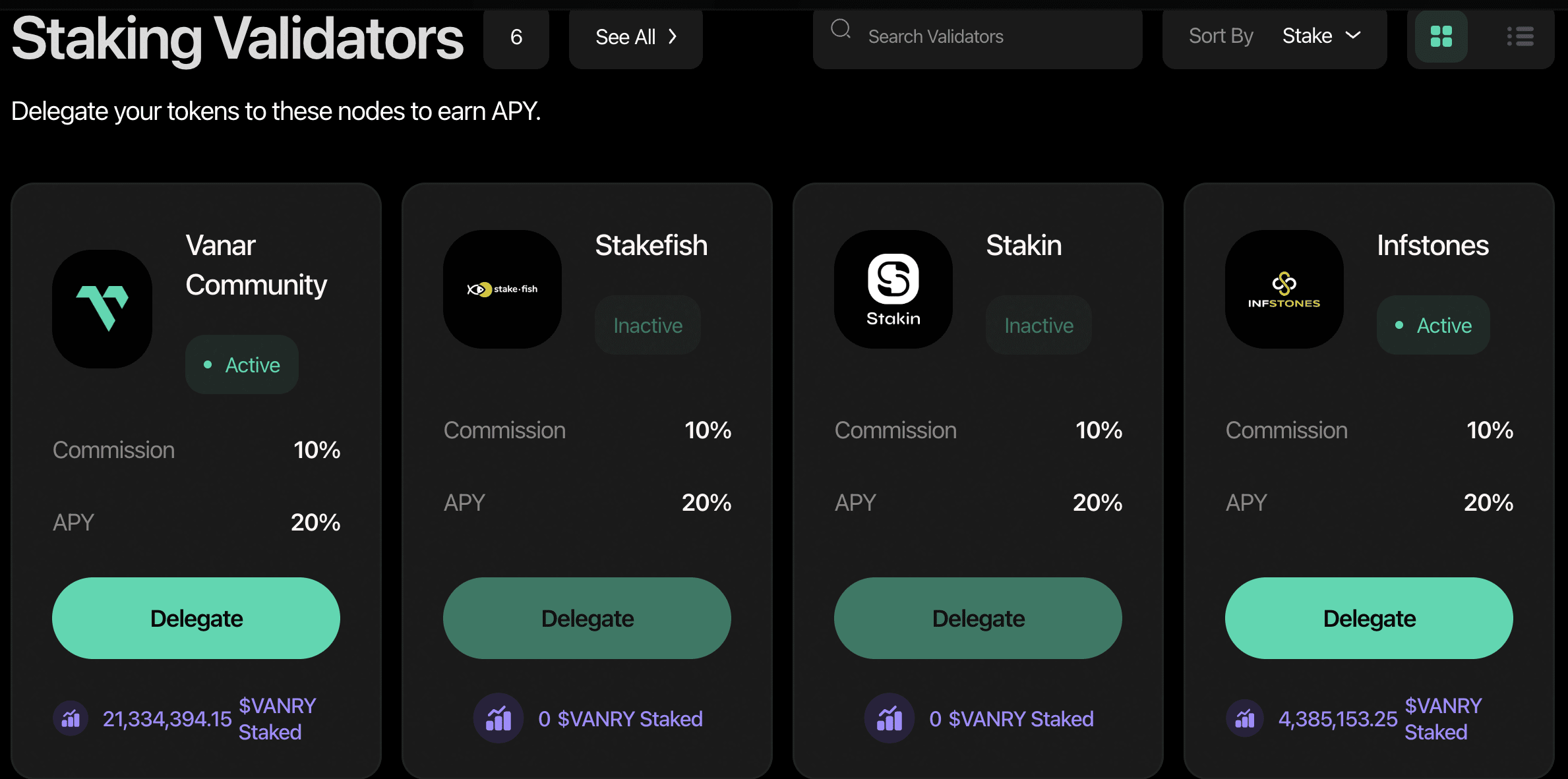
You can delegate $$VANRY to active validators to earn rewards, calculated and distributed every 24 hours. You can choose Vanar Community, which currently has a staking amount of 21.33M.