
1. Project background
#ZAMA is the native token of the Zama Protocol, a privacy computing project focused on Fully Homomorphic Encryption (FHE). Its core function is to provide a modular privacy layer for public chains like Ethereum, allowing smart contracts to encrypt transaction amounts, balances, and other data throughout the execution process, addressing the issue of the blockchain's 'transparency paradox.'
2. Current market situation and technical analysis
• Current price: $0.0457 (24-hour drop 8.78%)
• 24h trading volume: 307 million ZAMA, trading amount 14.671 million USDT
• Short-term trend: The 1-hour chart shows that the price has continued to decline from the high of $0.0641 on January 24, currently breaking below the MA(7), MA(25), and MA(99) moving averages, and is in a clear downtrend.
• Moving average status: MA(7) ($0.0464), MA(25) ($0.0482), MA(99) ($0.0538) are all showing downward trends, and the price is below all moving averages, indicating that both short-term and medium-term support levels have been broken.
Three, the core reason for the price decline
1. Profit-taking after the end of public sale
ZAMA's Dutch auction public sale ended on January 24, and the market's optimistic expectations for the project were already overdrawn during the subscription phase. With the public sale over, some early investors chose to sell in the secondary market to take profits, leading to a price correction.
2. Pressure from unlocking expectations
Tokens will be distributed and fully unlocked on February 2, and the market has anticipated the increased selling pressure post-unlocking, leading to early exits by capital.
3. Track popularity fluctuations
Although FHE (Fully Homomorphic Encryption) is a hot track in privacy computing, the current market's actual demand for the implementation of such technologies is still in the verification phase, lacking sustained hot catalysts, making it difficult to support high price levels.
4. Technical breakouts trigger stop-loss orders
After the price broke key moving averages, it triggered stop-loss orders from some short-term traders, further exacerbating the decline.
Four, risk and opportunity reminders
Risk
• Unlocking selling pressure risk: After all tokens are unlocked on February 2, if early investors sell off en masse, prices may face further downward pressure.
• Liquidity risk: Although current trading volume is high, short-term volatility is severe, and large buy/sell orders can easily trigger significant price fluctuations.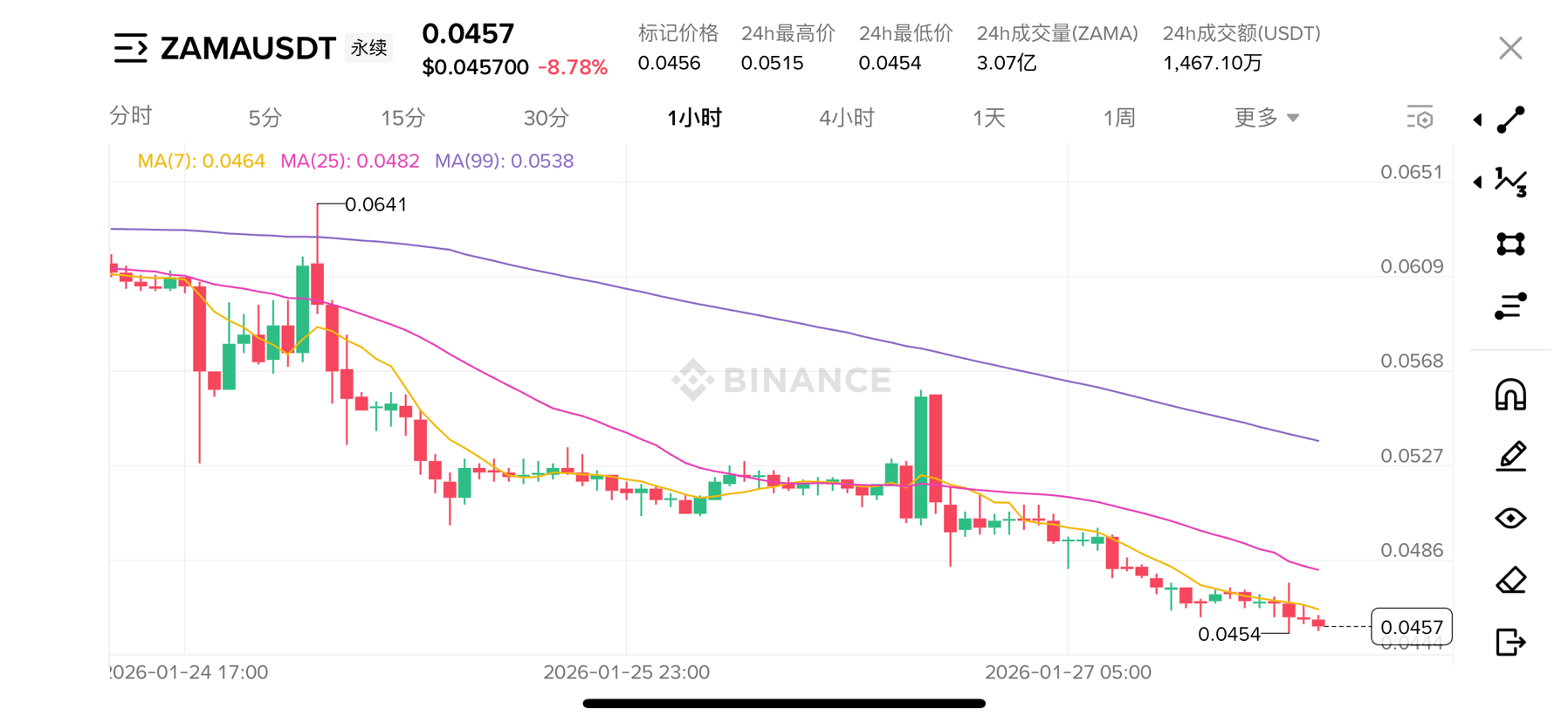
• Track uncertainty: The practical scenarios and commercial value of FHE technology are still in the early stages, and slower project progress than expected may impact the long-term performance of the token.
Opportunity
• Scarcity of technical tracks: As a leading project in the FHE track, Zama may see valuation recovery if subsequent technical breakthroughs or ecological collaborations progress.
• Oversold rebound opportunity: The recent drop has been significant (down 17.09% in the last 7 days), and if market sentiment warms up, a technical rebound may be possible.