

 Vanar Chain is not just an AI‑native Layer 1 blockchain with advanced data tools like Neutron and Kayon. It also incorporates a unique hybrid consensus model, community governance mechanisms, and token economics designed for decentralization, security, and sustainability. These elements shape how the network makes decisions, secures the chain, and involves the community in long‑term development.
Consensus Mechanism: Proof of Authority + Proof of Reputation
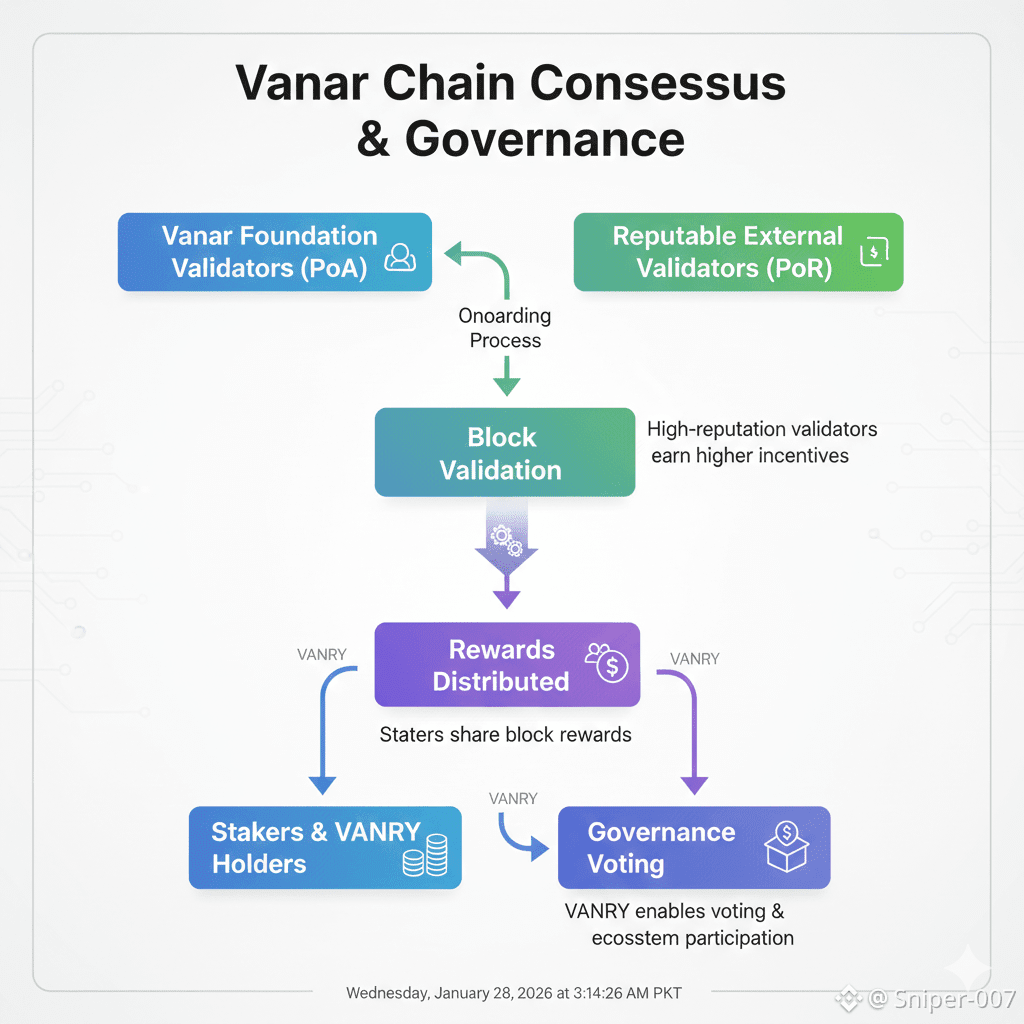
Vanar Chain uses a hybrid consensus mechanism that combines Proof of Authority (PoA) with Proof of Reputation (PoR) to strike a balance between performance, trust, and decentralization. Under this design, the Vanar Foundation initially manages validator nodes, ensuring the network operates securely in its early stages. Over time, reputable external entities are onboarded as validators based on their real‑world reputation in both Web2 and Web3 spheres. This reputation is evaluated by the foundation to help maintain a trusted and resilient validator set.
PoR allows organizations with a proven track record to participate in validation, which brings diversity and accountability into the network without sacrificing speed or efficiency. Validators with high reputation scores receive greater incentives, creating a feedback loop that encourages responsible behavior and effective performance.
VANRY and Staking Governance
The VANRY token is central to how governance and security operate on Vanar Chain. Holders must stake their VANRY tokens into staking contracts to gain voting rights and contribute to governance decisions. This mechanism aligns token holders with the long‑term health of the network by rewarding active participation in the ecosystem’s consensus and decision‑making processes.
Staking VANRY not only supports network security but also allows participants to share in block rewards and incentives. Validators distribute portions of these rewards to stakers who back them, fostering a cooperative system where token holders directly benefit from network growth and stability.
Governance Beyond Staking
VANRY’s role extends beyond staking and block rewards. As the ecosystem grows, token holders are expected to gain governance rights that let the community vote on proposals, protocol upgrades, and strategic development priorities. This democratic participation framework helps ensure that Vanar Chain evolves according to its community’s collective vision.
The flexibility of VANRY means it acts as a utility token, governance instrument, and participation ticket for both developers and users. It fuels transactions, powers smart contracts, and gives holders a voice in shaping Vanar’s future.
Decentralization and Long‑Term Sustainability
Vanar’s consensus design seeks to balance decentralization with reliability. While PoA offers initial operational efficiency, PoR opens validator roles to entities recognized for their integrity and contributions. This approach differs from purely permissionless systems — it deliberately invites trusted participants early on, reducing risks while the chain scales.
In the long run, more community validators can join through PoR, and VANRY staking can broaden governance participation, distributing influence and supporting network resilience. The combination of stake‑based governance, reputation‑based validator selection, and token incentives points toward a path where security and decentralization reinforce each other over time.
Economic Incentives and Community Roles
VANRY’s utility goes beyond simple transactional use. It is integral to Vanar’s ecosystem by:
• Paying for transaction fees and smart contract execution.
• Incentivizing validators and delegators through staking rewards.
• Enabling governance participation and voting power.
• Supporting community programs and future ecosystem upgrades.
This multi‑layered role ensures VANRY remains central to both economic activity and decision‑making within the Vanar ecosystem.
Impact on Ecosystem Growth
Strong governance and a balanced consensus mechanism are critical for sustainable blockchain growth. By giving token holders tangible motivations — from rewards to voting influence — Vanar Chain encourages community engagement and long‑term investment in the network’s success. This participation helps cultivate a more resilient, user‑driven ecosystem that can adapt and innovate over time.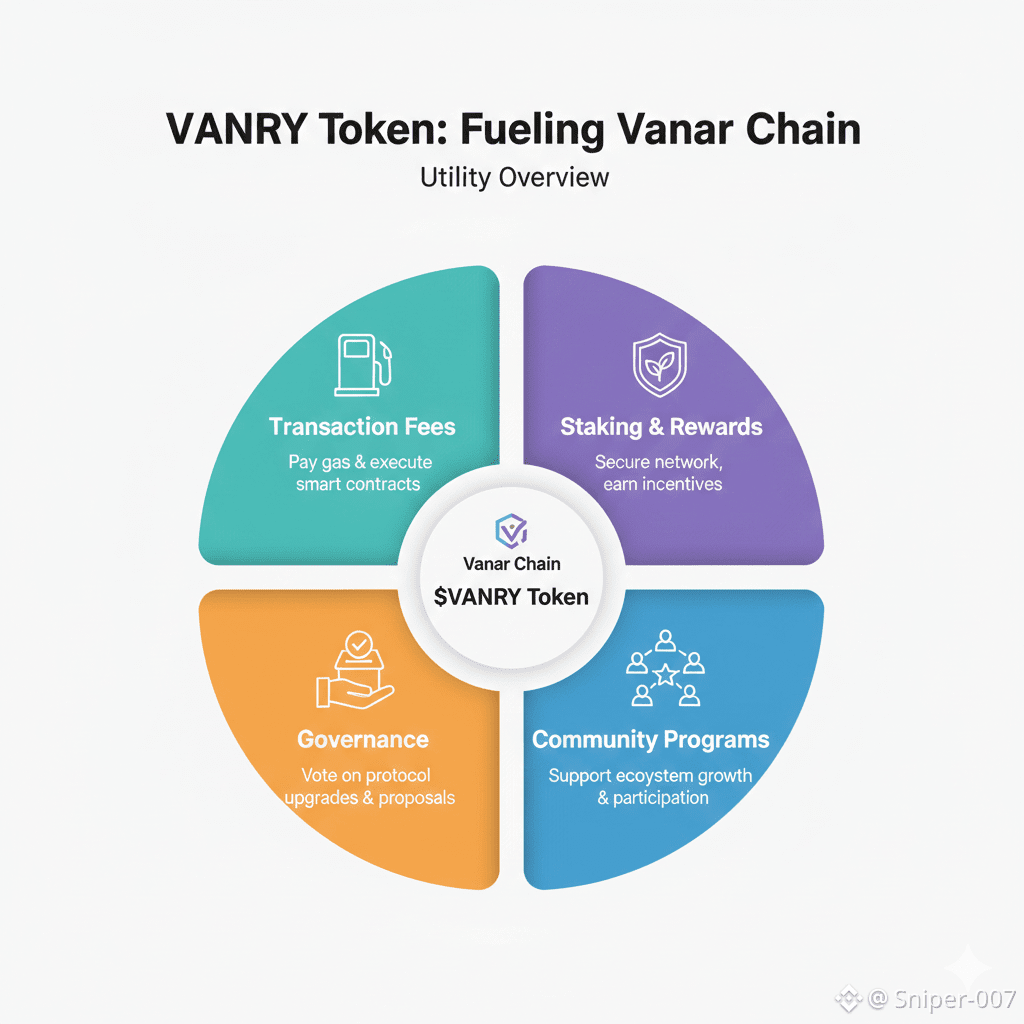
Conclusion
Vanar Chain’s consensus and governance framework, powered by Vanar’s hybrid model and the VANRY token, creates a structure where security, community participation, and long‑term network health are deeply intertwined. By combining Proof of Authority with Proof of Reputation, Vanar sets the stage for both trusted early development and gradual decentralization. VANRY serves as the linchpin that enables transaction execution, network security through staking, and community‑led governance decisions — forming the foundation of Vanar’s evolving Web3 infrastructure.