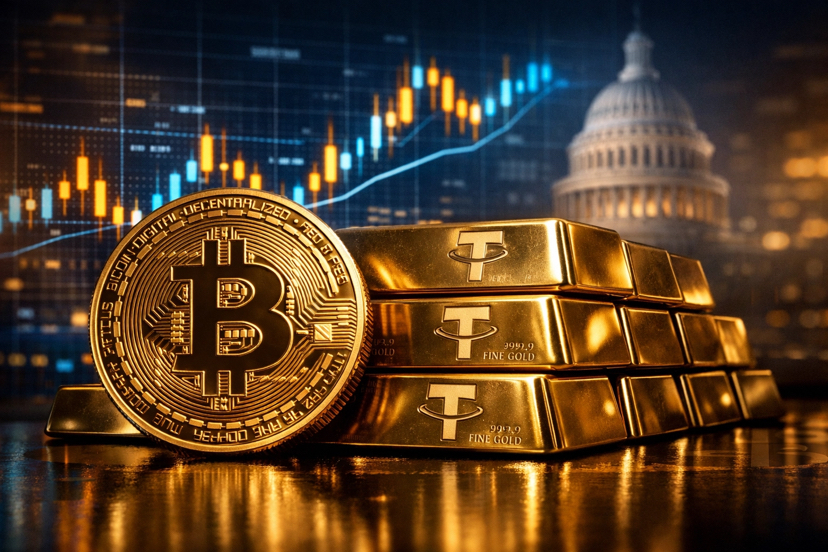
A detail that has recently been easily overlooked is: gold and silver continue to hit new highs, but Bitcoin remains unusually calm.
First, let's look at the silver price breaking through $100 per ounce, which is no coincidence. It has upgraded from a cheap industrial commodity to a 'critical mineral' in the eyes of countries like China and the U.S., with geopolitical factors and export restrictions reshaping its scarcity. This is no longer simple financial speculation, but rather the pricing logic of hard assets under the reconstruction of the global supply chain.
Meanwhile, stablecoin giant Tether holds 140 tons of gold, becoming one of the largest gold holders in the world. This is not only about diversifying reserves but also an epic strategy to hedge against the hegemony of the dollar and reshape the narrative of digital gold. Tether is deeply binding cryptocurrency with the oldest hard currency, challenging the traditional financial system.
However, when gold and U.S. stocks soar across the board, Bitcoin (BTC) remains stagnant around $89,000. This state of 'decoupling' is worth pondering:
It no longer simply follows gold, nor is it fully anchored to the Nasdaq.
Silence may not be lagging behind, but rather is a preemptive digestion of macro risks that have yet to arrive, such as the true contraction of global liquidity or policy uncertainty.
Overall, the market is shifting from short-term fluctuations to structural changes. The frenzy in precious metals and Tether's hard asset strategy both hint at deep-seated anxieties within the global financial system. The next step for Bitcoin will be crucial in determining whether it can truly become an independent asset.