
When I think about $VANRY I don’t see it as a token people hold just to flip later. I see it as something that gets used quietly, every day, inside the Vanar ecosystem. That difference matters. VANRY isn’t designed to sit still. It’s designed to move, because real activity on Vanar depends on it.
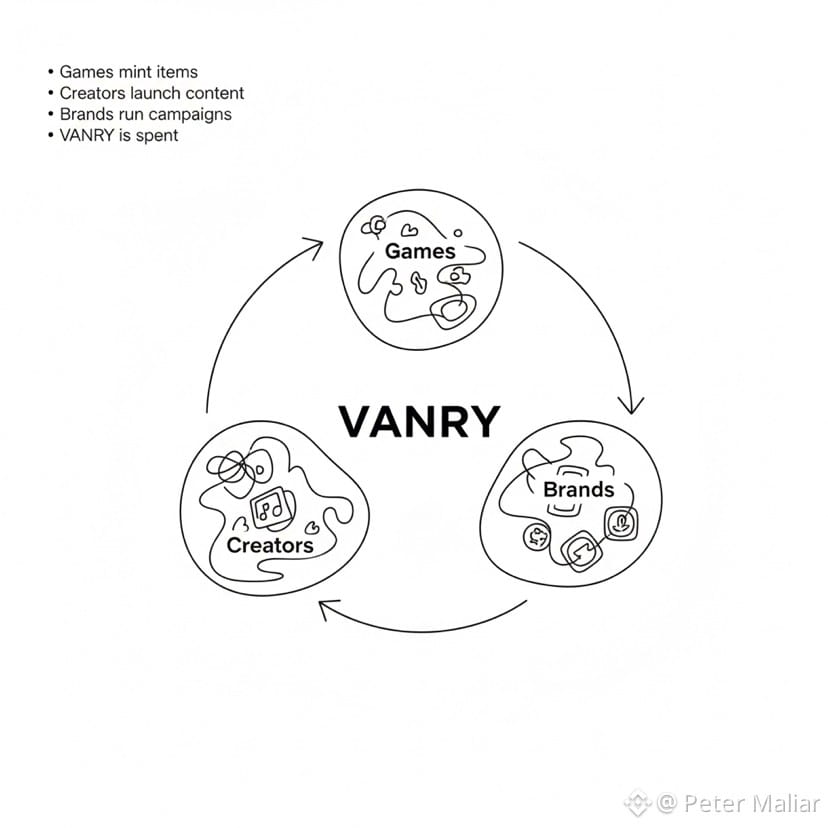
On Vanar, simple actions create real demand. When players mint in-game items, when creators launch NFTs, or when brands roll out short campaigns, VANRY is spent. These aren’t optional actions or speculative trades. They’re basic costs of using the network. Games have seasons, brands run regular promotions, and creators keep shipping content. All of that leads to repeated token usage, not one-time hype.
Another important part is AI. Vanar isn’t just adding AI as a feature, it’s building around it. AI agents on Vanar don’t run for free. They need VANRY to process tasks, store memory, and make decisions. As these agents manage game economies, user interactions, or automated brand actions, they keep consuming tokens in the background. The busier the system gets, the more VANRY naturally flows through it.
What really stands out to me is Vanar’s focus on memory. Instead of relying on centralized databases, Vanar lets developers store meaningful context on-chain. Games can remember players. Brands can recognize returning users. AI can build long-term understanding instead of starting from zero every time. This makes apps feel more human and connected, and it lowers the work developers usually face when building complex systems.
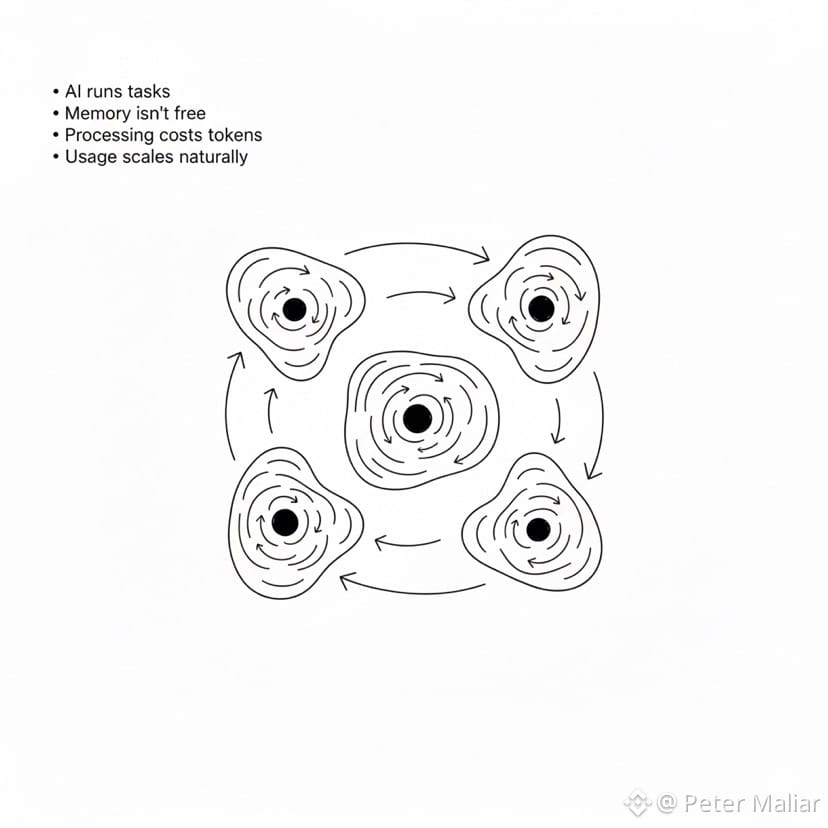
All of this creates a loop. More users and builders means more activity. More activity means more VANRY usage. That usage supports better tools and experiences, which brings in more users again. It’s steady, not flashy.
For me, that’s the appeal. VANRY feels less like a bet on excitement and more like a bet on usefulness. And in the long run, usefulness is what usually lasts.