When Money Finally Starts to Move Like Information
It is one of those networks that quietly changes how you think about crypto the moment you understand what it is actually optimizing for. Not narratives. Not speculation. But money itself. Every time I follow Plasma’s progress, it genuinely feels amazing, because it addresses a problem the market has avoided for years and does it with calm precision.
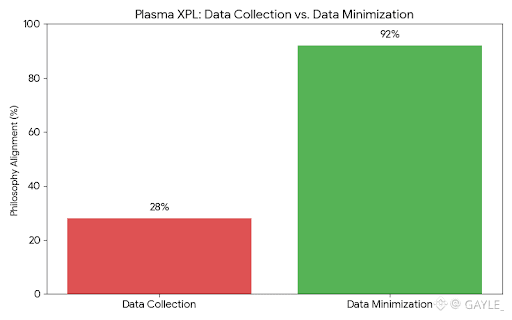
Plasma is a Layer 1 built specifically for stablecoin settlement, and that framing matters more than most people realize. Crypto has spent over a decade trying to behave like an asset market first, and a financial network second. Plasma flips that logic. It treats stablecoins not as a side feature, but as the core economic primitive. That single design choice reshapes everything downstream.
The technical foundation supports this focus without trying to oversell itself. Full EVM compatibility through Reth means developers do not have to relearn their craft. Sub second finality via PlasmaBFT makes transactions feel immediate in human terms, not blockchain terms. When payments feel instant, psychology shifts. Users stop thinking about blocks and confirmations and start thinking about flow.
Gasless USDT transfers and stablecoin first gas are not gimmicks. They are behavioral upgrades. Removing friction at the moment of payment changes how often people transact and how much mental energy they spend doing it. When users do not need to hold volatile assets just to move stable value, participation widens naturally.
What really stands out is the Bitcoin anchored security model. By anchoring to Bitcoin, Plasma is making a clear statement about neutrality and censorship resistance. This is not about chasing maximal throughput at the cost of trust. It is about anchoring value transfer to the most battle tested security layer in crypto. That choice signals long term thinking to institutions and users alike.
From a market narrative perspective, Plasma reframes what Layer 1 competition looks like. It is not trying to replace everything. It is specializing. In mature markets, specialization wins. By focusing on stablecoin settlement, Plasma positions itself as financial infrastructure rather than a general purpose playground.
The psychology of trading changes around systems like this. Traders respond to reliability. Institutions respond to predictability. Retail users respond to simplicity. Plasma touches all three. When money moves cleanly and consistently, risk perception drops. Lower perceived risk encourages higher volume and repeat usage, which builds organic liquidity over time.
Plasma’s target audience makes this even clearer. Retail users in high adoption regions need cheap, fast, reliable settlement. Institutions need compliance friendly, neutral rails for payments and finance. Plasma does not try to blur these needs. It designs for both with intent, which is rare in crypto.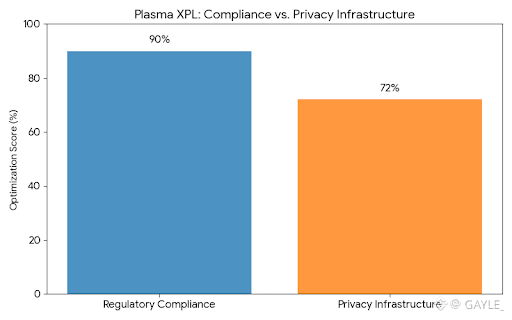
The $XPL token fits into this structure as infrastructure, not spectacle. Its role supports the network rather than distracting from it. That restraint matters. Markets eventually punish systems that confuse purpose with promotion. Plasma avoids that trap by keeping utility aligned with usage.
What impresses me most is how Plasma treats the idea of money with respect. There is no drama in the design. No unnecessary complexity. Just a clear understanding that stablecoins are already one of crypto’s most successful products, and they deserve first class infrastructure.
In a market still obsessed with noise, Plasma builds narrative intelligence through execution. It changes how people feel about moving value on chain. And honestly, every time I study its direction, it feels amazing to see a network finally treating payments as the main event, not an afterthought.