

Walrus isn't your average decentralized storage play—it's built from the ground up to fix what sucks about most of the others. 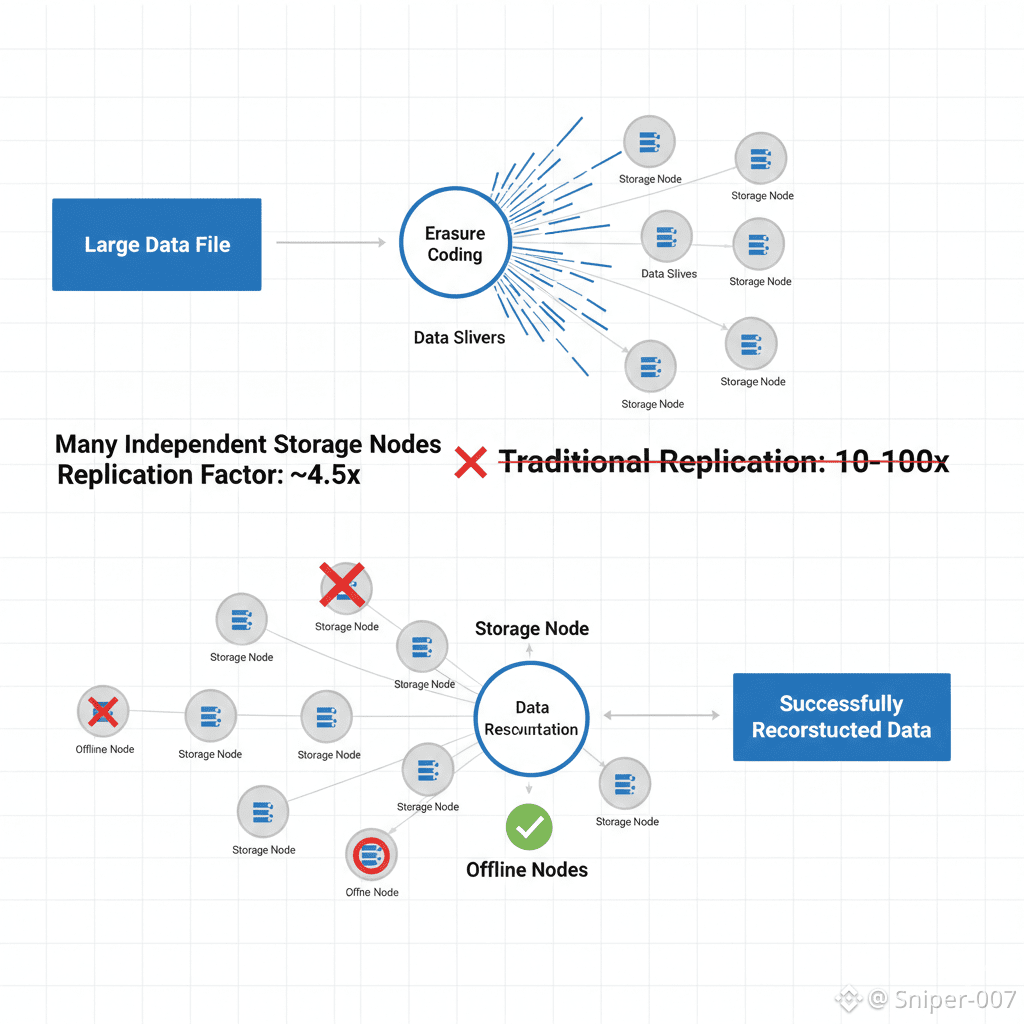
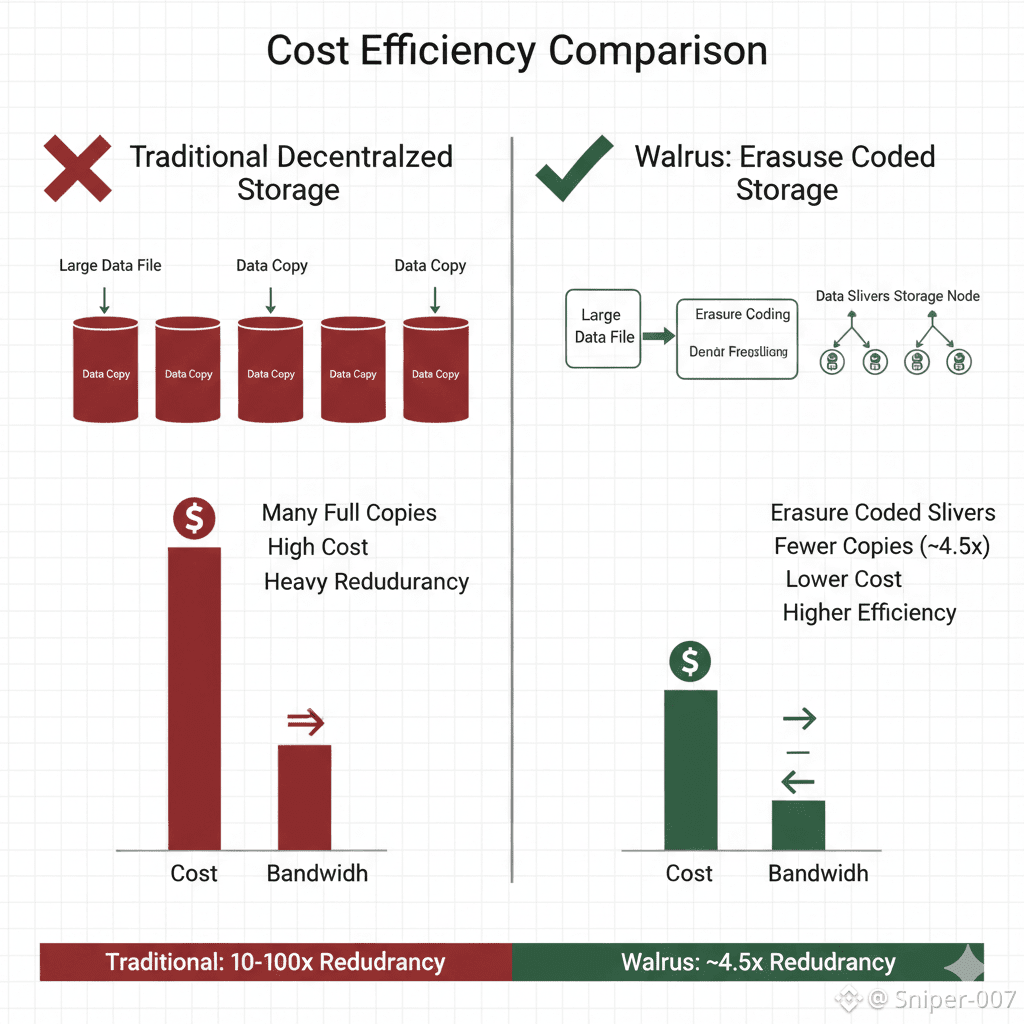
Right now, tons of systems chase durability by just making a million full copies of everything. Sure, it works... kinda.
But it wastes insane amounts of resources, jacks up costs, and scales like crap.
Walrus says nah to that brute-force approach. Instead of hoarding duplicates, it focuses on smart, efficient recovery. The core idea is simple: you don't need a ton of complete copies to keep data alive.
 Take big blobs (videos, datasets, whatever), chop them into smaller slivers using their Red Stuff 2D erasure coding, then scatter those pieces across hundreds or thousands of independent storage nodes.
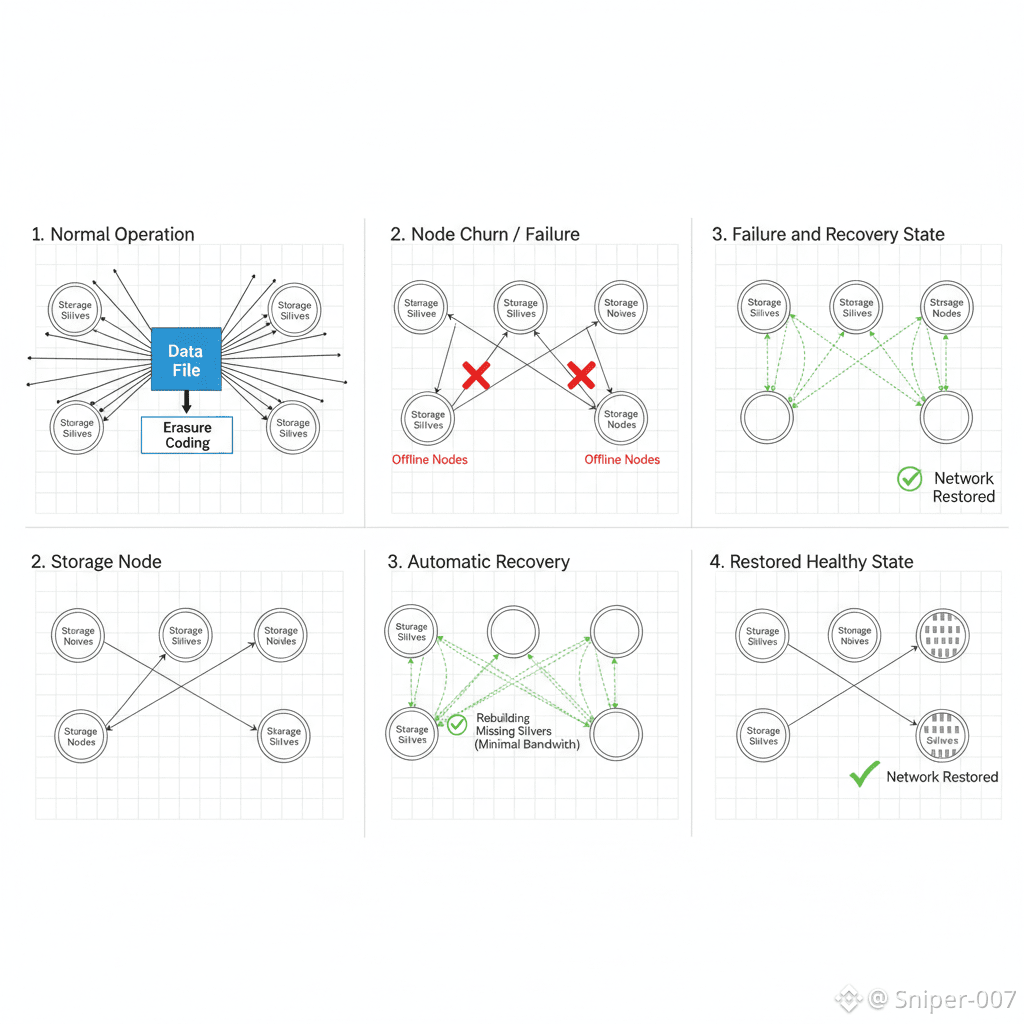
Even if a huge chunk of nodes flake out—go offline, get disconnected, churn away because that's just how open networks are—Walrus can still rebuild the original blob reliably.
 You get rock-solid availability without the ridiculous replication overhead. We're talking ~4.5x replication factor instead of 10–100x like some others. Massive win on cost and efficiency.
What I really dig is how Walrus treats churn as normal, not a bug. In permissionless systems, nodes come and go all the time—it's expected chaos. Walrus doesn't fight it; it embraces it with built-in fault tolerance.
 Recovery happens efficiently: nodes can reconstruct missing pieces using only the bandwidth of what's actually lost (not the whole file), no global coordination needed, no trusting random parties. Self-healing on steroids.
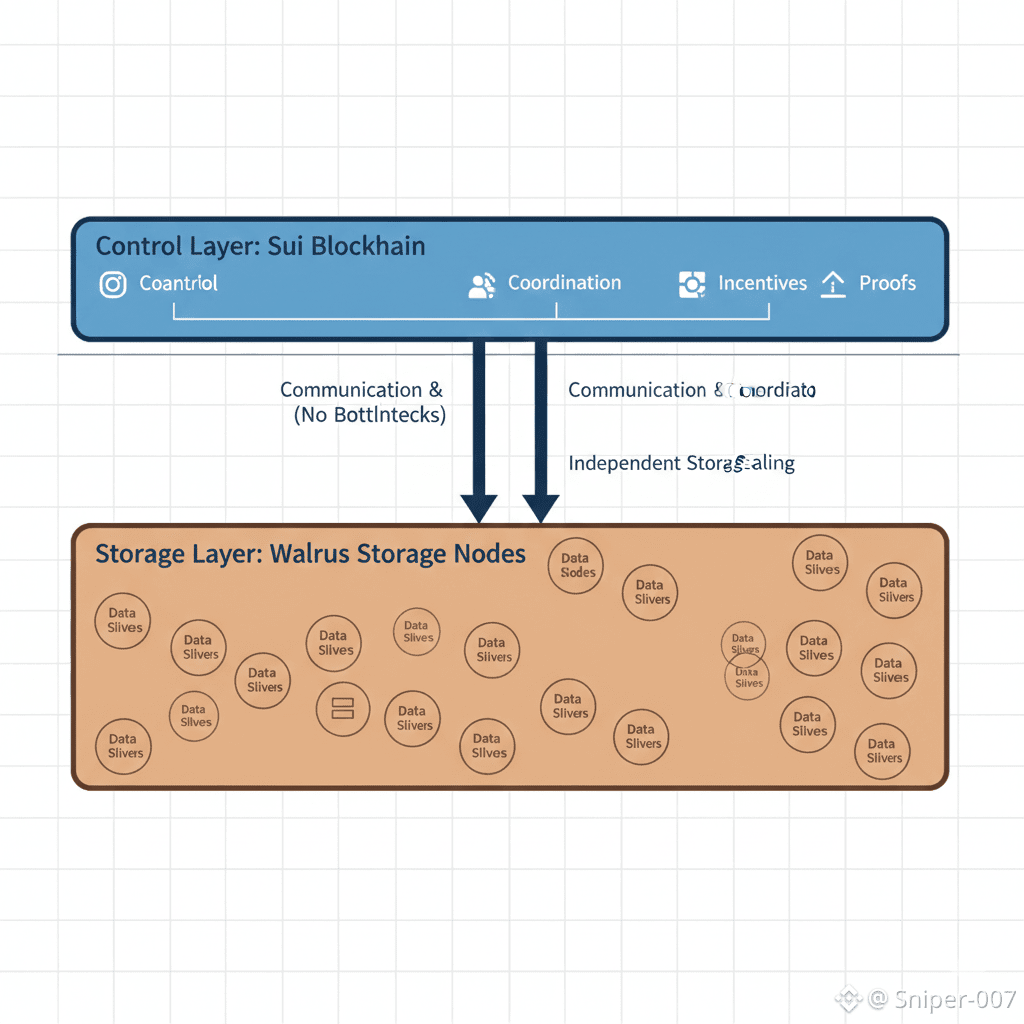
Big architectural flex too: they split the control layer from the storage layer. Control (coordination, incentives, proofs) lives on an external blockchain (Sui in this case), while the actual heavy storage happens separately on the Walrus nodes. This means Walrus can scale independently, stay flexible as blockchains evolve, and not get bottlenecked by whatever chain it's talking to.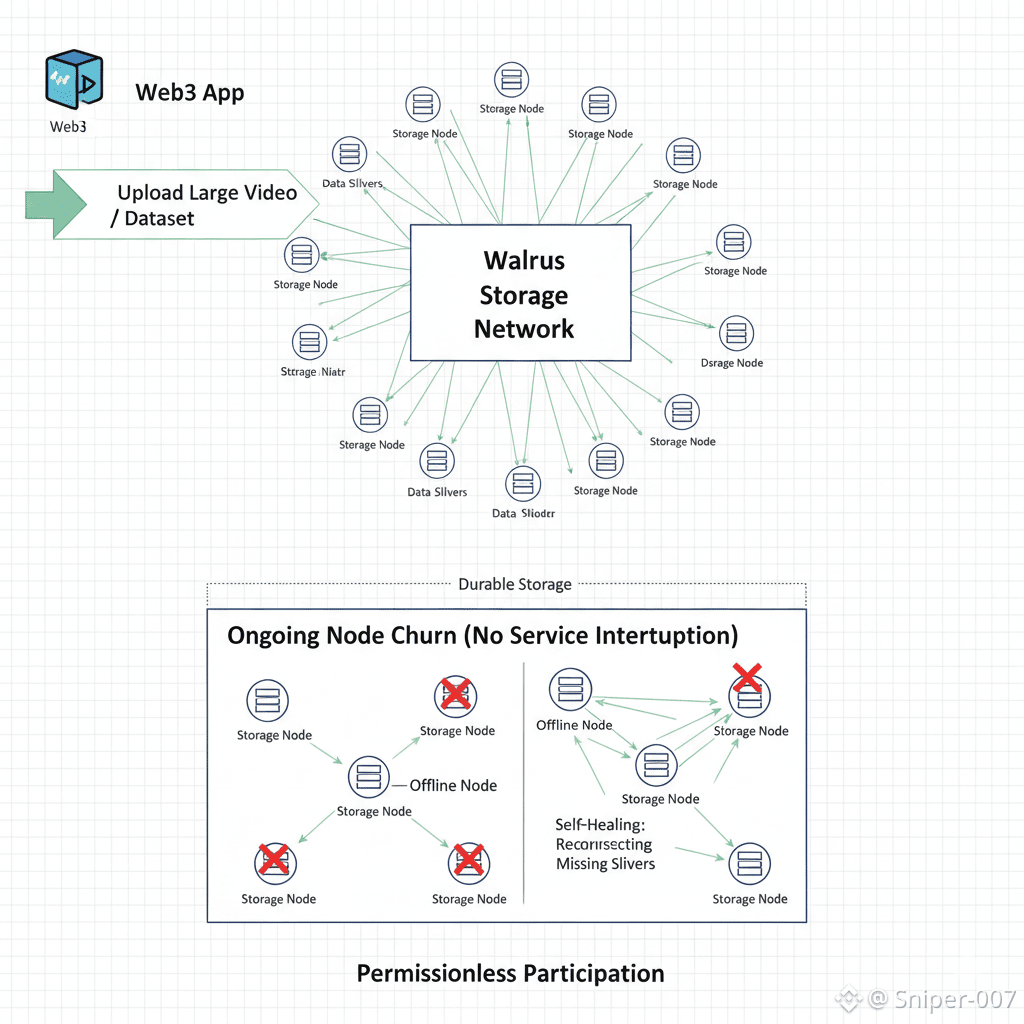
For devs building dApps that need durable, long-term storage—think modular chains, data availability layers, Web3 apps that actually have to hold big files without dying—Walrus is tailor-made. Low replication keeps costs sane, efficient recovery keeps data alive, and the permissionless setup means anyone can join without gatekeepers.
It's not hype; it's practical engineering for the messy reality of decentralized networks. Walrus makes storage feel less like a luxury and more like something that just works, even when half the nodes decide to take a nap.