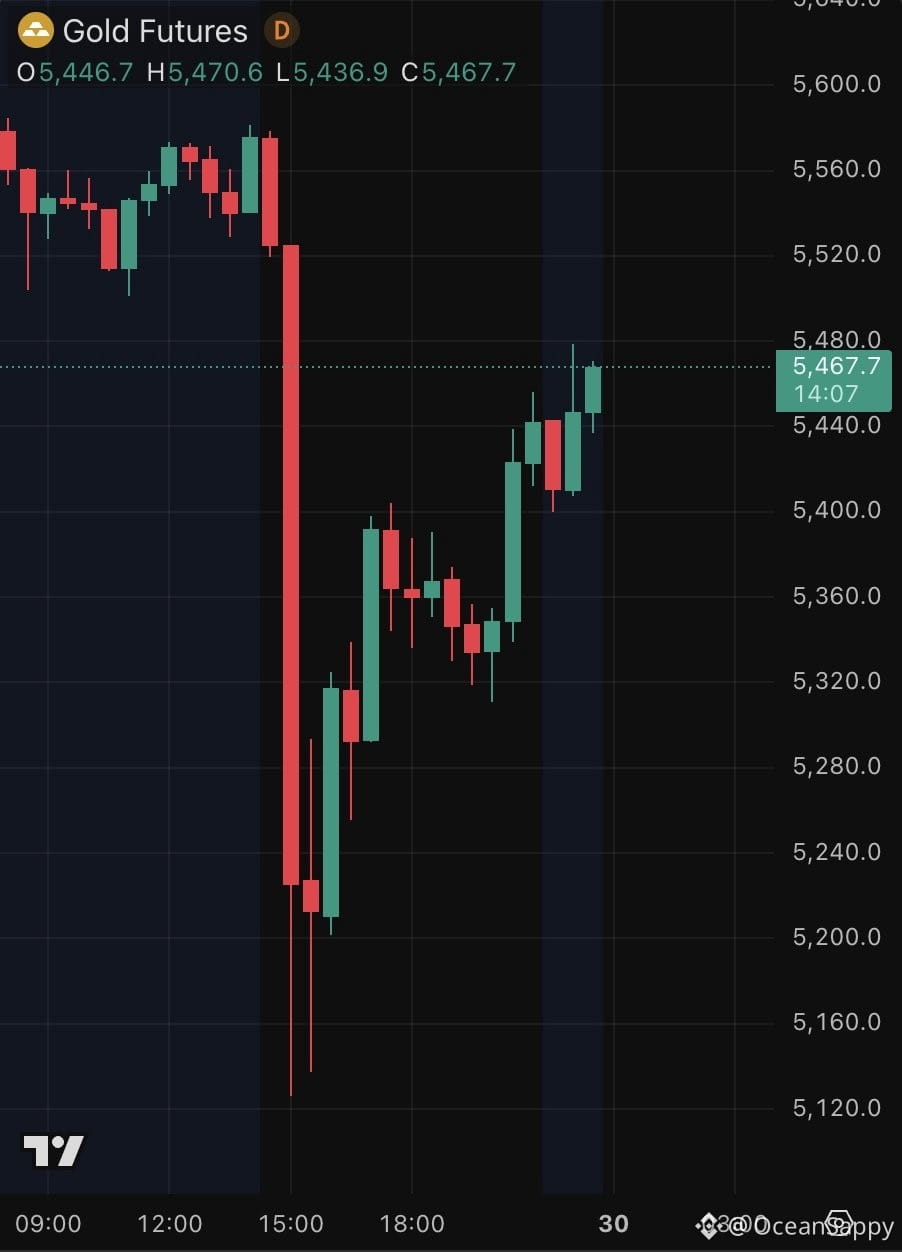
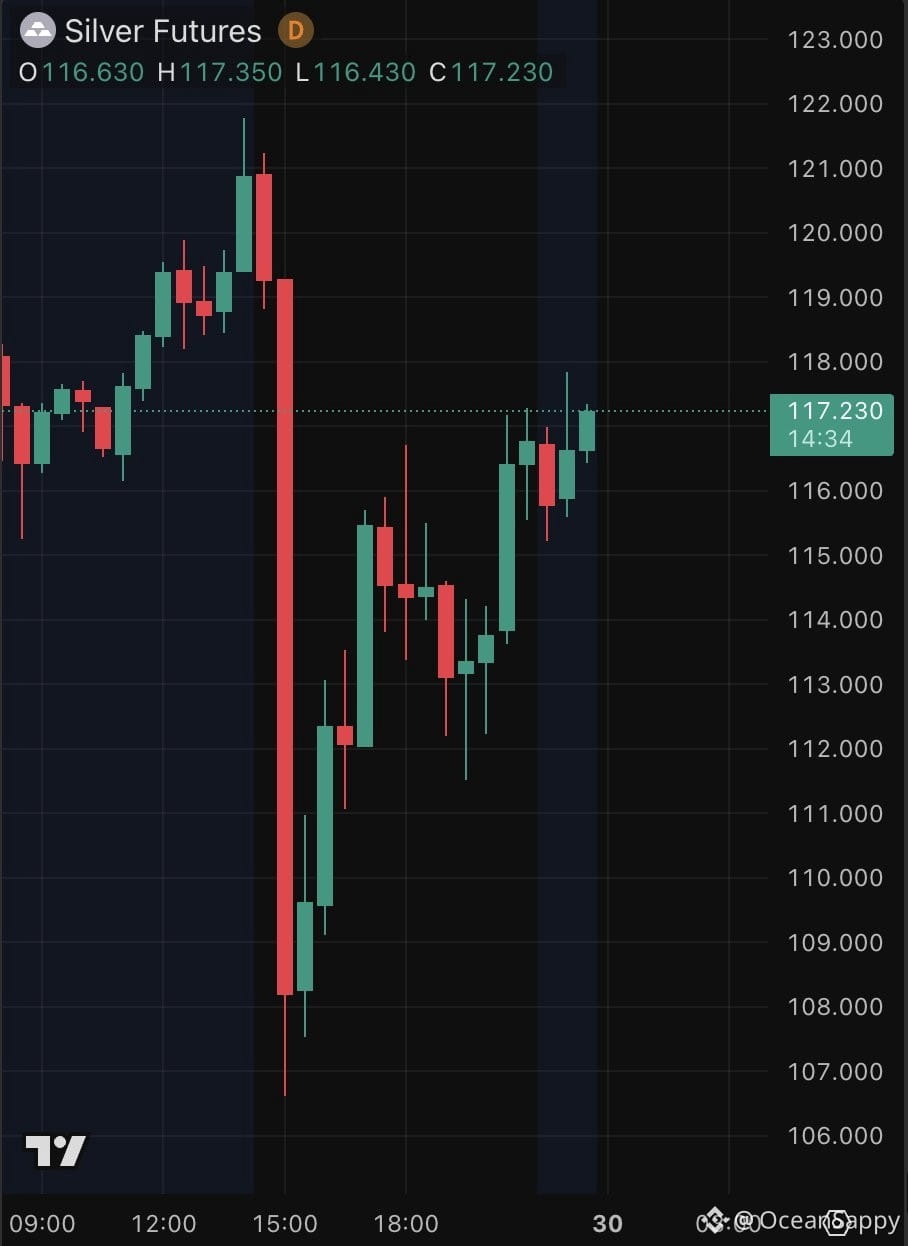
On January 29, 2026, the precious metals markets delivered one of the most dramatic intraday events in modern financial history. Gold futures rocketed to a fresh all-time high near $5,600 per ounce before suffering a violent plunge of over 8%, bottoming around $5,100–$5,200 in under an hour (with some reports citing drops to as low as $5,104). Silver followed suit, crashing roughly 12% from peaks above $117–$121 per ounce down to levels near $106. The rapid sell-off erased trillions in implied market capitalization estimates ranged from $2.7 trillion to over $3.4 trillion for gold alone during the sharpest phase, with silver contributing hundreds of billions more in losses. By the end of the trading session, a powerful rebound added back significant value (around $2.3–$2.5 trillion combined across the metals), leaving both assets closing higher on the day but still reflecting extreme volatility. This episode has been widely described as the largest intraday liquidity shock ever recorded in precious metals, dwarfing historical precedents like the 1980 Hunt brothers silver squeeze or even major corrections during the 2008 financial crisis. Gold's intraday market cap swing alone reached staggering figures, with one analysis noting -$3.2 trillion wiped out in under an hour before a swift recovery.
What Triggered the Chaos? Multiple overlapping factors appear to have fueled the flash crash:
Profit-taking after parabolic gains — Gold had surged nearly 90–100% year-over-year and over 20–26% in January alone, while silver posted even more explosive gains (up 50–60%+ YTD and far higher in some industrial contexts). Overcrowded long positions left the market vulnerable to any catalyst.
Broader risk-off flows — Coordinated liquidations hit across assets, including tech stocks, crypto, and leveraged positions. Reports pointed to margin calls, algorithmic stop hunts, and forced selling as funds rotated into cash or USD amid sudden hawkish policy speculation (including rumors around a potential Fed Chair nomination).
Liquidity dynamics in futures markets — Heavy selling pressure in COMEX futures (particularly during U.S. hours) created temporary dislocations. Some observers noted unusual spreads between U.S. paper prices and physical/global benchmarks (e.g., London, Hong Kong, Mumbai), fueling theories of aggressive shorting or manipulation to support the dollar index (DXY) temporarily.
Macro backdrop — Ongoing dollar weakness, geopolitical tensions, tariff threats, and central bank uncertainty had propelled the multi-month rally. A brief hawkish pivot or risk aversion wave reversed flows violently.
Unlike a true structural collapse, the move was short-lived. Gold stabilized and climbed back toward $5,300–$5,500 levels by session close and into January 30, while silver recovered toward $117. Many analysts view it as a healthy (if brutal) correction in an otherwise bullish trend, with eastern physical demand (India, China) remaining robust and viewing dips as buying opportunities.
Looking ahead, this flash crash underscores the heightened sensitivity in overextended markets. While short-term volatility may persist especially with policy uncertainty and potential Fed developments the long-term drivers (geopolitical risk, inflation hedging, central bank buying, and industrial demand for silver) remain intact for many observers. For investors, the event serves as a stark reminder: in today's interconnected, leveraged markets, even the "safest" assets can experience extreme swings. Whether viewed as a manipulation signal, deleveraging episode, or classic correction, January 29, 2026, has cemented itself as a defining moment in the ongoing precious metals bull run.