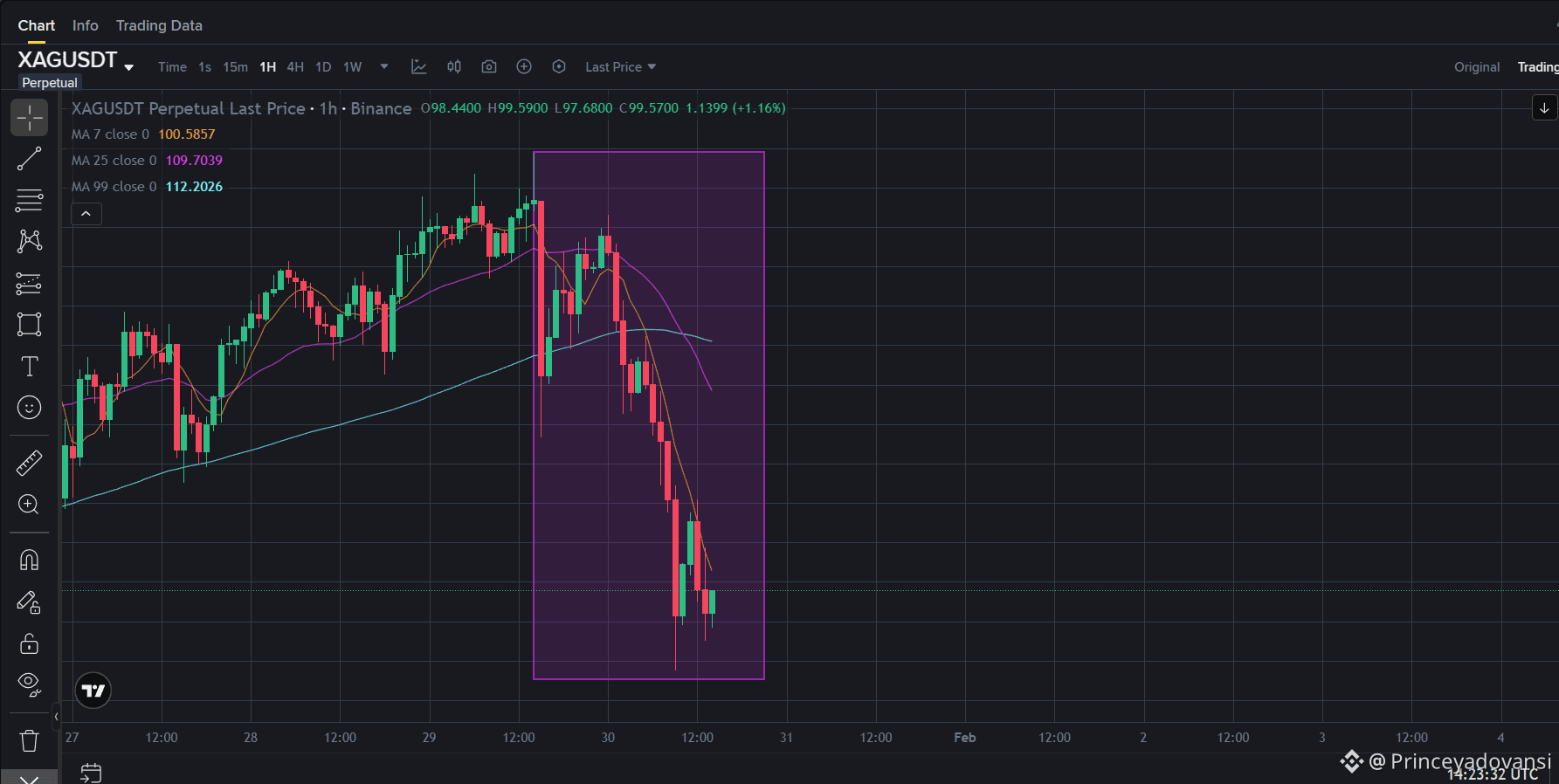
On 30 January 2026, silver prices saw a major crash, with drops of 8–15%+ in a single session after hitting record highs recently. This was one of the sharpest single-day declines in years.
Here are the key reasons behind the plunge:
🧨 1. Profit Taking After Big Rally
Silver had surged to record levels in the past weeks as investors rushed in (up 100%+ year-to-date). When prices hit extremes, many traders began selling to lock in profits, leading to a sudden drop.
💰 2. Margin Increases in Futures Markets
The Chicago Mercantile Exchange raised margin requirements for silver futures, forcing leveraged traders to either put up more collateral or reduce positions – which triggered forced selling and momentum-driven declines.
💵 3. Stronger US Dollar
A strengthening US dollar makes commodities like silver more expensive in other currencies, reducing demand and putting downward pressure on prices.
🪙 4. Reduced Safe-Haven Demand
Silver (like gold) often rallies when geopolitical risks spike. Recent positive developments in geopolitical scenarios reduced the “safe-haven” premium, leading investors back to riskier assets and away from precious metals.
📊 5. Wider Selloff in Precious Metals
Gold and other metals also fell, indicating broader commodity market correction rather than a silver-specific problem.
🔍 Short-Term Market Behavior
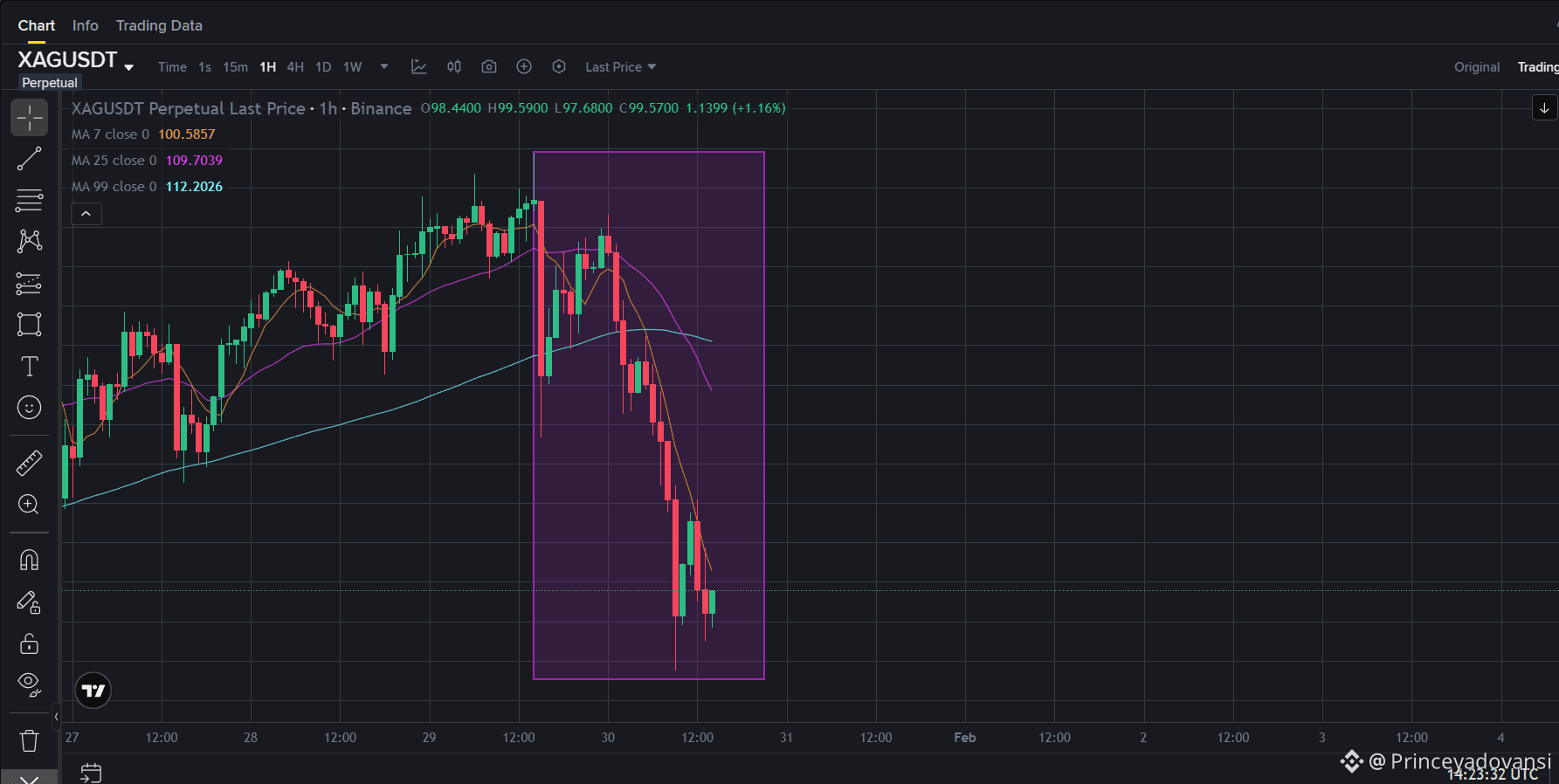
Silver saw extreme swings: after reaching near record peaks, prices quickly corrected.
This volatility reflects technical trading, speculative positions, and reactions to macroeconomic news, not necessarily a fundamental breakdown in silver demand.
Because silver markets are smaller and more liquid-thin than gold, they can fall faster during rapid selloffs.