
When talking about a store of value, gross performance is not enough. What distinguishes a sustainable asset from a speculative asset is its ability to withstand time, cycles, and corrections, without losing its fundamental thesis.
On this point, the figures speak for themselves.
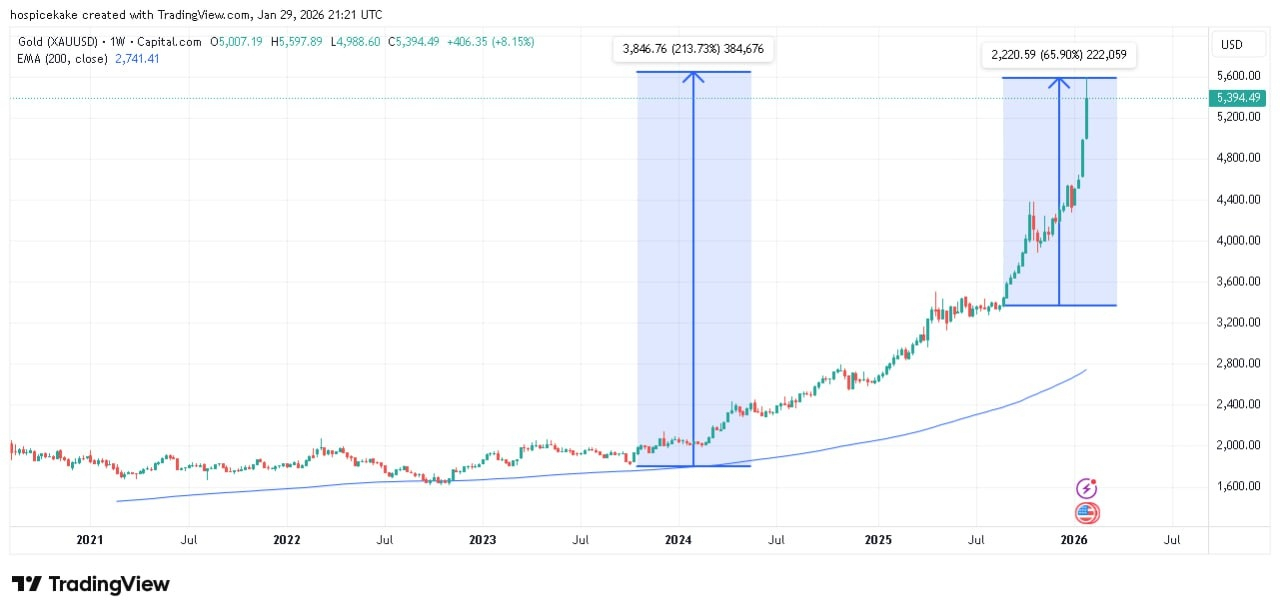
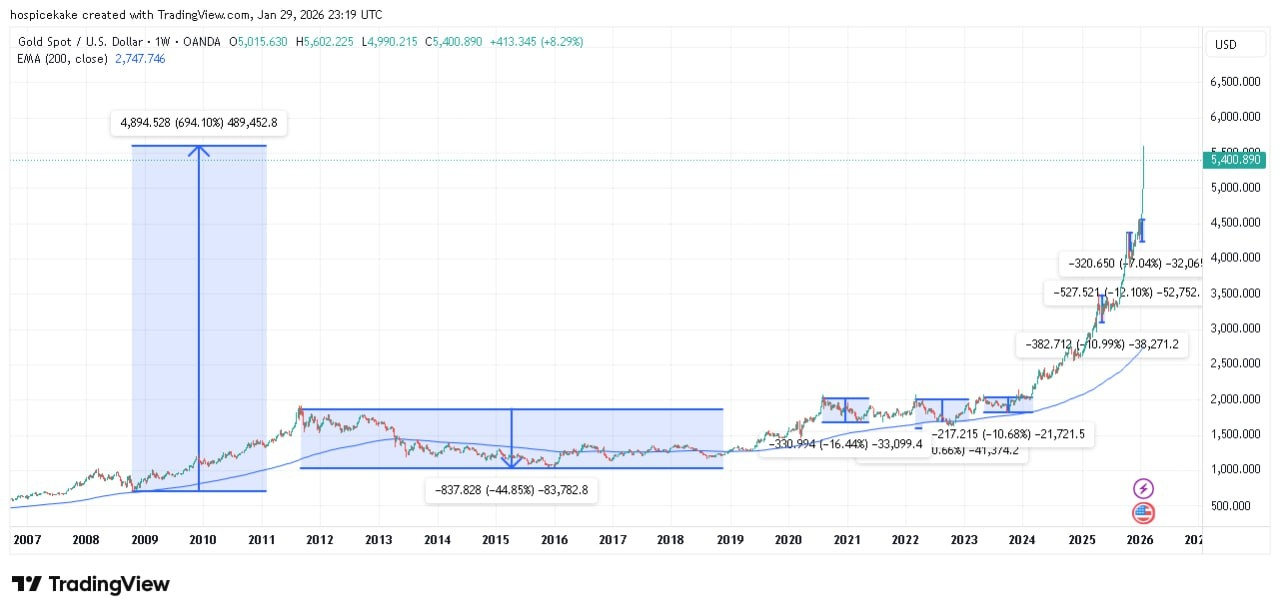
Since 2024, Gold has shown a performance of about +214%, including +65% over the last six months. An impressive dynamic for an asset historically seen as slow, confirming its central role during periods of monetary and geopolitical uncertainty. However, this performance has not been linear: between 2012 and 2019, gold went through nearly 8 years of consolidation, with a maximum drawdown of -44%, testing the patience of long-term investors. Over the entire cycle since 2010, gold has accumulated about +675%.
Silver, often underestimated, shows even more spectacular figures: +485% since 2024, +356% since 2025, and +169% over the last three months.
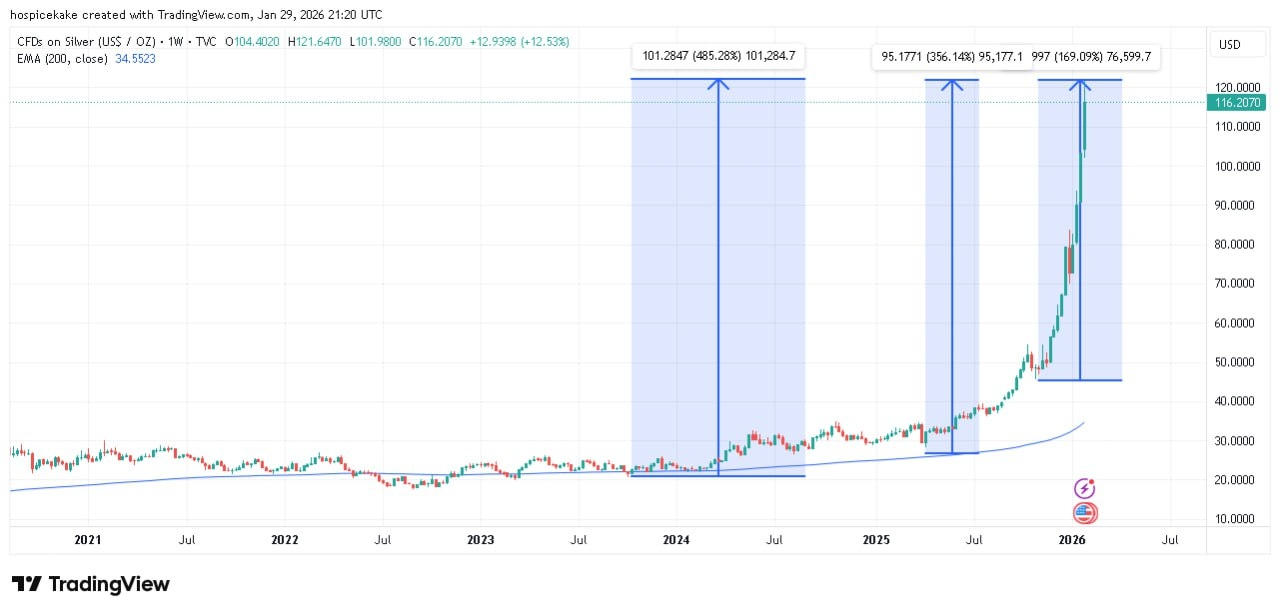
Its dual function — store of value and strategic industrial metal — explains this upward volatility in the context of a global energy transition.
But the asset that profoundly redefines the standards remains Bitcoin.
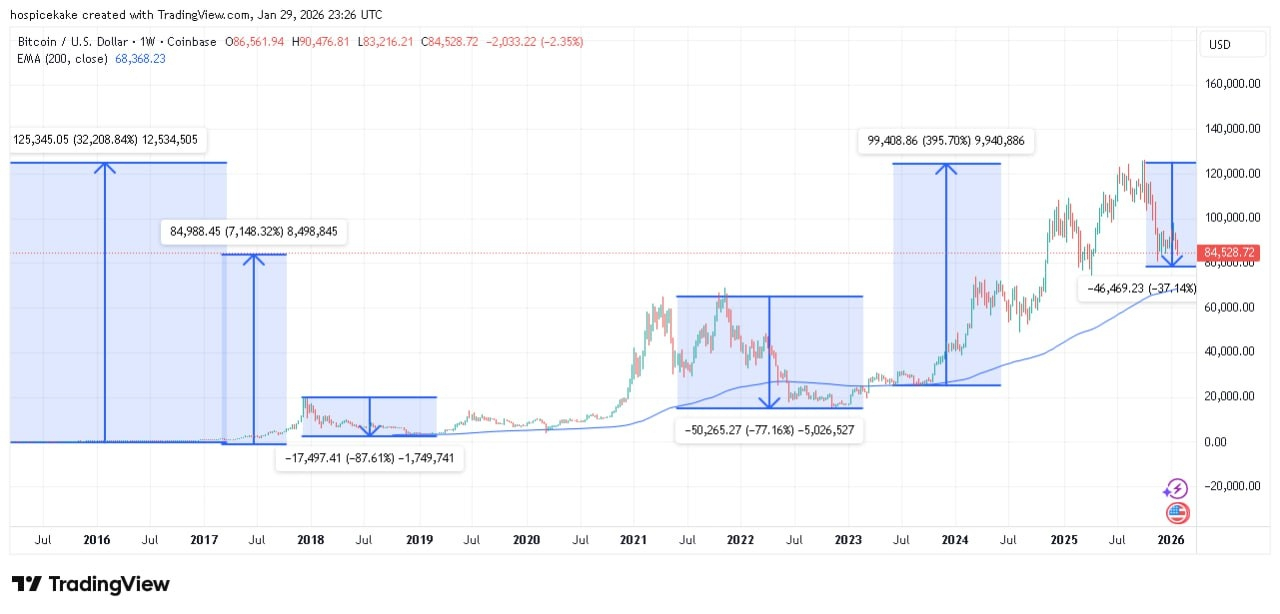
Between 2015 and 2025, at current price levels, Bitcoin shows more than +7000% cumulative performance. A figure that has only been possible at the cost of extreme discipline: -87% correction in 2019 and -77% in 2022, periods during which one had to not sell to benefit from the complete cycle.
Today, Bitcoin represents still more than 15 times less than the market capitalization of gold, confirming that it is a young market, but in a phase of rapid maturation. The higher the capitalization, the more difficult it becomes to manipulate the market. Where a few hundred million dollars used to suffice to provoke strong movements, it now takes tens or even hundreds of billions of dollars to influence the market by only 20%, regardless of the direction.
The key question is no longer which asset is 'better than another', but how to intelligently combine them in a long-term allocation. Stores of value do not all play the same role within a portfolio.
Gold provides stability, protection against monetary inflation, and macroeconomic shocks.
Silver offers a hybrid exposure, both monetary and industrial, with potential outperformance during economic and technological cycle phases.
Bitcoin, despite its volatility, introduces asymmetric growth, mathematical scarcity, and global liquidity without intermediaries.
A coherent strategic allocation involves balancing resilience and growth, accepting that volatility is the price to pay for performance in emerging assets.
Historically, it is the investors able to withstand correction phases — and not avoid them — who capture most of the value creation over a complete cycle.
At GoldenBridge, our approach is based on a long-term, disciplined vision founded on cycles: using corrections as allocation optimization phases, and not as signals of panic. In a world where trust in traditional currencies is eroding, diversifying into tangible and digital stores of value becomes no longer an option, but a strategic necessity.
💬 And you, what would your ideal allocation be between Gold, Silver, and Bitcoin for the coming years?
Do you think Bitcoin can, in the long run, compete with gold as a global store of value?
Share your vision in the comments — the debate is open.