
Dusk did not start as a flashy idea meant to excite crowds or chase quick attention. It began with frustration, the quiet kind that builds when you see a system that could be better but keeps repeating the same mistakes. In 2018, when most blockchains were celebrating radical transparency and speed at any cost, the people behind Dusk were asking an uncomfortable question that many preferred to ignore. Why does innovation in finance demand that privacy be sacrificed. Why should institutions be forced to expose sensitive data just to benefit from decentralization. Behind Dusk was a deep emotional understanding of how real finance works, how people’s livelihoods, reputations, and trust are tied to confidentiality, and how regulation is not always an enemy but often a shield against chaos. This understanding gave birth to a Layer 1 blockchain that was not trying to replace the world overnight, but to gently rebuild it in a way that respected reality.
Privacy in finance is not about hiding wrongdoing. It is about dignity. It is about protecting investors from manipulation, businesses from predatory strategies, and markets from panic fueled by exposed information. Dusk treats privacy as a human need rather than a technical feature. At the same time, it acknowledges the emotional responsibility of operating within regulated systems where trust must be earned through accountability. This balance is difficult, and Dusk does not pretend otherwise. Instead, it embraces the tension and builds directly within it. Every design decision reflects a desire to protect individuals while still allowing regulators to do their job. This is not rebellion. It is reconciliation. It is the belief that technology can heal a long standing conflict between secrecy and oversight instead of deepening it.
Dusk’s technical foundation feels personal because it is clearly shaped by real financial pain points. The Phoenix transaction model allows assets to move without broadcasting every detail to the world, creating a sense of safety for participants who cannot afford exposure. Zedger builds on this by acknowledging that financial instruments have lives, responsibilities, and rules. Dividends must be paid. Voting rights must be honored. Transfers must respect jurisdictional laws. Dusk does not ignore these realities. It encodes them. The Confidential Security Contract standard ties everything together by embedding compliance into the logic of assets themselves. This means rules are not enforced by trust alone but by code that understands both law and privacy. The result is a system that feels less like an experiment and more like a careful promise.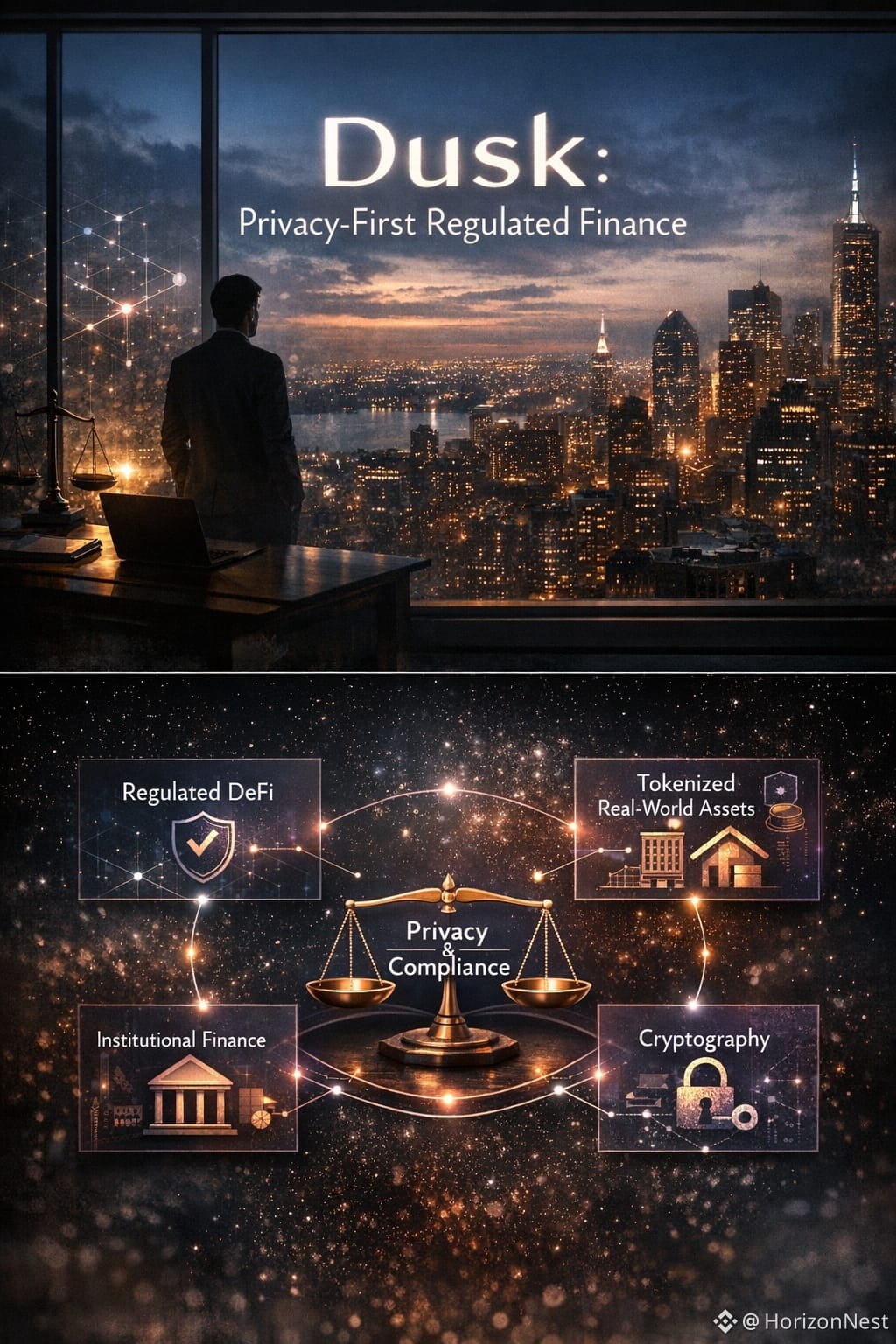
Behind the scenes, Dusk operates with a quiet discipline. A privacy focused blockchain cannot rely on full transparency to police itself, so it must be designed with resilience and intention. Through a Proof of Stake based model adapted for confidentiality, the network reaches consensus without exposing sensitive patterns. Validators are incentivized not just economically, but morally, through the responsibility of safeguarding a system that may one day carry real world value tied to real people. When Dusk moved into mainnet operation, it was not a celebration of speed, but a moment of accountability. From that point forward, every block mattered. Every transaction carried weight. The system was no longer theoretical. It was alive.
The DUSK token exists to serve the network, not to overshadow it. Its purpose is grounded and practical. It secures the chain through staking, fuels transactions, and aligns participants with the long term health of the ecosystem. There is an emotional restraint in this design. Dusk does not promise instant wealth. It promises participation in something that grows slowly and meaningfully. Listing on Binance provides access and visibility, but the deeper value of the token depends on whether the network becomes useful enough to earn trust from institutions that move carefully and think in decades, not days.
Dusk’s natural home is not in speculative frenzy, but in the quiet machinery of finance that moves trillions without applause. Tokenized equities, bonds, private funds, and regulated digital assets are where this network finds its purpose. These are markets where privacy is not optional and compliance is non negotiable. By offering a place where such assets can exist on chain without losing their legal and ethical grounding, Dusk opens doors that have long been closed to decentralized systems. It creates space for compliant decentralized finance that does not embarrass institutions, but invites them in with respect.
Success for Dusk will not announce itself loudly. It will show up in steady validator participation, careful developer adoption, and long conversations with financial actors who ask difficult questions. Price movement may come and go, but the true health of the network lies in whether it continues to function reliably, securely, and predictably. Being available on Binance gives the project a public face, yet its real validation will come quietly, through use rather than speculation.
Dusk does not walk an easy path. Privacy attracts scrutiny, and scrutiny demands clarity. The complexity of zero knowledge systems requires relentless auditing and transparency about how secrecy is controlled. Institutions are slow to trust, and rightly so. Competition is growing, and regulations are evolving. These risks are real, and Dusk does not escape them by pretending they do not exist. Instead, its strength lies in its willingness to engage, adapt, and prove itself over time.
If Dusk succeeds, the future it helps create will feel almost ordinary. Assets will settle faster. Ownership will be protected. Compliance will feel natural rather than forced. Investors will gain access without exposure. Institutions will innovate without fear. This is not a future driven by hype, but by quiet confidence. It is a future where decentralization finally learns how to behave responsibly.
Dusk feels like a project built by people who understand that finance is not just numbers and systems, but trust, fear, responsibility, and care. It does not shout. It does not rush. It waits, builds, and listens. In an industry obsessed with noise, Dusk chooses patience. And sometimes, patience is the most radical innovation of all.