

I’m seeing something happening in the world of digital money that feels strangely personal, almost like watching a quiet shift that affects ordinary people far more than it affects traders or tech experts. Stablecoins have become the digital dollars that so many people now rely on, whether they’re saving money in uncertain economies, sending something home to family, or simply protecting their earnings from currency instability. They’re doing all of this, but they’re doing it on blockchains that were never really built for them. Every time you try to send a stablecoin on those networks, you deal with little frustrations that shouldn’t exist. You need a second token just to cover gas, fees jump around like they have a life of their own, and sometimes you wait hoping your transaction doesn’t get delayed or reversed. It becomes clear that the rails we’ve been using weren’t designed for real human money movement.
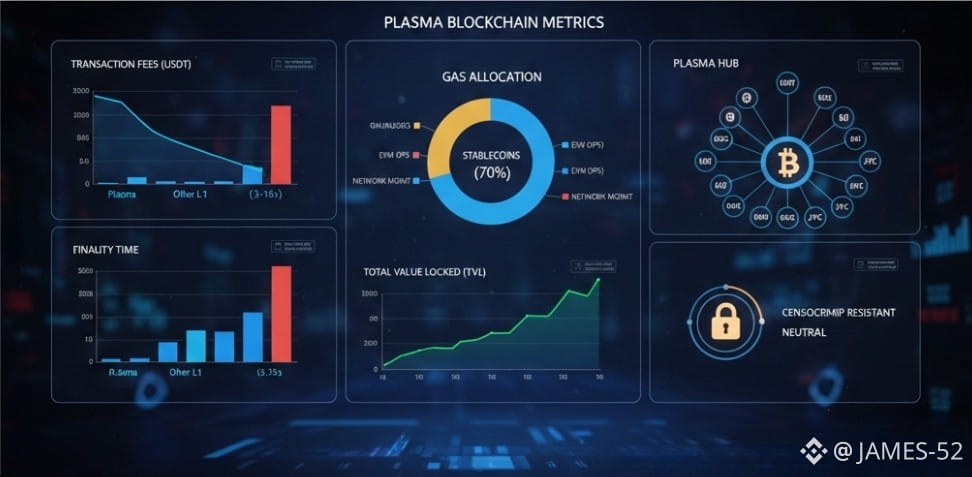
That’s why Plasma feels different. It doesn’t try to be everything for everyone. It doesn’t pretend to be a playground for every new trend or hype cycle. It feels more like a system built with actual people in mind, designed for one purpose that really matters in daily life, the simple act of sending and settling money. When you realize that Plasma is a Layer 1 chain created from the ground up to serve stablecoins, you start to see how refreshing that is. They’re not trying to win a war for features or complexity. They’re trying to build a clean, predictable foundation for digital dollars, something that behaves like a payment network instead of a slot machine.
What makes it so human is how it feels to use. The first time someone sends USDT on Plasma, it’s almost surprising how effortless it is. You don’t think about gas. You don’t think about another token. You don’t calculate fees. The transfer just happens, like handing someone a five dollar bill in person. It becomes this moment where you realize blockchain doesn’t have to be complicated or intimidating. Plasma lets you pay fees in the stablecoin you already have, and simple transfers don’t cost anything at all because the network handles the tiny gas for you. For someone who’s never been comfortable with crypto, that’s a relief. For someone living in a place where stablecoins are a lifeline, that’s dignity and convenience in the same breath.
But the part that feels truly different is the thoughtfulness behind its security. Instead of relying only on its own validators and hoping everything stays fair forever, Plasma reaches out to the oldest, strongest, most neutral blockchain in the world, Bitcoin. By anchoring its state to Bitcoin, Plasma borrows a kind of strength that no single company or government can easily influence. It means the history of Plasma’s transactions is wrapped inside something unshakeable. I’m struck by how deeply human that desire is, the need for money that cannot be tampered with, a system that stands beyond bias or political pressure. When people send or receive value, they want to know that it will still be there tomorrow, still correct, still honest. That’s what this kind of hybrid security gives them.
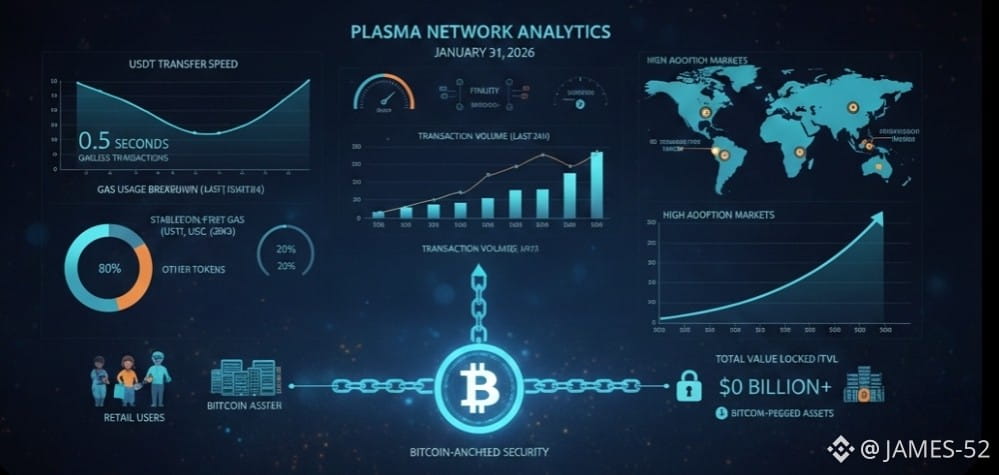
When Plasma launched, the response wasn’t quiet at all. Billions of dollars flowed in almost immediately, as if people had been waiting for exactly this kind of chain. Within days, the stablecoin value locked on Plasma became one of the largest in the world. It didn’t grow because of hype or flashy marketing. It grew because the idea made sense. Developers came. Liquidity came. Apps came. Exchanges like Binance listed the token quickly. Everything seemed to move faster than expected, almost as if the ecosystem had been holding its breath for a chain that treated stablecoins as actual money instead of side characters.
What’s powerful is how Plasma serves people across very different worlds. In places where inflation makes everyday life uncertain, stablecoins have already become a form of survival. For those people, Plasma makes using digital dollars feel effortless and reliable. For workers sending money home, it removes the weight of unnecessary fees and delays. For small businesses trying to accept stablecoin payments, it offers consistency they can plan around. And for institutions moving large amounts across borders, it offers finality that feels almost like traditional banking rails but without the borders or the layers of delay.
It becomes more than just a blockchain. It becomes a kind of invisible infrastructure, something that works quietly so people don’t have to think about it. The best technologies fade into the background. The best payment systems don’t beg for attention. Plasma feels like it wants to be that kind of system, one that hums steadily while people go on with their lives. You send money. It arrives. You settle a transaction. It finalizes. You build on it. It behaves consistently. There’s a human comfort in that kind of predictability, especially in a world where financial systems often feel fragile or unfair.
As I think about what Plasma represents, I realize it isn’t trying to shock the world with something new. It’s trying to make what already exists work the way it should have worked all along. It’s trying to let stablecoins behave like real money, not like technical experiments. It’s trying to let people trust digital value the same way they trust the physical cash in their pocket. And somehow, through all its engineering and innovation, the outcome feels simple, almost gentle.
Plasma feels like a step toward a future where sending money across the world is as natural as sending a message. A future where people don’t have to understand blockchains to benefit from them. A future where digital value flows freely without intimidation or complexity. It feels like a system that doesn’t just change technology, but quietly supports the everyday lives of people who need reliability, speed, fairness, and stability.
And maybe that’s why Plasma matters. Not because it’s the loudest or the flashiest, but because it brings a sense of humanity back into how money moves, making something as essential as value feel simple, safe, and beautifully familiar again.