
There is a quiet tiredness in the digital world today, a feeling that comes from being promised transformation again and again while everyday users are left behind, confused, overwhelmed, or simply uninterested, and Vanar seems to begin its journey by acknowledging that emotion instead of ignoring it. Rather than treating people as numbers to onboard or wallets to activate, Vanar approaches blockchain as something that should gently fit into human life, not interrupt it. It is a Layer One blockchain built from the ground up to function in the real world, not just in technical documentation or market cycles, and its vision of reaching the next three billion people feels rooted in empathy rather than ambition alone. Vanar is shaped by the belief that ownership, creativity, and value should feel natural and reassuring, not cold or intimidating, and that belief runs quietly through everything it is trying to build.
The people behind Vanar did not arrive here by accident or through hype. Their background is deeply tied to games, entertainment, and global brands, environments where trust is fragile and attention is earned slowly. They have seen users leave when experiences feel clumsy, when systems feel unfinished, and when technology demands too much emotional energy. Those lessons are woven into Vanar’s foundation, shaping it into something patient and intentional. Instead of asking the world to adapt to blockchain, Vanar adapts blockchain to the world, accepting that real adoption comes not from education campaigns or jargon, but from experiences that simply feel right. It carries the weight of knowing that if something does not work smoothly, people will not complain loudly, they will just disappear, and that quiet exit is the most dangerous failure of all.
What truly separates Vanar from many other chains is its refusal to make blockchain the center of attention. The philosophy is simple but deeply human: users should never feel like they are using blockchain technology. When someone plays a game, explores a virtual world, or interacts with a brand, the moment should feel fluid and immersive. Ownership should exist quietly in the background, transactions should feel effortless, and identity should persist without friction. Vanar understands that most people do not want to think about wallets, tokens, or confirmations, they want to feel safe, engaged, and rewarded for their time. By treating blockchain as invisible infrastructure rather than a product to be showcased, Vanar aligns itself with how people actually behave, not how the industry wishes they would behave.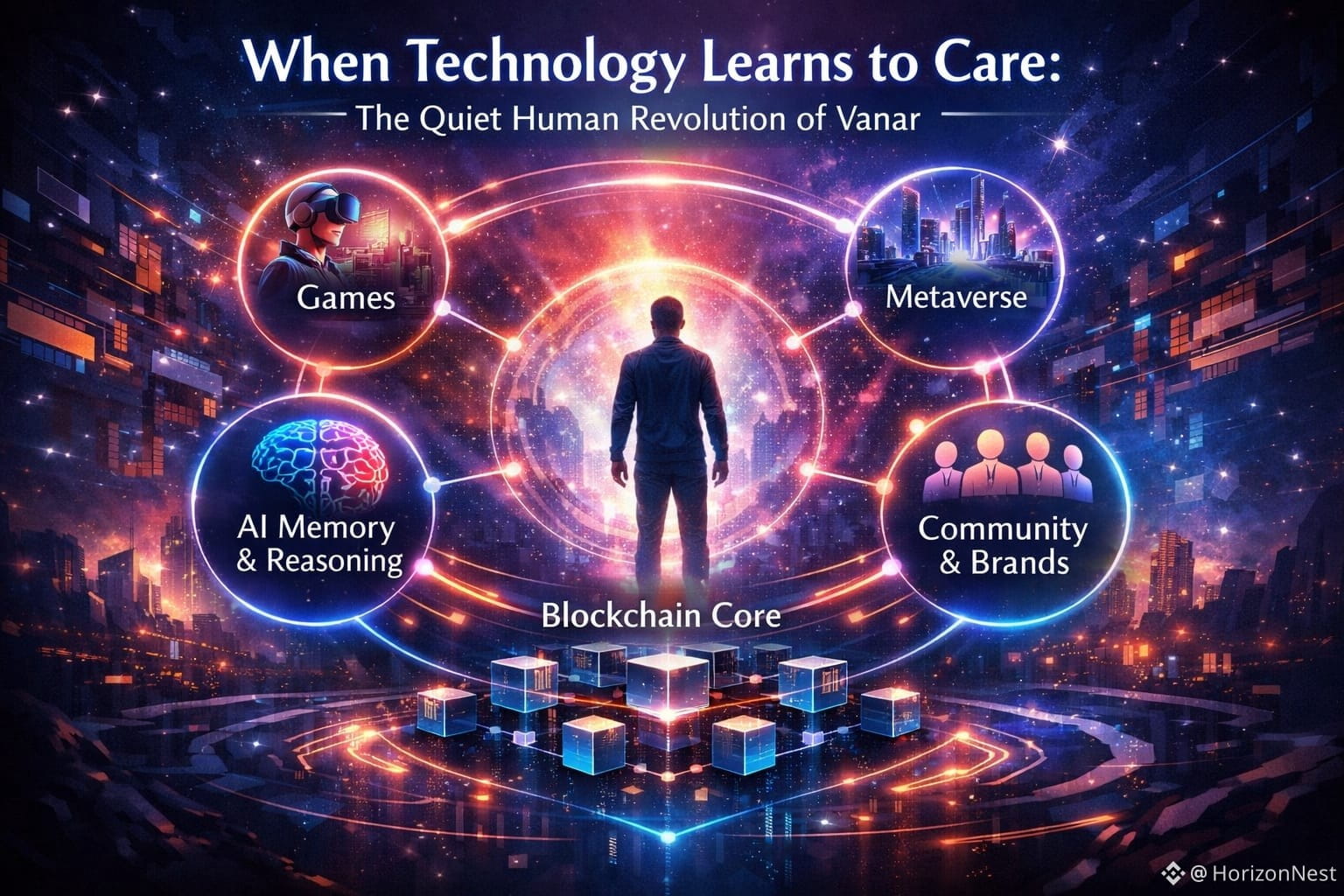
Beneath that calm and user-first surface lies a technically ambitious foundation. Vanar is a modular Layer One designed to handle real-time activity at scale, the kind of activity found in games, metaverse environments, and AI-driven experiences where delays and unpredictability instantly break immersion. Its architecture is built to support persistent data and intelligent systems, allowing digital worlds to evolve alongside users instead of resetting or fragmenting. This creates space for experiences that remember players, adapt to behavior, and feel alive over time. The technology is not built to impress developers alone, but to protect emotional continuity, because once immersion is broken, trust fades, and Vanar treats that truth as non-negotiable.
Running a blockchain meant for everyday people carries an emotional responsibility that is often underestimated. Users may forgive a slow app, but they rarely forgive lost assets or broken promises. Stability, predictability, and reliability become acts of trust rather than technical achievements. For Vanar, network health is not measured only in throughput or numbers on a dashboard, but in living experiences, active communities, and moments that feel safe to return to. Every smooth interaction quietly reinforces confidence, and every failure risks undoing months of trust. This is why Vanar’s operational focus feels less like engineering bravado and more like care, an understanding that reliability is the foundation of belonging.
At the center of the ecosystem sits the VANRY token, quietly powering everything without demanding attention. It secures the network, fuels transactions, and aligns long-term incentives, yet it is intentionally designed to fade into the background for most users. This subtlety is deliberate. Vanar recognizes that mainstream adoption will not come from asking people to manage tokens or think about fees. Instead, VANRY exists to support builders, validators, and sustainability, while shielding users from complexity. It becomes the heartbeat of the ecosystem, essential but unseen, enabling creativity without overshadowing it.
Vanar’s philosophy is already alive through its products, not just promised for the future. Virtua Metaverse offers a space built around imagination and identity, where digital ownership feels meaningful rather than speculative. It is designed to be welcoming and emotionally resonant, a place where brands, creators, and communities can coexist naturally. Alongside it, the VGN games network empowers developers to create engaging experiences without forcing players into crypto-first behavior. Together, these platforms serve as living proof that blockchain can enhance enjoyment instead of interrupting it, and that technology can support play, creativity, and connection without demanding explanation.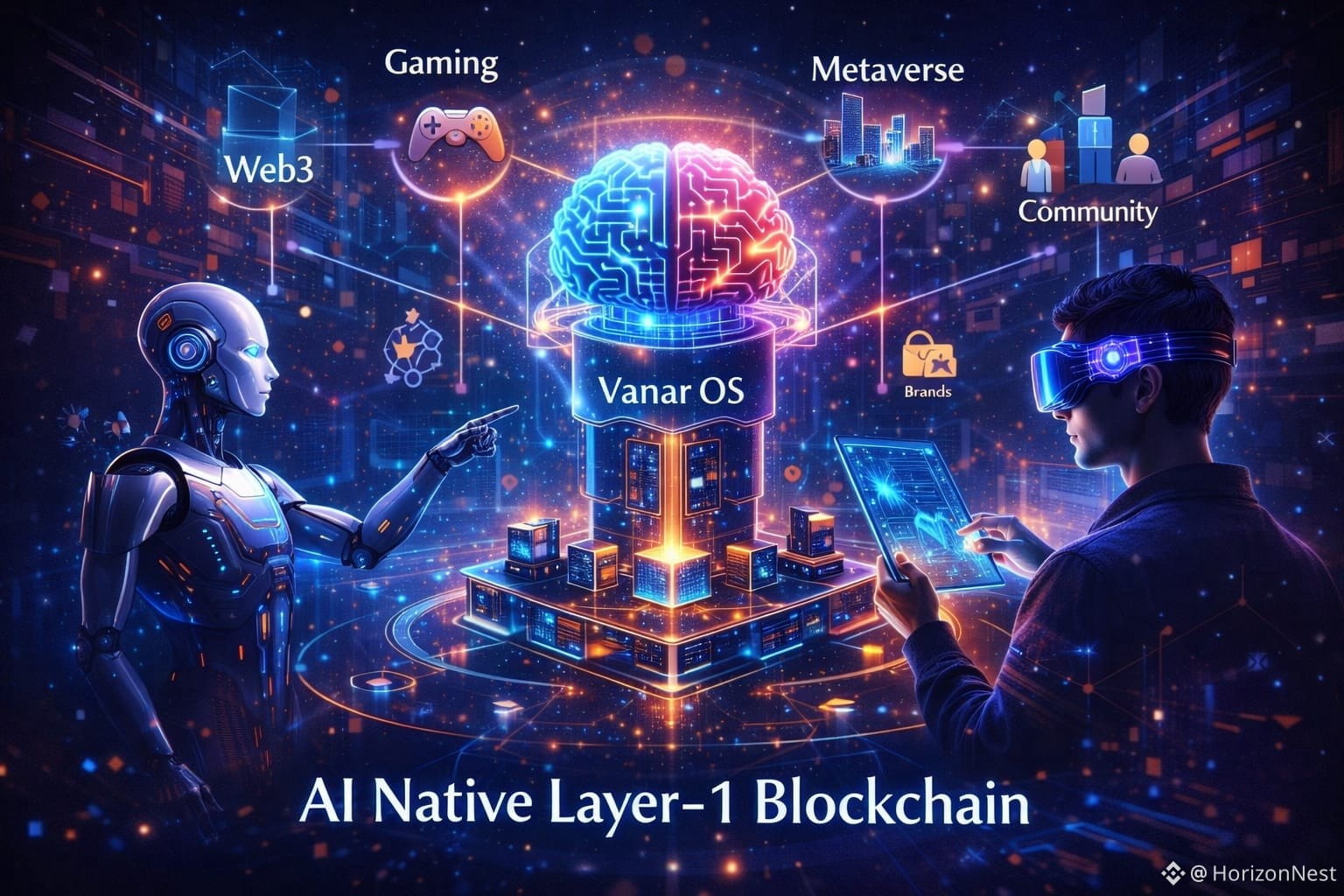
Within the wider Web3 landscape, Vanar occupies a rare and gentle position. It is not trying to dominate attention or rewrite everything overnight. Instead, it is quietly building bridges between familiar digital spaces and deeper systems of ownership and value. By focusing on games, entertainment, AI, and brands, Vanar speaks the language of culture rather than finance. This choice may not generate the loudest headlines, but it builds something more durable, an ecosystem that grows from lived experiences rather than ideology.
None of this comes without risk, and Vanar does not escape the realities of the space it operates in. Scaling intelligent systems, maintaining a token economy designed for invisibility, navigating competition, and adapting to evolving regulations all present real challenges. There is also the emotional risk of expectation, because promises of mass adoption create pressure, and progress will likely be slow and uneven. What matters is not denying these uncertainties, but meeting them with transparency and patience, understanding that trust grows when honesty replaces exaggeration.
The future Vanar is reaching for is not loud or chaotic. It is a world where people play without fear of losing what they earn, where digital identity carries meaning across experiences, where creativity is rewarded fairly, and where technology feels supportive instead of demanding. It is a future where blockchain becomes background infrastructure, powerful but rarely discussed, and if Vanar succeeds, many users may never know its name. That quiet presence may become its greatest success.
In the end, Vanar feels like it was built by people who understand that technology only matters when it respects human emotion. It is shaped by patience instead of urgency, by usability instead of ego, and by the belief that the next chapter of the digital world should feel less stressful and more empowering. There are no guarantees, only careful steps forward, but there is something deeply reassuring about a project that does not ask for blind belief, only the time and space to quietly prove that it belongs.
