

Geopolitics is becoming the key variable influencing Bitcoin prices. From Venezuela to Greenland, global power conflicts are directly reshaping the flow of capital into speculative assets.
In the era of digital finance, Bitcoin and speculative assets (such as tech stocks, cryptocurrencies) are no longer isolated islands. They are becoming the most sensitive "barometers" to global political tremors.
From border conflicts to changes in trade policy, geopolitics can shift global capital flows in an instant. This article will deeply analyze why geopolitics has the power to strongly impact Bitcoin prices, while also dissecting real case studies from Venezuela and Greenland with the latest data up to January 2026.
The invisible link between geopolitics and digital finance
Geopolitics is the intersection of political power and geographical space, including war, territorial disputes, economic sanctions, capital flow controls, and changes in international trade order. With traditional assets like gold or government bonds, geopolitics often reinforces the role of a 'safe haven.' But with Bitcoin and speculative assets, the response is much more complex.
Bitcoin has both the characteristics of a high-risk asset and is considered 'digital gold' due to its decentralization and limited supply. This contradiction makes Bitcoin's price sensitive to geopolitical signals, especially during periods of increased instability.
As tensions escalate, the market often enters a risk-averse state. Institutional investors tend to reduce positions in highly volatile assets and return to holding cash or bonds. This explains why Bitcoin sometimes experiences sharp declines immediately following news of war or conflict. However, conversely, if geopolitics erodes trust in traditional monetary systems, Bitcoin benefits as a value preservation channel beyond government control.

The main channels of geopolitical impact
Why can a conflict half a world away cause your account to 'evaporate' or skyrocket?
Economic Uncertainty: When geopolitical risks rise, money tends to withdraw from risky assets (Risk-off) to seek USD or Gold.
Sanctions and Capital Controls: Sanctioned countries often turn to Bitcoin as a 'financial escape,' creating sudden demand.
Monetary policy: Conflict drives inflation, making Bitcoin – with its 'digital gold' nature and limited supply – a long-term defensive tool.
Technology supply chain: Disputes affecting chip production and mining equipment directly impact the infrastructure of the Crypto network.
Real data: According to CoinMarketCap, major geopolitical events often cause average fluctuations of 5-10% within just 48-72 hours.
Venezuela – When Bitcoin becomes a 'lifeline'
Venezuela is one of the most illustrative examples of how geopolitics can turn Bitcoin from a speculative asset into a means of survival. The crisis, which began after 2014 due to the collapse of oil prices, with oil accounting for up to 95% of Venezuela's export revenue, along with international sanctions, has pushed the Venezuelan economy into hyperinflation.
At its peak in 2018, inflation in this country exceeded 1.6 million percent, rendering its national currency - the bolívar - almost entirely ineffective as a store of value. The government imposed strict foreign exchange controls, restricting access to USD and freezing capital flows. In this context, Bitcoin emerged as a rare escape route.
Peer-to-peer Bitcoin trading in Venezuela has surged, especially through P2P platforms. For local residents, Bitcoin is no longer a speculative tool but a means to protect income, receive remittances, and make cross-border payments. Data from blockchain analytics companies show that crypto transaction volumes in Venezuela once surged several times during peak crisis periods.
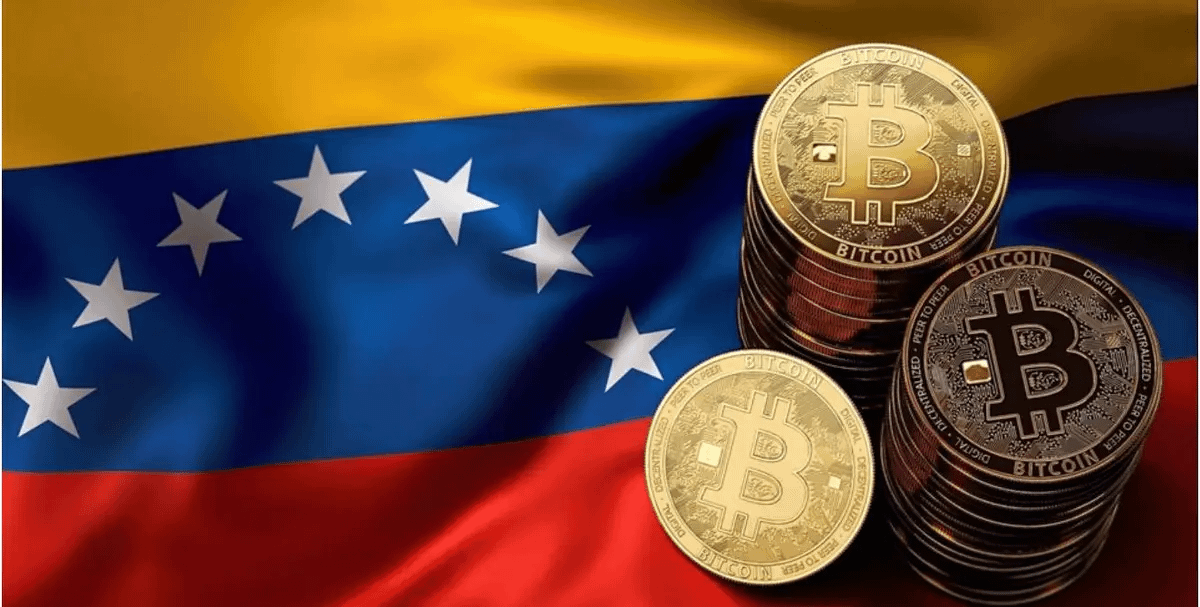
Notably, in January 2026, the Washington event launched a military campaign to arrest Venezuelan President Nicolás Maduro, escorting him and his wife Cilia Flores to the U.S. to face drug trafficking and terrorism-related charges, becoming the global geopolitical focus early in the year. The U.S. military conducted a large-scale raid in Caracas on January 3, 2026, prompting a series of international reactions and marking a turning point in U.S.-Venezuela relations as Maduro was brought to New York for trial under indictment from the Federal Prosecutor's Office in Manhattan.
During the global financial market's reorientation towards risk sentiment, Bitcoin recorded a significant increase from January 3 to January 5, moving from around $87,500 to $95,000. Although this volatility cannot be attributed solely to developments in Venezuela, in the face of geopolitical instability and concerns over global oil supply chains affected by events in Caracas, risk-averse capital has sought refuge in assets considered 'safe havens' like Bitcoin.
However, the Venezuelan case also shows the downside: if control measures tighten further, crypto flows from this region may be disrupted, causing reverse volatility in the short term.
Greenland – Resource and Mining Infrastructure Dispute
Unlike Venezuela, Greenland is not a hotbed of currency issues but holds strategic significance regarding resources and global security. This autonomous territory of Denmark possesses large rare earth reserves – a key factor for high-tech industries, from electric vehicle batteries to cryptocurrency mining hardware.
In the context of climate change opening new shipping routes in the Arctic, Greenland is increasingly attracting the attention of great powers. China's involvement in mining, along with Russia's increased military presence in the area, has caused the U.S. and its Western allies to pay special attention to Arctic security.
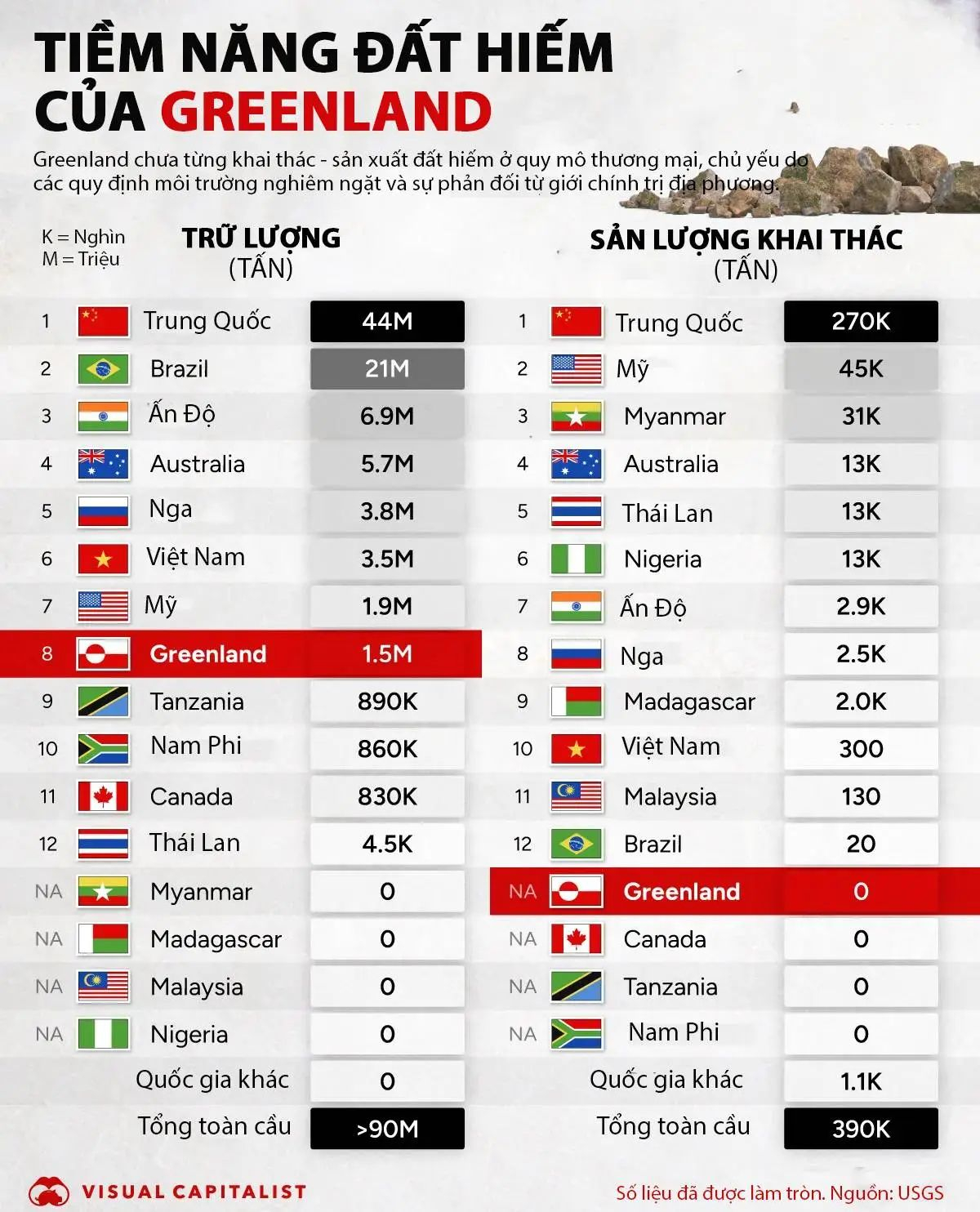
Geopolitical developments surrounding Greenland in January 2026 quickly spilled over into the financial markets. When information about high-level meetings concerning security and resources emerged, Trump stated emphatically: 'Greenland must be under U.S. control, any other options are unacceptable.' Bitcoin immediately reacted negatively in the short term. On January 14, the price of Bitcoin dropped about 5%, from around $97,000 to below $87,700, amid investor concerns about the risk of disruption to the rare earth supply chain, affecting the chip and GPU manufacturing sector.
However, by January 22, Trump announced that he had reached a 'framework of a future deal' with NATO when meeting Secretary-General Mark Rutte, after the parties reached a temporary agreement and tensions eased, Bitcoin's price quickly recovered to around $90,000. This shows that the impact of geopolitics in the Greenland case is indirect yet significant, especially through the technology and mining infrastructure channels.
Bitcoin in the dual role of risk and refuge
The two examples above clearly reflect one reality: Bitcoin does not react according to a fixed pattern to geopolitical shocks. In the short term, it may be sold off along with other risky assets. But in the medium and long term, Bitcoin often benefits when trust in fiat currency and traditional financial systems weakens.
This dual role is what makes Bitcoin the most 'unreadable' asset during global instability, and it is also why it is increasingly monitored closely whenever geopolitical tensions rise.
From the analyses above, investors need to draw hard-learned lessons to protect their portfolios:
Diversification is a must: Never put all your capital into a single asset when geopolitical tensions are high.
Monitor macro news: Use reputable sources like Reuters, CoinDesk, or Bloomberg to catch events before they reflect in prices.
Tight risk management: Always set a Stop-loss order to avoid assets being 'account-shared' due to unexpected news shocks.
Long-term perspective: Geopolitics often causes short-term fluctuations (as seen in Greenland) but can create long-term growth trends (as seen in Venezuela).
Geopolitical risk is indispensable in financial markets
The Bitcoin market does not exist in a vacuum. It is a mirror reflecting the smallest movements on the global geopolitical chessboard. Understanding why geopolitics affects Bitcoin will help you maintain a calmer view in the face of the market's turbulent waves.
What is your assessment of the Bitcoin price trend in the current context? Please leave a comment below to discuss with the investor community.
#MARCO #BTC