
Understanding market structure is one of the most critical skills a crypto trader can develop. Without it, even the most advanced indicators or trading strategies can fail. Let’s break down what market structure is, how it differs from traditional markets, and why it’s essential for traders.
What is Market Structure in Crypto Trading?
Market structure refers to the overall framework of price action that shows how a cryptocurrency moves over time. It includes patterns, trends, support and resistance levels, and key price zones where buyers and sellers interact.
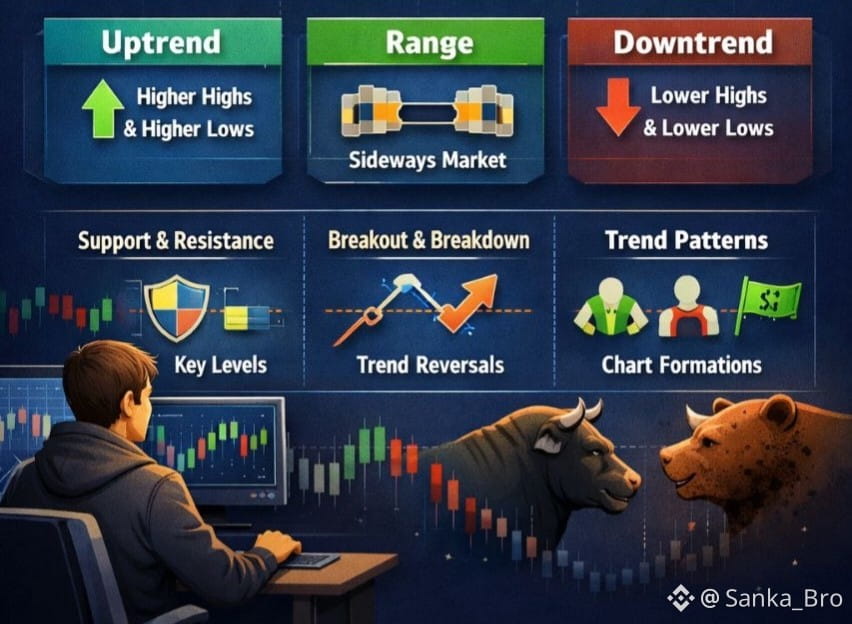
By analyzing market structure, traders can identify whether the market is trending, consolidating, or reversing. This helps them make informed decisions rather than blindly following price movements.
Key components of market structure:
Trends – Uptrends, downtrends, and sideways movements.
Support and Resistance – Levels where price tends to bounce or stall.
Price Patterns – Head & shoulders, double tops/bottoms, triangles, and channels.
How Crypto Market Structure Differs from Traditional Markets
Crypto markets are unique in several ways:
Higher Volatility – Prices can swing dramatically in a short period, making trends sharper but less predictable.
24/7 Trading – Unlike stock markets, crypto never sleeps. This continuous trading can lead to sudden moves overnight.
Market Fragmentation – Multiple exchanges with varying liquidity create differences in price action across platforms.
These factors make crypto market structure more dynamic and challenging to read compared to traditional markets.
Why Understanding Market Structure is Critical for Traders
Traders who understand market structure can:
Navigate unpredictable market shifts – Recognize real trends versus false breakouts.
Avoid common traps – Spot potential stop-hunts or fake signals set up by larger players.
Gain an edge over competition – By anticipating where the market is likely to move next, instead of reacting after the move has occurred.
Without a solid understanding of market structure, traders risk being reactive, making emotional decisions, and suffering losses.
Without a solid understanding of market structure, traders risk being reactive, making emotional decisions, and suffering losses.
Conclusion
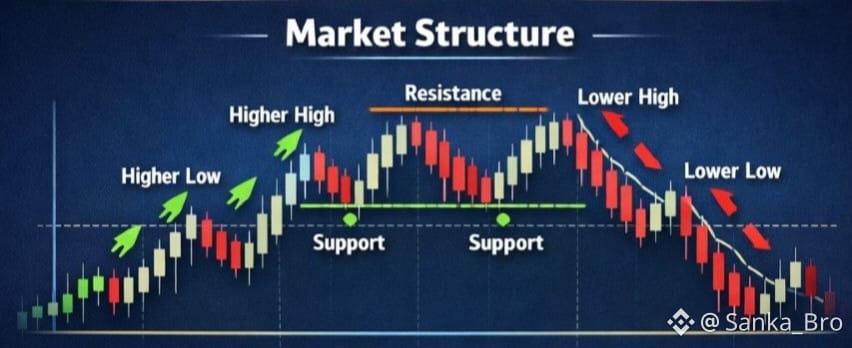
Market structure is the backbone of effective crypto trading. By studying price trends, key levels, and patterns, traders can make smarter decisions, reduce risks, and position themselves for consistent success. In a market as volatile and fast-moving as crypto, understanding structure isn’t optional—it’s essential.
#BinanceSquare #CryptoTrading
#MarketStructure