
Plasma keeps moving forward in a very deliberate way as 2026 unfolds, and what stands out to me is how focused the network is on solving problems that actually matter to institutions and everyday businesses. With confidential transactions coming online and real world assets being issued directly on stablecoin rails, Plasma is closing two gaps that have held blockchain back for years. One is the lack of serious privacy for commercial payments, and the other is the messy connection between traditional assets and on chain liquidity. Instead of patching these issues with workarounds, Plasma is rebuilding the foundation so private settlements, tokenized assets, and compliance can coexist without friction.
This stage feels like Plasma growing up. It is no longer just a fast place to move stablecoins but a full financial operating layer where banks, asset managers, payment firms, and even small merchants can operate side by side. Mobile validation brings participation down to street level, while confidential USDT and tokenized government debt begin to look viable for real business use. If this continues, Plasma starts to look like the neutral ground where legacy finance and digital dollars finally meet.

Private Payments Designed for Real World Rules
Plasma confidential transactions are entering audits in the second half of 2026, and the design choice here feels very intentional. Privacy is optional, not absolute. Zero knowledge proofs allow transaction values and participants to remain hidden, while selective disclosure tools let regulators or auditors see what they need when they need it. From what I can tell, this strikes a balance most enterprises have been waiting for.
Under the hood, transactions are encrypted before they ever hit the network. Validators confirm correctness without seeing the raw details, and finality still arrives in under a second. Businesses can settle large invoices without broadcasting sensitive pricing data. Merchants can process refunds without exposing customer histories. Individuals can move income without constant surveillance, while still remaining compliant.
This is not about rejecting regulation. It is about protecting commercial intelligence. Companies operating across borders can meet KYC and AML obligations while keeping competitors out of their books. I like how view keys are handled here, with personal keys for tax reporting and institutional keys for compliance teams. Privacy is shared deliberately, not hoarded.
Mobile wallets generate proofs locally and batch them efficiently, which keeps the experience smooth even on modest devices. Early pilots in manufacturing and export corridors already show why this matters. When pricing stays private, negotiation power stays intact.
Bringing Traditional Assets Directly On Chain
Real world asset issuance on Plasma feels less like an experiment and more like infrastructure planning. Instead of wrapping assets through multiple layers, Plasma is introducing standardized vaults that handle custody proofs, yield distribution, and compliance from day one. Government debt, real estate shares, commercial paper, and commodities can all live on the same rails as USDT.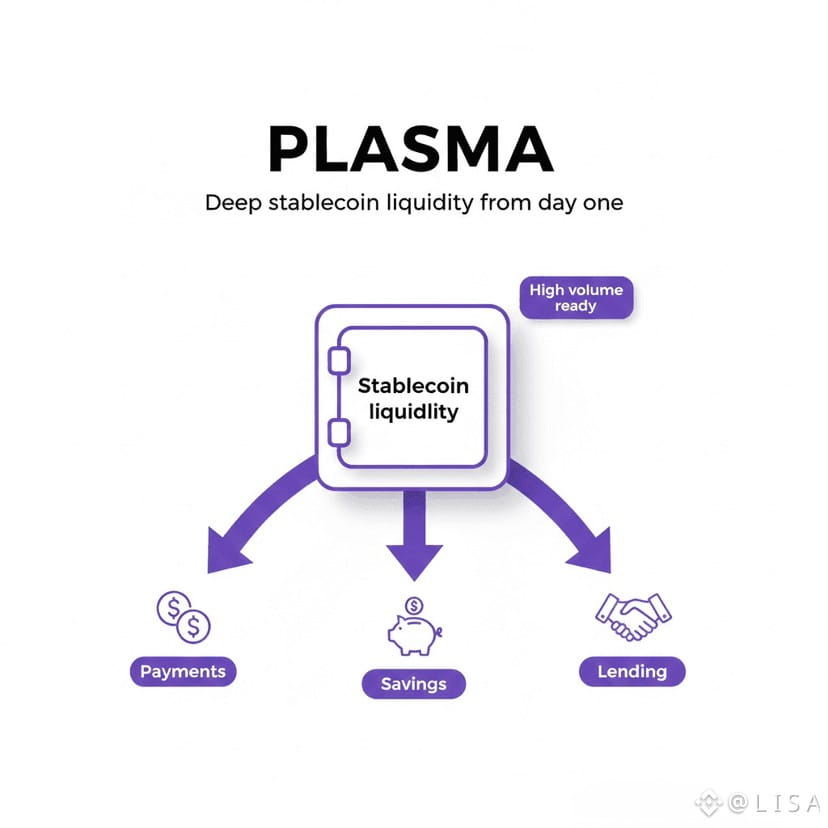
Institutions can deposit treasury bills into Plasma vaults and earn predictable yields while using those positions as collateral for stablecoin liquidity. Property funds distribute rental income automatically to global investors. Commodity desks settle forward contracts with finality measured in milliseconds rather than days.
What makes this powerful to me is composability without complexity. Firms do not need to acquire a volatile native token just to interact. Fees can be handled at the vault level. Yields compound automatically. Governance tools allow issuers to vote on oracle sources or redemption schedules without rewriting contracts.
Compliance is not an afterthought either. Identity checks, geographic limits, and reporting hooks are built in. Asset issuers can meet jurisdictional requirements while still accessing global liquidity. The result is a hybrid system where traditional finance standards and decentralized execution reinforce each other.
Mobile Validation Brings the Network to the Street
One of the most interesting developments is Plasma mobile validation. Instead of requiring heavy infrastructure, phones and point of sale devices can now participate in securing the network. Stateless design means devices only carry the proofs they need, not the entire chain history.
A small shop owner can stake XPL through their payment terminal and earn rewards from the same transactions they process daily. Ride share drivers validate fares. Vending machines batch payments. All of this happens without servers or data centers.
This changes decentralization in a very practical way. Security grows with adoption. As more merchants use Plasma, more validators appear organically. Slashing targets bad behavior without wiping out capital, which encourages participation rather than fear.
Test networks already show tens of thousands of mobile validators operating smoothly. To me, this feels like decentralization finally leaving the data center and entering everyday commerce.
Preparing for a Post Quantum World
Plasma is also looking ahead to cryptographic risks that many networks still treat as distant problems. Post quantum signatures are entering testing, allowing the network to migrate gradually without downtime. Keys rotate dynamically, and performance stays consistent.
This matters when you consider the scale of value Plasma aims to handle. Stablecoins and tokenized assets represent trillions in future settlement volume. Protecting those flows against future threats is not optional. I see this as Plasma taking responsibility for the long term rather than chasing short term gains.
Scaling for Real World Spikes Without Breaking Liquidity
Adaptive sharding experiments show how Plasma plans to handle extreme volume without fragmenting markets. Payment traffic can split dynamically during peak demand, while DeFi execution remains unified to preserve composability.
Holiday shopping surges, payroll distributions, or global remittance events do not push fees higher or slow confirmations. The system adapts automatically, keeping the experience predictable. Early simulations suggest sustained throughput that rivals global payment processors.
Enterprise Onboarding Without Friction
Plasma enterprise gateways are designed to remove guesswork for institutions. Custom integrations, compliance dashboards, and dedicated validation clusters allow firms to deploy quickly without rebuilding internal systems.
Each new participant deepens liquidity and lowers costs for everyone else. Instead of extracting equity, Plasma uses performance based incentives to encourage real usage. That approach feels more aligned with infrastructure than speculation.
Holding Stability Through Token Unlocks
Mid 2026 token unlocks are a real test, but the strategy here focuses on absorption rather than avoidance. Delegation, enterprise staking, mobile validator rewards, and asset vault incentives all encourage long term locking. Burns from usage help balance new supply.
If adoption continues at its current pace, increased activity may matter more than emission schedules. That is a healthier dynamic in my view.
Plasma XPL is starting to look like the background layer you do not notice until it disappears. Private settlements, tokenized assets, and everyday merchants all running on the same neutral rails. I keep thinking about a future where a phone validates a payment, a treasury settles quietly, and assets earn yield without friction. When infrastructure fades into reliability, that is usually when it has finally succeeded.

