
Core Problem / Hook
Most blockchains don’t fail because they are slow.
They fail because builders give up.
“Technology attracts developers. Experience keeps them.”
Governance is not just voting.
It is the discipline of removing friction.
Wallet chaos.
Onboarding drop-offs.
Tooling gaps.
Migration risk.
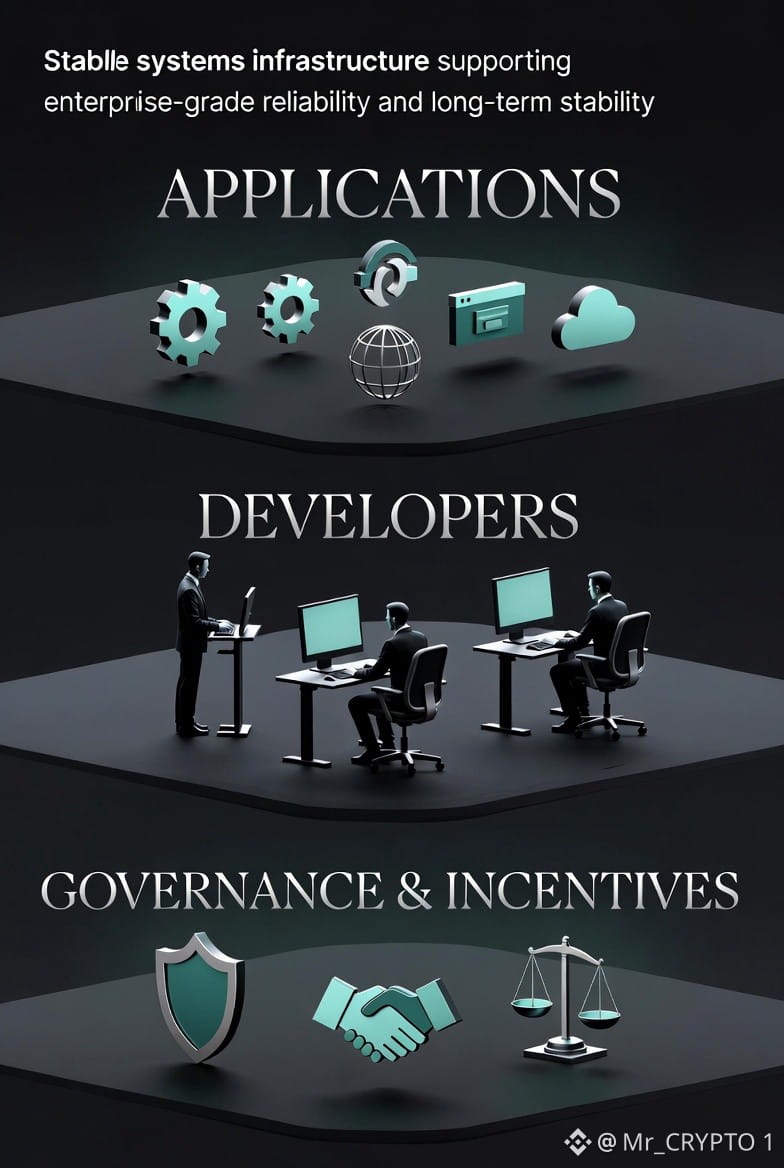
Vanar aligns validators, builders, and token holders around one goal.
Make building feel ordinary again.
Not experimental.
Not fragile.
But predictable.
That alignment is rare.
And it matters more than marketing.
Governance as an Operating System
Governance is not a ceremony.
It is an operating system.
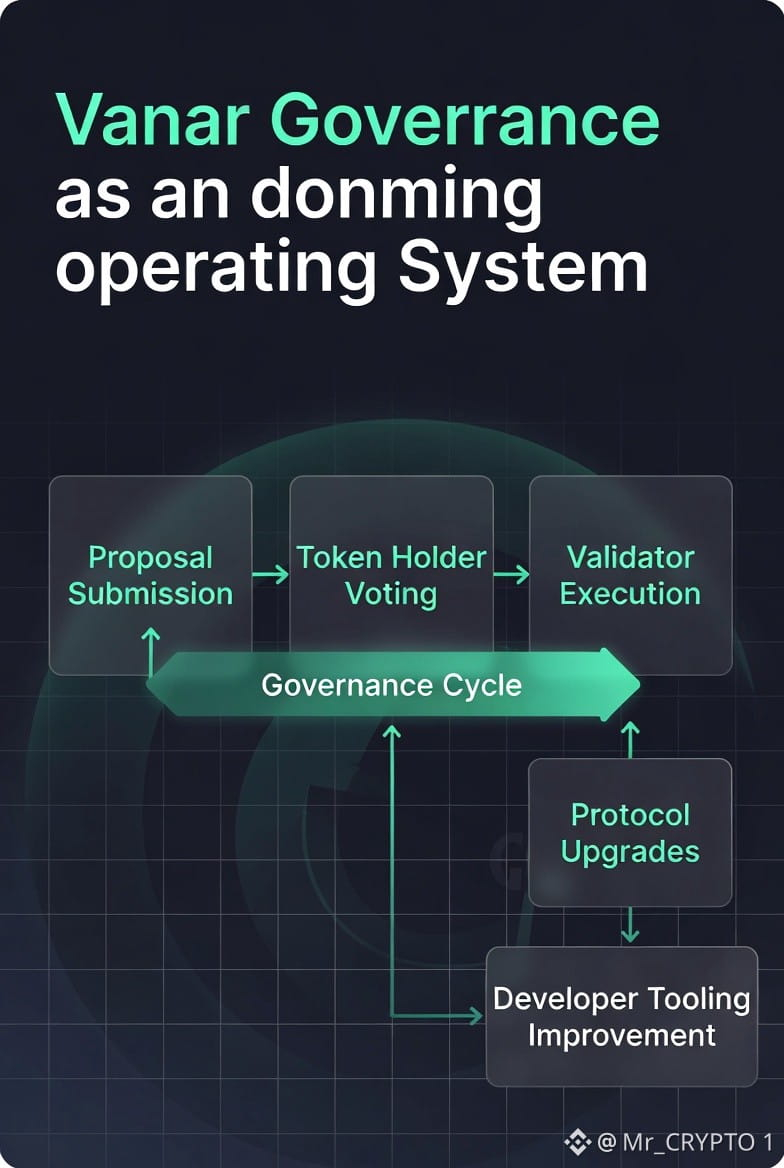
On Vanar, decisions move clearly.
Proposal submission.
Community review.
Token-weighted voting.
Validator execution.
On-chain recording.
Nothing is hidden.
Nothing is manual.
Token holders influence parameters that affect real builders.
Fees.
Upgrades.
Tooling direction.
Together, these processes ensure something critical.
Developers can plan.
And planning is how real products ship.
Developer Experience Is Economic Alignment
Developer experience is not soft.
It is economic.
Time is the most expensive resource in software.
Risk is the second.
Vanar removes both.
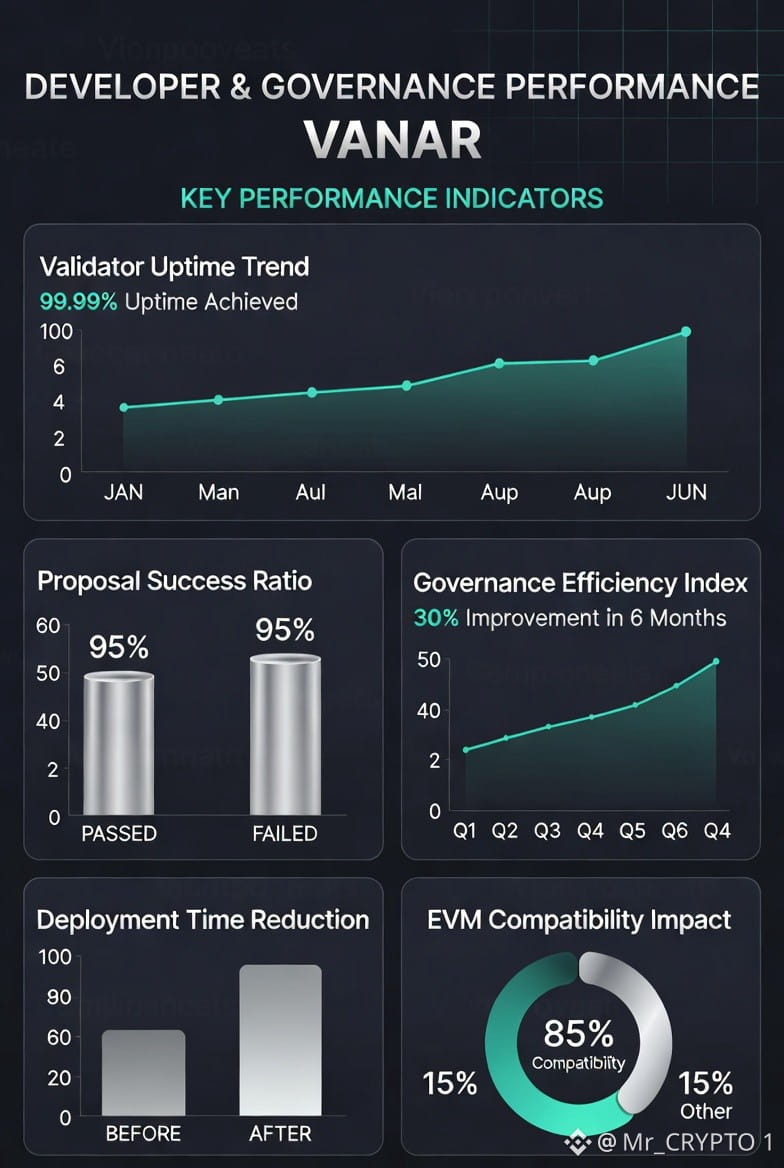
EVM compatibility is not a checkbox.
It is an adoption strategy.
Solidity stays the same.
Audits stay valid.
Tooling stays familiar.
Brains do not migrate.
As a result, teams ship faster.
And governance rewards that behavior.
Validators earn for uptime above 99%.
Proposal success rates stay above 90%.
Governance efficiency improves release velocity.
Incentives reward stability.
Penalties discourage disruption.
As a result, data stays available.
And performance holds under stress.
Onboarding Is the Real Bottleneck
The real bottleneck is not TPS.
It is onboarding.
Seed phrases scare users.
Gas tokens confuse them.
Approvals feel dangerous.
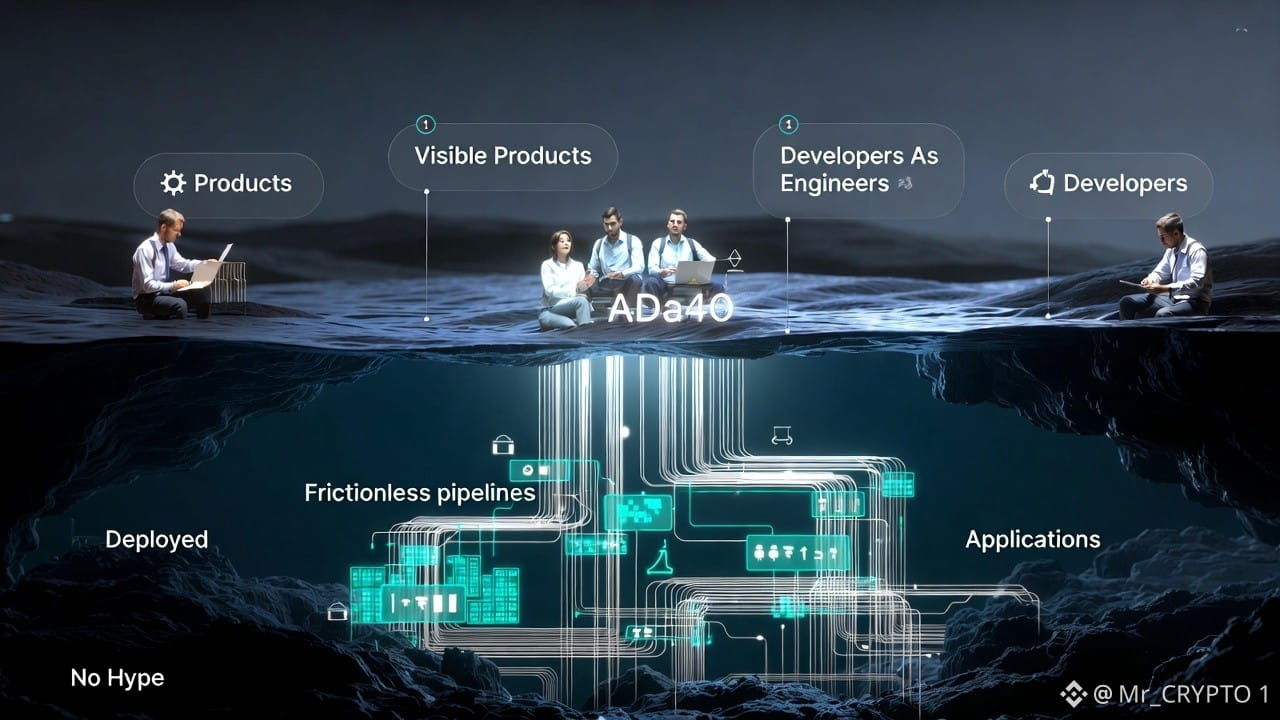
Vanar treats the chain as backend infrastructure.
Not a user interface.
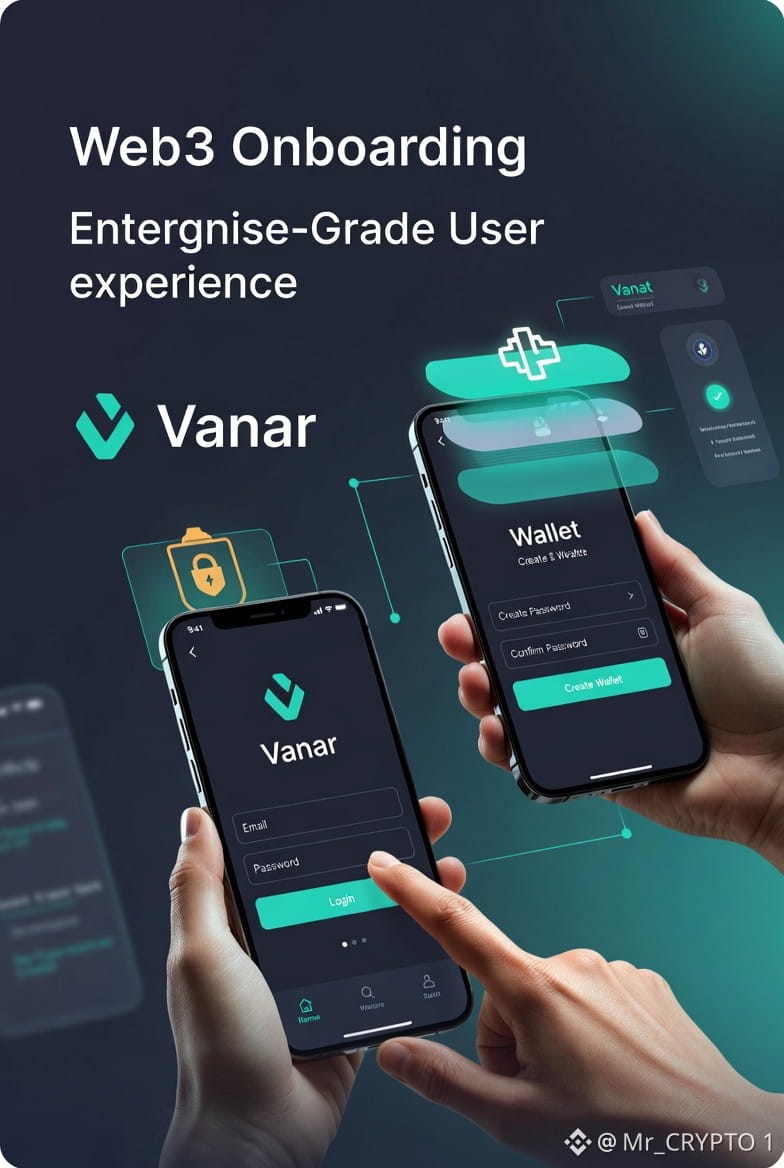
Account abstraction patterns remove fear.
Wallets can exist invisibly.
Login feels familiar.
Recovery feels safe.
This changes who can use Web3.
Not just crypto natives.
But normal users.
Businesses.
Apps that never mention blockchain.
Infrastructure becomes invisible.
And invisible infrastructure scales.
Conclusion / Value Proposition
The strongest chains are not loud.
They are dependable.
Vanar competes on something harder than speed.
Trust in workflows.
Trust in tools.
Trust in time saved.
Good infrastructure does not beg for attention.
It earns repeat usage.
Developers who ship once, return.
Teams that onboard smoothly, grow.
That is not hype.
That is how platforms win.
CTA / Engagement
Will the next generation of blockchains win with louder narratives —or with quieter developer trust?
Which one would you build on?
