
When Dusk Network first came into existence in 2018, it did not arrive with fireworks or slogans about overthrowing the world, but with a deep sense of unease about where finance was heading and who it was slowly leaving behind. There was a growing feeling, almost a collective exhaustion, that something fundamental had gone wrong, that people were being asked to trust systems that watched them constantly while offering very little protection in return, and that institutions were being forced into either full exposure or full opacity with nothing humane in between. Dusk was born from that discomfort, from the emotional realization that finance without privacy feels like living under permanent observation, and that transparency without consent does not create fairness, it creates fear.
What makes Dusk different is not just what it builds, but why it builds it. At its core, the project recognizes that money is never just money, it is safety, leverage, identity, and sometimes survival. People do not want to hide because they are doing something wrong, they want privacy because exposure has consequences, because a visible balance can make someone a target, because a public transaction history can erase negotiation power, dignity, and peace of mind. Traditional finance abused secrecy to protect the powerful, while early blockchains abused transparency in the name of ideology, and Dusk stepped into that emotional gap with a simple but radical belief that privacy and accountability do not cancel each other out, they complete each other.
Instead of pretending regulation does not exist, Dusk accepts it as part of reality, not because rules are sacred, but because societies demand structure when trust is fragile. Laws emerge when systems fail people, and ignoring them does not create freedom, it creates collapse. Dusk chose the harder path of designing a blockchain that could operate inside real financial frameworks without surrendering its values, embedding compliance into the architecture itself so it does not feel like a cage bolted on later. This approach allows financial instruments to exist on chain in a way that feels familiar to institutions but still protective to individuals, creating an environment where participation does not require emotional exposure or blind faith.
The emotional heart of Dusk lives in its use of privacy technology that allows truth to exist without spectacle. Zero knowledge proofs make it possible to verify actions without revealing lives, to prove correctness without broadcasting vulnerability. This is not abstract cryptography, it is a form of respect built into code. Ownership can be validated without announcing wealth. Rules can be enforced without constant surveillance. Audits can happen without stripping people bare. In a world where visibility is often mistaken for honesty, Dusk quietly reminds us that restraint can be a form of integrity.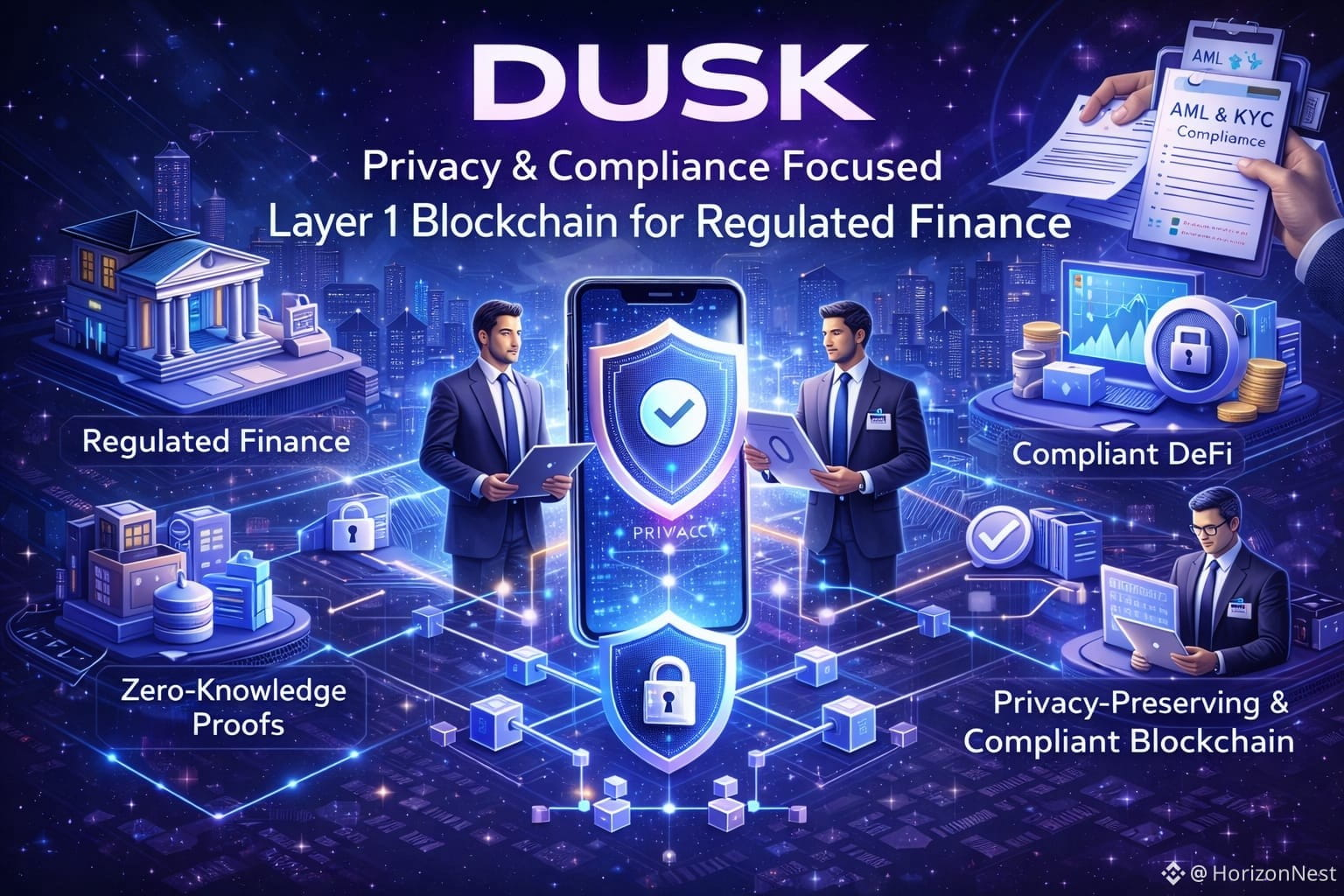
The network’s consensus design reflects the same philosophy. It favors steadiness over bravado, reliability over raw speed. Financial systems do not need to be exciting, they need to be dependable. Trust is not built through maximum throughput or dramatic innovation, it is built through consistency, through systems that behave the same way in calm and in crisis. Validators on Dusk are incentivized to protect the network over time, not to extract short term advantage, reinforcing the idea that shared infrastructure carries shared responsibility.
Even the economics of the network feel shaped by memory rather than hype. Dusk avoids the familiar temptation to overreward early participation at the expense of future stability. Its token model is designed to support security, governance, and continuity without turning the system into a speculative machine that feeds on attention. While access through platforms like Binance provides visibility and liquidity, the project does not let market mood dictate its identity. Price exists, but it is not the story. Longevity is.
Perhaps the most emotionally significant aspect of Dusk is its approach to real world assets, because these are not just data structures, they represent homes, companies, pensions, and futures. Mishandling them does not cause inconvenience, it causes harm. Dusk treats this responsibility with seriousness, enabling assets like equities and bonds to move on chain while preserving confidentiality and legal enforceability. This opens financial doors for people who were never meant to walk through them, without removing the safeguards that prevent collapse. It is inclusion without recklessness, access without chaos, progress without amnesia.
The path Dusk walks is slow, and slowness is not romantic in an industry addicted to momentum. Institutional adoption takes years. Regulatory clarity arrives unevenly. Much of the real work happens quietly, behind closed doors, without applause. This creates long stretches where belief has to survive without validation, where builders continue because the work matters, not because it is being celebrated. That emotional endurance is part of the project’s DNA, and it may be one of its greatest strengths.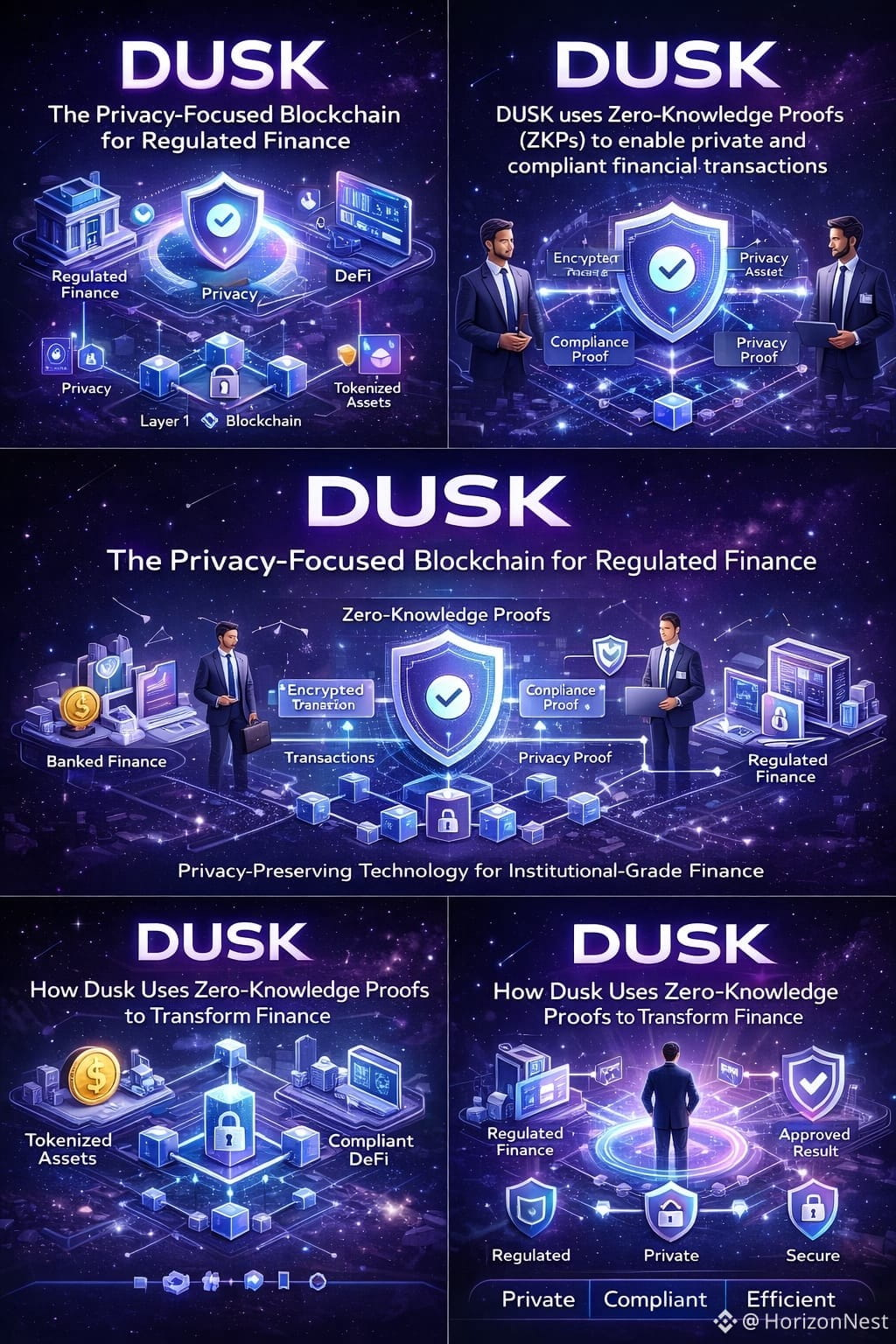
There are real risks. The focus is narrow. The technology is complex. Larger players may imitate the ideas with more influence and louder voices. Regulation may shift in hostile directions. None of these threats are abstract, and none are ignored. Dusk exists with a clear understanding that meaningful systems are fragile before they are strong, and that survival depends on adaptation without surrender.
What Dusk ultimately points toward is not a dramatic future, but a calmer one. A world where financial participation does not feel invasive. Where privacy is normal instead of suspicious. Where compliance does not mean exposure. Where blockchain technology fades into the background as infrastructure that quietly does its job. It imagines markets that feel less predatory and more humane, systems that assume dignity rather than mistrust.
Dusk is not trying to save the world in a single moment. It is trying to reduce harm over time. It is built by people who understand that financial systems shape human lives in invisible ways, and that fixing them requires patience, humility, and care. In an ecosystem driven by noise, Dusk chooses silence. In a culture obsessed with speed, it chooses endurance. And sometimes, the most meaningful change begins exactly like that.
