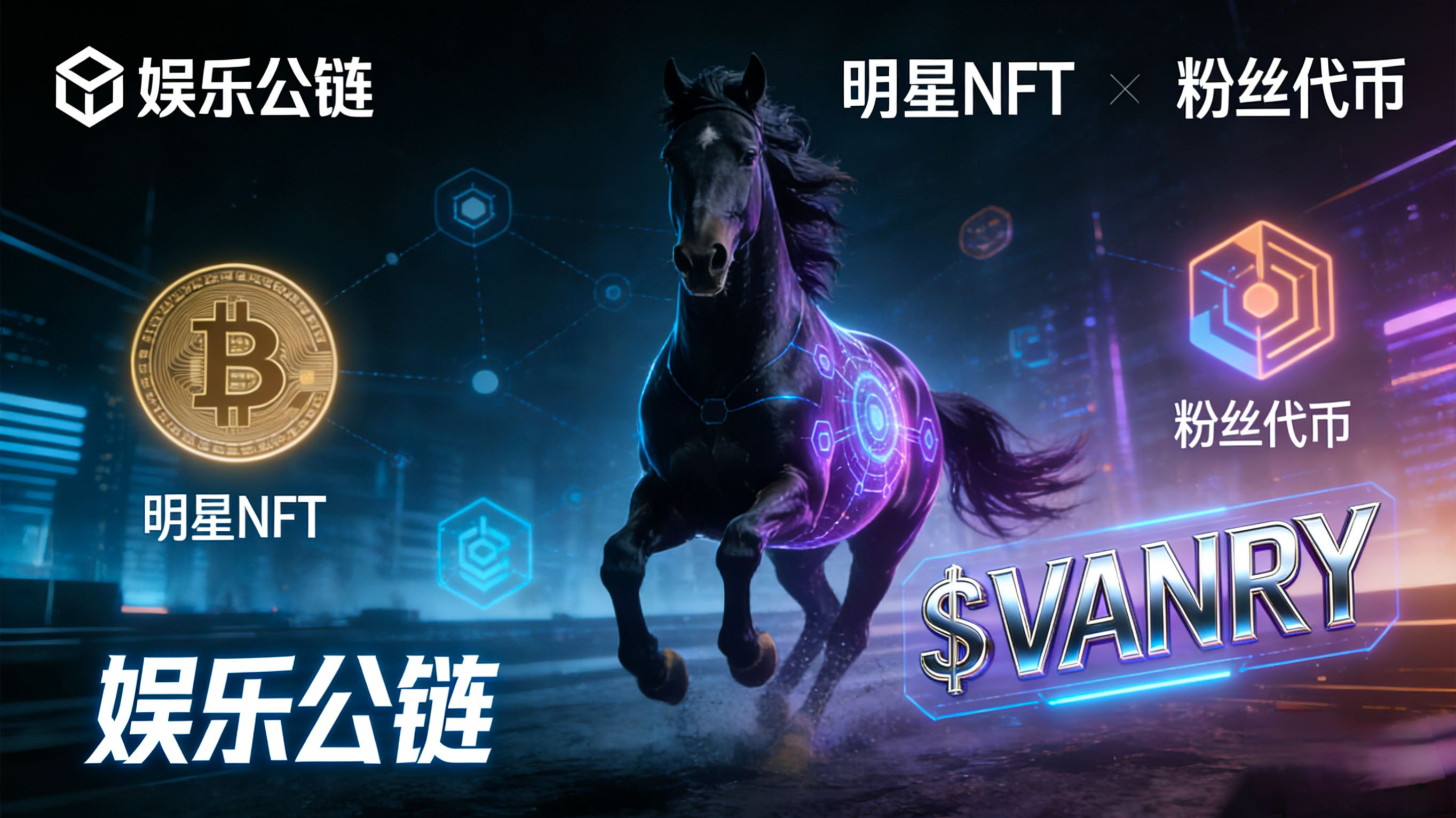
Recently, the crypto circle has been heated up by AI concepts and the rebound of mainstream coins. BTC has stabilized above 60,000, and ETH has returned to above 2,000 USD, while a low-key AI native public chain has quietly completed a key layout - it is Vanar Chain, the L1 blockchain focused on 'making it easy for 3 billion people to enter Web3'.
As a seasoned crypto veteran with three years of experience, I have seen too many hype-driven projects, but the progress of Vanar Chain has impressed me. Unlike those 'pseudo-innovations' that merely add AI interfaces to existing architectures, Vanar adopts an AI-first design from the ground up, with a five-layer architecture directly supporting AI workloads. The myNeutron decentralized memory layer can store unstructured data, and the AI engine on the Kayon chain can automatically complete compliance checks. Even the oracles that ETH relies on, it can manage to close the loop on its own! This hard power reminds me of early SOL - also a modular architecture, also focused on ecological landing. Currently, SOL's market value remains in the top five, while the price of Vanar is only 0.0066 USD, with a market value of less than 15 million. Isn't this gap an opportunity?
More importantly, Vanar's ecosystem strategy is incredibly adept at understanding user acquisition! It not only integrates with the Base cross-chain, enabling it to support a massive user base within the ETH ecosystem, but also partners with Worldpay to open fiat currency deposit channels in 146 countries—what does this mean? Ordinary users no longer need to go through complicated cryptocurrency exchanges; they can directly participate in Vanar's AI games and metaverse projects using fiat currency. This user-friendliness is far superior to ADA's ecosystem expansion. Currently, Vanar has two core products: Virtua Metaverse and VGN Games Network, along with 7,570 token holders and a circulating supply of nearly 2 billion tokens. The maximum supply of 2.4 billion tokens also avoids the pitfalls of unlimited inflation.
Some might say that Vanry has fallen over 98% from its all-time high of $0.38, is it beyond saving? But don't forget that Sodium also fell from $260 to $8, a 97% drop, before rebounding a hundredfold; Dott also experienced a drop from $53 to $2. Vanry is currently in a bottoming-out phase, with a 24-hour trading volume of $200,000, indicating that liquidity hasn't dried up. Furthermore, recent signs of a bottoming out have emerged, with a slight 0.44% increase in the last 24 hours. Could this be the prelude to a rebound?
What I'm most excited about is Vanar's token economic model—VANRY can not only be used to pay transaction fees and participate in governance, but developers also need to consume tokens to use its AI functions. This "use and burn" value binding is much more reliable than simple staking mining. With the explosion of AI + Web3, more and more DApps will need on-chain AI computing power, and the demand for VANRY will only increase, just like how $LINK secured its leading position by relying on oracle demand.
In the current crypto market, mainstream cryptocurrencies have entered a period of high-level consolidation. To find 100x coins, one can only look at potential projects with technological barriers. Vanar Chain has both an AI-native architecture and seamless integration with mainstream ecosystems and fiat currency channels, along with a community of over 7,000 users. Such projects are truly rare in the market capitalization rankings outside the top 1,000.
Finally, I'd like to ask everyone: Do you think VANRY can replicate SOL's rebound miracle? Is the current price of $0.0066 worth a small position? Feel free to leave your opinions in the comments section, or tag a knowledgeable friend to discuss!