


I didn't notice it when the first item shipped.
It was small. Cosmetic. Something meant to live for a session or two, maybe longer if someone cared. We treated it like content. Mint it. Track it. Move on.
Then the first heavy weekend hit. Not a launch. Just a Vanar's Virtua metaverse room staying crowded long past the "busy hour", trades clearing while people kept drifting in. The inventory didn't thin out after the moment ended, because the moment didn't really end.
A player logs in and doesn't look at the world first. They open their inventory. Not to check balance. To orient themselves. What they own becomes where they are. What they can do next is implied by what's already sitting there, persistent, remembered, waiting.
In a live Virtua-style environment, inventory never empties between moments. Vanar Sessions overlap. Trades resolve while someone else is still dragging an item across a grid. A reward lands while a different action is already closing. Nothing asks permission to reset state. The inventory just keeps accumulating history inside the same metaverse session.
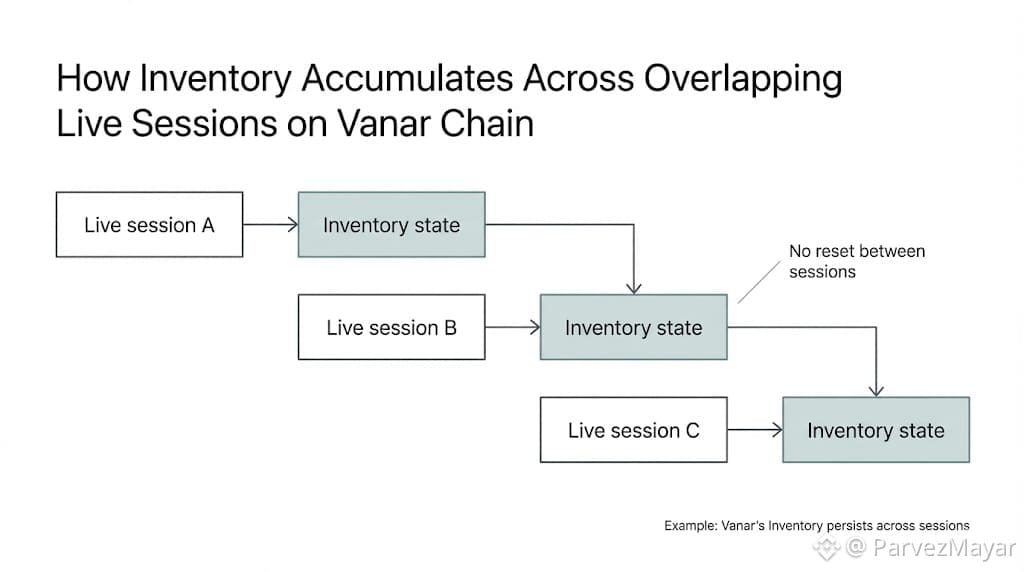
At some point, you stop calling it storage.
That realization on Vanar usually comes late. For me, it came when a 'harmless' change landed. We adjusted how an item stacked. Same asset. Same ID. Slightly different behavior. No migration. No fanfare. On-chain state updated cleanly. Dashboards stayed green. I even said "looks fine."
Support pinged anyway.
Not angry. Confused.
"Which version is the real one?"
Because two players in the same Virtua space on Vanar were describing the same item like it was two different objects. Screenshots showed up before anyone thought to pull logs.
Players noticed immediately. Not because something broke. Because something they relied on moved. A routing they'd internalized no longer worked. A habit formed inside a live economy got invalidated mid-session. They didn't file bug reports. They asked questions that sounded personal. Why did this change? Was this intended? Did I miss something?
We hadn't announced anything. We didn't think we had to.
By Sunday night, the item wasn't "owned" anymore. It was part of a route. One crafting flow started miscounting because stacking behaved differently than yesterday. Nothing crashed. Players just re-routed around it like the world had changed shape.
I kept thinking minting was the problem. It wasn't.
Live game economy settlement doesn't give you a rewind lane. Once an item has existed long enough to be seen, traded, screenshotted, or routed around, it carries weight. Not value in a market sense. Weight in the sense that other decisions quietly lean on it.
We used to think the risk was duplication. Then inflation. Then exploits.
Those show up fast. Everyone hears about them.
This wasn't loud. It was continuous.
An inventory that never resets starts accumulating expectations. Players assume items will behave tomorrow the way they did today because nothing ever told them otherwise. When Vanar's Metaverse sessions don't end cleanly, inventory becomes the longest-running memory in the system. Longer than the world. Longer than the UI. Longer than whatever doc you're staring at right now.
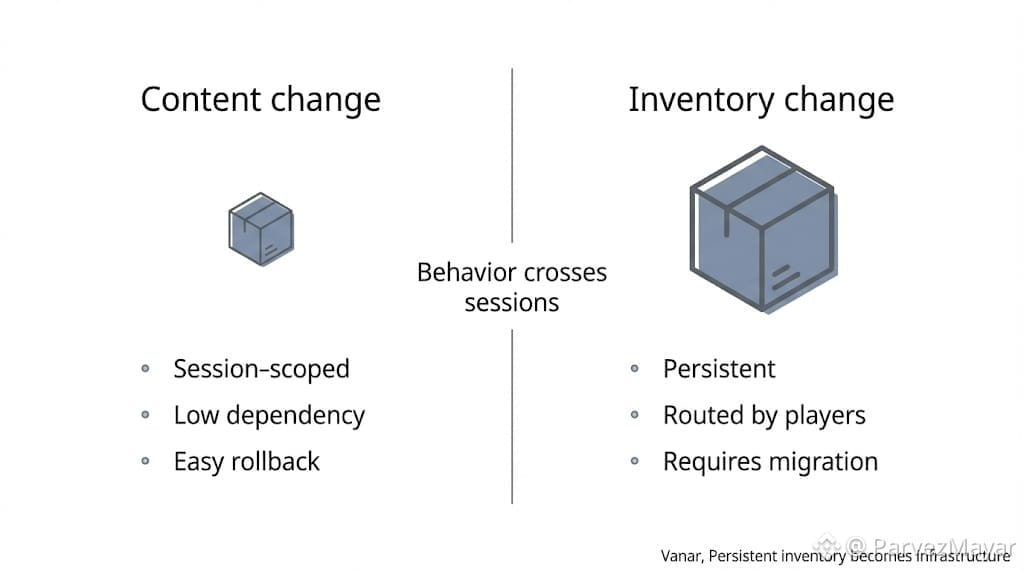
Change something there... and you're not tweaking content. You're renovating a load-bearing wall while people are still inside the building.
You feel it in the way teams start hesitating. Not about shipping new items, but about touching old ones. Migration plans get heavier. Backward compatibility stops being "nice" and starts being existential. You add versioning not because it's elegant, but because breaking continuity feels worse than carrying baggage.
Player inventory on-chain on a consumer gradeas usage entertainment chain like Vanar isn't a feature. It's a commitment you keep making every block.
The chain will settle whatever you ask it to. Everything has already built itself around yesterday's behavior. Quietly. While the world stayed live. Now you don't touch it without a migration plan. Even when it's "just stacking."