
I’ll be honest: most “real-world adoption” claims in crypto start to sound the same after a while. Everyone says they’re building for the future, but the future always seems to require one more wallet popup, one more bridge, one more confusing step.
What feels different to me about Vanar is that the focus isn’t on making people care about the blockchain it’s on making sure they don’t have to.
The easiest way I can describe it is this: Vanar feels less like it’s building a flashy new ride, and more like it’s building the systems that make the whole amusement park run smoothly. Ticketing, power, logistics, security the invisible stuff. When that part works, nobody talks about it. They just enjoy the experience.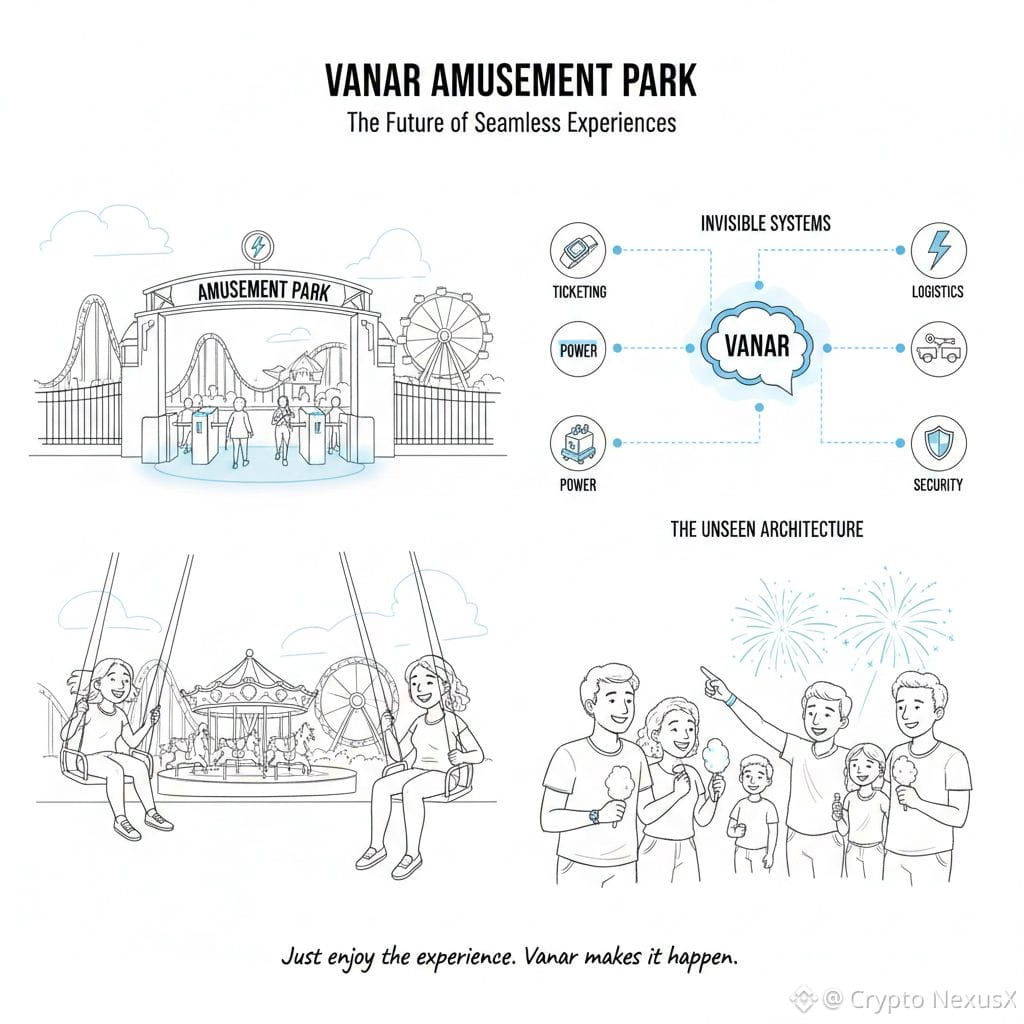
That mindset shows up in how Vanar presents itself. It doesn’t just talk about being an L1 chain; it talks about being a full stack meant to support real consumer-facing experiences gaming, entertainment, brand activations, and digital environments where people already spend time. The chain is there to support those worlds, not to be the main character.
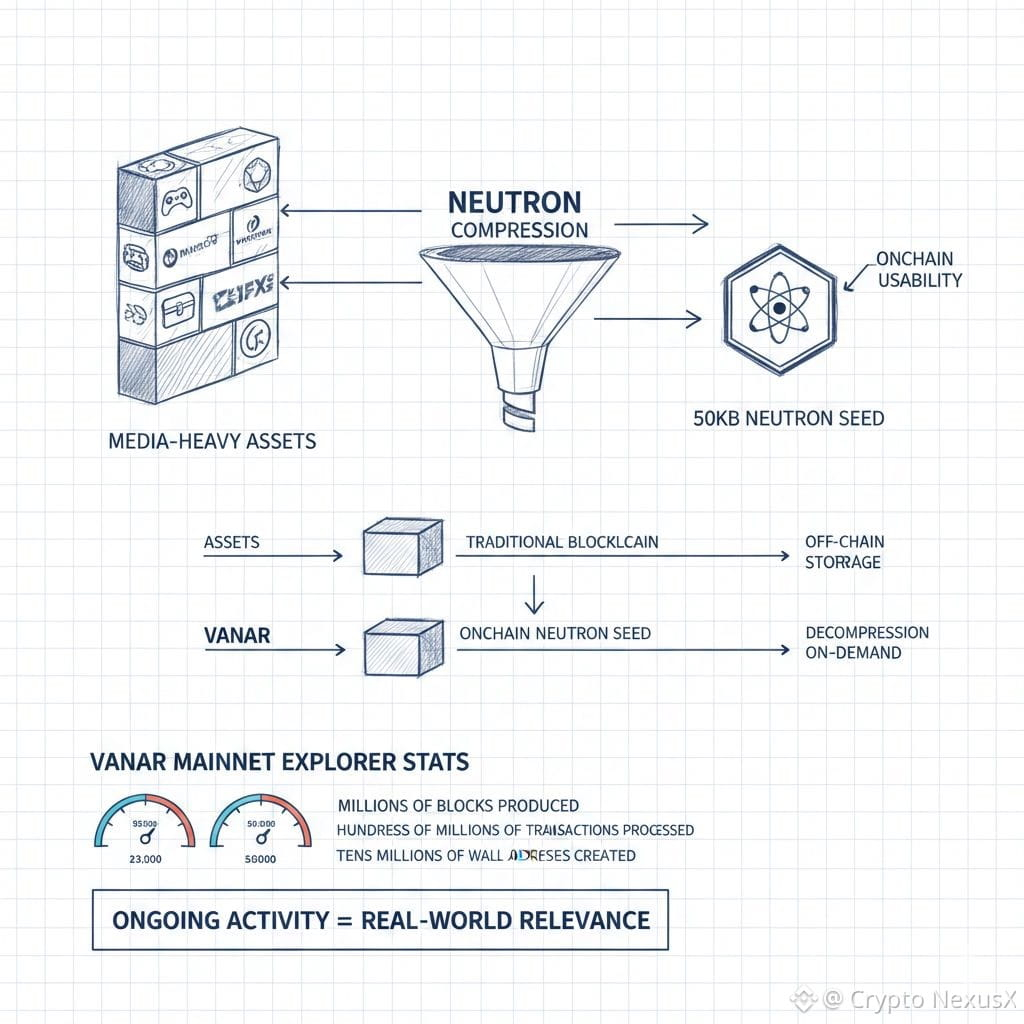
One of the more interesting technical ideas in their stack is something called Neutron. Strip away the branding, and the pitch is pretty practical: making large data lighter and more usable onchain. Vanar claims Neutron can compress 25MB of data down to 50KB using what they call “Neutron Seeds.” If you’ve ever dealt with media-heavy apps game assets, rich collectibles, branded digital items you know how fast “onchain” becomes “we’ll just store it somewhere else.” The Neutron approach is basically saying: what if we didn’t have to push all that important context off-chain just to make things work?
But stories are cheap, so I look at the boring numbers. Vanar’s mainnet explorer shows millions of blocks produced and hundreds of millions of transactions processed, along with tens of millions of wallet addresses created. Those aren’t vanity metrics by themselves, but they do suggest this isn’t an empty chain waiting for its first real users. There’s ongoing activity, and that’s table stakes for anything claiming real-world relevance.
The token side also feels more like infrastructure than hype. VANRY is positioned mainly as the fuel of the network — paying for transactions and participating in staking under a delegated proof-of-stake model. That’s not glamorous, but it’s exactly what consumer-facing ecosystems need: predictable, usable plumbing behind lots of small actions.
Looking at the Ethereum version of the token gives another angle. The public contract data shows a fixed maximum supply in the low billions, several thousand holders, and steady daily transfer activity. It’s not the kind of explosive churn you see with pure speculation tokens. It looks more like a steady heartbeat which is actually what you want if the goal is to support applications, not just trading.
Where this starts to feel more tangible is through consumer platforms tied to the ecosystem. Virtua, for example, describes its NFT marketplace and digital experiences as being built on Vanar. That matters because onboarding doesn’t happen through technical documentation it happens in places where people are already motivated to participate: games, digital collectibles, branded virtual spaces. If users show up for the experience and the blockchain quietly handles ownership, transactions, and provenance in the background, that’s when “adoption” stops being a buzzword.
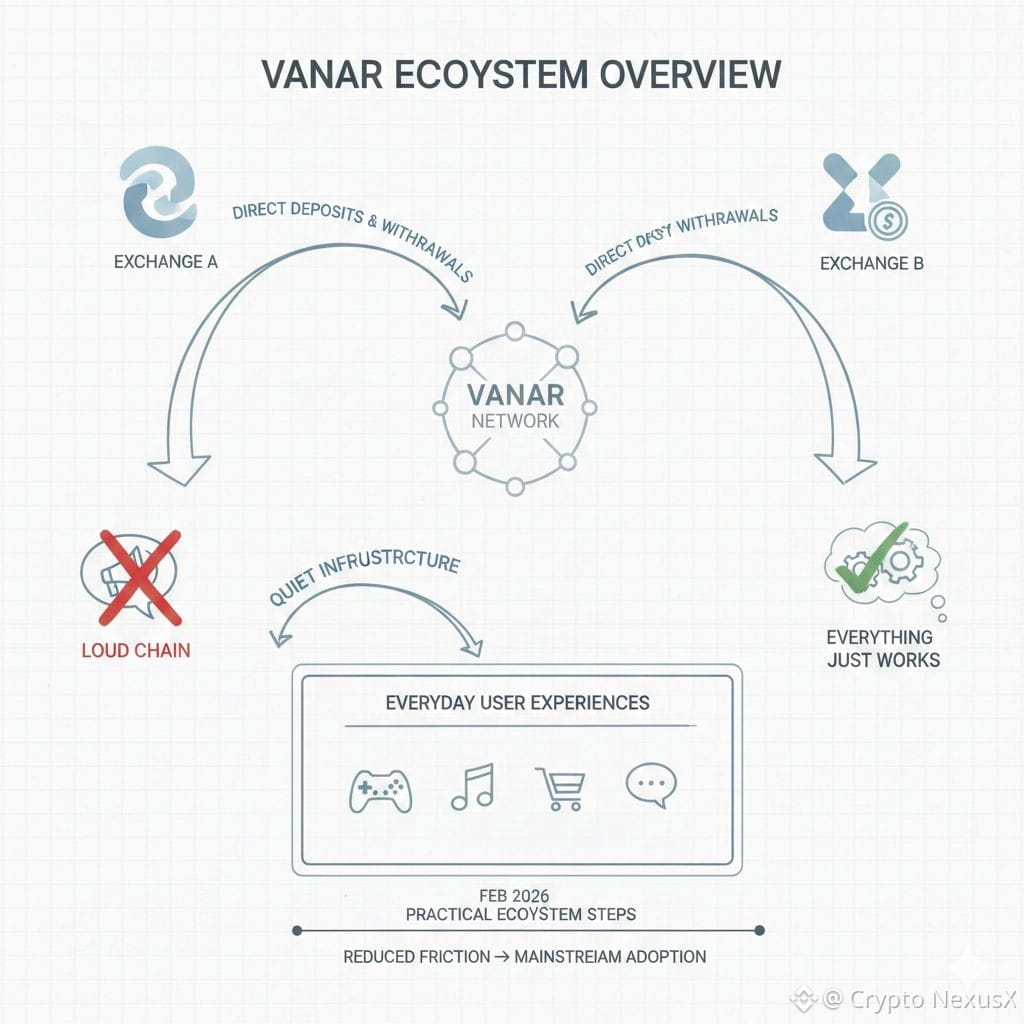
There have also been practical ecosystem steps that make life easier for users, like exchange integrations that allow direct deposits and withdrawals on the Vanar network. Those updates might not be exciting to read about, but they reduce friction and friction is what usually kills mainstream curiosity before it turns into real usage.
So my personal read is this: Vanar isn’t trying to win a race for the loudest chain. It’s trying to become the quiet infrastructure under experiences that already make sense to everyday users. Less “look at our blockchain,” more “everything just works.”
Whether that vision pays off won’t be decided by slogans. It’ll show up in whether consumer apps built on the network keep attracting repeat users, whether transaction activity reflects real product usage, and whether the data-heavy promises like Neutron actually translate into smoother, richer experiences without users ever needing to think about what chain they’re on.