
The more I study large scale stablecoin settlement, the more I realize that speed alone is not the hard problem anymore. Many networks can process transactions quickly. The real challenge is how you preserve trust when billions move daily and political or regulatory pressure inevitably appears. Plasma approaches this problem by anchoring its own fast moving ledger into Bitcoin, not as a marketing slogan but as a concrete cryptographic protocol. I find this design fascinating because it treats Bitcoin not as a competitor or a bridge target, but as a final court of record that silently enforces honesty across the entire system.
Plasma is a sovereign Layer one with its own validator set, its own consensus, and its own economics. Yet every few minutes it commits its internal state to Bitcoin using compact state roots. This article focuses exclusively on how that anchoring protocol works, how light clients verify it, and why this approach changes the risk profile of stablecoin infrastructure in a way most people underestimate.
Why Anchoring Matters in a Payments First Chain
Plasma is optimized for stablecoins, not generalized experimentation. With PlasmaBFT delivering deterministic finality in roughly four hundred milliseconds and sustaining around one thousand transactions per second, the chain behaves more like a payment switch than a speculative playground. That speed is essential, but it also introduces a question I keep coming back to. What happens if validators are coerced, compromised, or legally pressured in a single jurisdiction.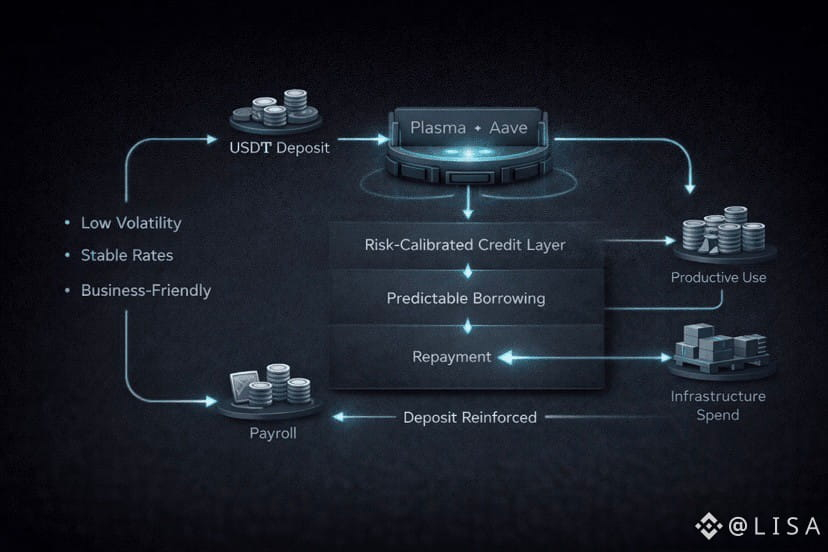
Instead of pretending this cannot happen, Plasma assumes it eventually will. Bitcoin anchoring exists precisely for that scenario. By committing state roots into Bitcoin, Plasma ensures that rewriting history would require not only capturing Plasma validators, but also rewriting Bitcoin itself. That cost difference is enormous, and it fundamentally changes the attack calculus.
PlasmaBFT State Finality Before Anchoring
Understanding anchoring requires first understanding what is being anchored. PlasmaBFT is a Byzantine fault tolerant consensus protocol designed for fast deterministic settlement. Validators are organized into committees that propose, vote, and finalize blocks with a two thirds supermajority. Fault tolerance is designed around a sixty seven percent honest assumption, meaning up to one third of validators can be faulty without breaking safety.
Once a block is finalized under PlasmaBFT, it is final within the Plasma network. There are no probabilistic confirmations or reorg windows. However, that finality is local to Plasma. Anchoring extends that finality outward by recording a cryptographic fingerprint of Plasma state onto Bitcoin.
Constructing the State Root
Every Plasma block updates the global state trie in a manner familiar to Ethereum developers. Plasma uses the Reth execution client, which is fully EVM compatible and optimized for throughput. At predefined intervals, typically after a batch of finalized blocks, Plasma computes a state root that represents the entire chain state at that moment.
This root is not a transaction hash or block hash. It is the Merkle root of the world state, including account balances, contract storage, and system parameters. If any historical transaction were altered, the root would change. I think of this root as a checksum for the entire economy running on Plasma.
Encoding State Roots into Bitcoin
Once the state root is computed, it must be written to Bitcoin in a way that is cheap, verifiable, and permanent. Plasma uses OP_RETURN outputs for this purpose. OP_RETURN allows embedding a small amount of arbitrary data into a Bitcoin transaction without creating unspendable UTXOs.
The Plasma anchoring transaction includes the state root, the Plasma block height, and a domain separator to prevent replay or ambiguity. The total payload fits comfortably within OP_RETURN limits. This transaction is broadcast to Bitcoin and becomes part of the Bitcoin mempool like any other transaction.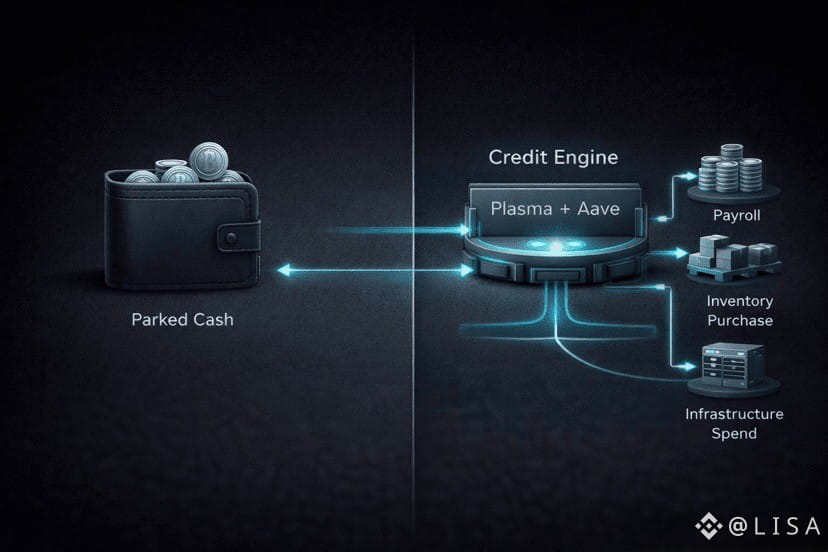
After six Bitcoin confirmations, Plasma treats that anchor as immutable. At that point, reversing Plasma history before that anchor would require reorganizing Bitcoin beyond six blocks, which is economically unrealistic.
Anchoring Frequency and Cost Tradeoffs
Anchoring every Plasma block would be unnecessary and expensive. Anchoring too infrequently would weaken guarantees. Plasma strikes a balance by anchoring periodically based on time and volume thresholds. During high throughput periods, anchors may occur more frequently. During quieter periods, they may be spaced further apart.
I like this adaptive approach because it aligns security expenditure with economic activity. When billions are settling, anchors tighten. When activity is low, costs are minimized. Anchoring costs are paid from protocol level fees and are factored into long term sustainability models.
Light Client Verification Flow
Anchoring only matters if it can be verified independently. Plasma is designed so that light clients can verify Bitcoin anchors without trusting Plasma validators. This is where the protocol becomes especially interesting.
A Plasma light client tracks PlasmaBFT headers and periodically checks for corresponding Bitcoin anchors. Using a Bitcoin light client or third party relay, it verifies that a given Plasma state root appears in a confirmed Bitcoin transaction. It then checks that the Plasma block height associated with that root matches the local Plasma header chain.
If a Plasma validator attempted to present an alternative history that contradicts an anchored root, the light client would immediately detect the mismatch. No trust in validators is required beyond cryptographic proofs.
Dispute and Exit Scenarios
One reason anchoring matters is dispute resolution. If a user believes Plasma validators are misbehaving, the anchored roots provide a clear reference point. Any withdrawal or exit mechanism can reference the last anchored state as a safe checkpoint.
This design avoids the complexity of challenge periods and fraud proofs seen in older scaling systems. Plasma does not ask users to monitor continuously. Instead, Bitcoin anchoring passively enforces correctness in the background.
Interaction With the Bitcoin Bridge
The anchoring protocol also underpins the pBTC Bitcoin bridge. Deposits and withdrawals reference anchored state roots to ensure that minting and burning operations align with Bitcoin reality. Because both the bridge and the anchor rely on Bitcoin, they reinforce each other.
I find this symmetry elegant. Bitcoin secures Plasma state, and Plasma secures programmable Bitcoin liquidity, all without custodial trust.
Performance Impact on PlasmaBFT
A common concern is whether anchoring slows down the chain. In practice, it does not. PlasmaBFT finality remains sub second. Anchoring happens asynchronously and does not block transaction processing.
Validators construct anchors in parallel with block production. If an anchor transaction is delayed on Bitcoin, Plasma continues operating normally. The anchor simply finalizes later once Bitcoin confirms it.
Comparison With Other Anchoring Models
Many chains talk about checkpointing to Bitcoin or Ethereum, but few integrate it as deeply. Some rollups post data to Ethereum but inherit its fee volatility. Others rely on social consensus checkpoints.
Plasma’s model is different because it anchors minimal data, not full transaction batches. The cost is low, the verification is simple, and the security inheritance is strong. I see this as closer to a cryptographic notarization service than a scaling dependency.
Regulatory and Institutional Implications
From an institutional perspective, Bitcoin anchoring is extremely powerful. It provides an external, politically neutral audit trail. Even if Plasma were pressured to censor transactions, anchored history remains visible and provable.
This matters for stablecoin issuers, payment processors, and asset managers who need assurances that settlement history cannot be silently altered. Anchoring gives them a fallback guarantee without forcing them to operate Bitcoin infrastructure directly.
Long Term Security Assumptions
No system is perfect, and anchoring does introduce assumptions. It assumes Bitcoin remains secure and censorship resistant. Given Bitcoin’s hash power and decentralization, this assumption is currently stronger than any alternative.
Plasma also assumes that anchors are frequent enough to limit rollback windows. Governance can adjust anchoring parameters over time as usage grows.
Roadmap Enhancements to Anchoring
Plasma’s roadmap includes improvements to anchor aggregation and compression. Multiple Plasma roots may be aggregated into a single Bitcoin transaction using Merkle trees, further reducing cost.
There are also plans to expose anchor verification directly in SDKs so developers can build applications that reference anchored checkpoints for added assurance.
Anchoring as Invisible Infrastructure
What strikes me most is how invisible this entire mechanism is to end users. Someone sending USDT on Plasma does not see Bitcoin, does not wait for Bitcoin, and does not manage Bitcoin fees. Yet Bitcoin is silently enforcing honesty underneath.
If this design holds at scale, Plasma may demonstrate a model where Bitcoin becomes a global settlement judge rather than a daily transaction rail. Fast chains handle commerce. Bitcoin enforces history.
Closing Reflections on Anchored Finality
As stablecoins increasingly resemble global money, the question of final settlement becomes unavoidable. Plasma’s Bitcoin anchoring protocol offers a compelling answer. Fast local finality backed by slow, unstoppable global finality.
I keep thinking about what it means when a coffee purchase, a payroll run, and a billion dollar treasury settlement all share the same ultimate anchor. Not because users chose Bitcoin explicitly, but because the infrastructure quietly made that choice for them.
If digital dollars are to move the world, they will need rails that are fast enough for daily life and strong enough to withstand pressure. Plasma’s anchored state roots suggest a future where both are possible, without tradeoffs, and without noise.

