
I have read approximately four thousand blockchain whitepapers at this point, and I can tell you exactly what 99% of them have in common. They all claim to be faster, cheaper, and more decentralized than Ethereum. They all have some novel consensus mechanism with a name like "Proof-of-Recursive-Stochastic-Sharding." They all promise to onboard the next billion users. And they are all, without exception, completely empty of actual users doing actual things.
The problem is not technical. We have solved throughput. We have solved finality. We have solved interoperability, at least on paper. What we have not solved is the fundamental question of why anyone who is not already rich, paranoid, or ideologically committed would bother with any of this.
Vanar is interesting to me because it started from the opposite direction. The founders were not crypto researchers looking for applications. They were running games and entertainment properties, trying to figure out why blockchain kept failing them. They wanted to sell digital items that players actually owned. They wanted virtual economies that did not collapse the moment token prices dipped. They wanted the technology to be invisible, which is the one thing almost nobody in this industry actually wants.
The result is a chain that looks deeply unfashionable by crypto standards. There is no elaborate staking gamification designed to lock up supply and pump the chart. There are no DAO proposals about treasury diversification or protocol politics. The documentation is almost boring in its focus on transaction costs and latency benchmarks. And yet they have actual products running on it.
Virtua Metaverse is the one that gets attention because it looks good in screenshots. People have built clubs, galleries, and retail spaces there. What matters more is that it functions you can walk around without the client crashing you can buy land without calculating whether gas fees will exceed the purchase price and you can actually do things with the property you own rather than just staring at it as an appreciating asset This should be baseline functionality, but in the current landscape it counts as exceptional.
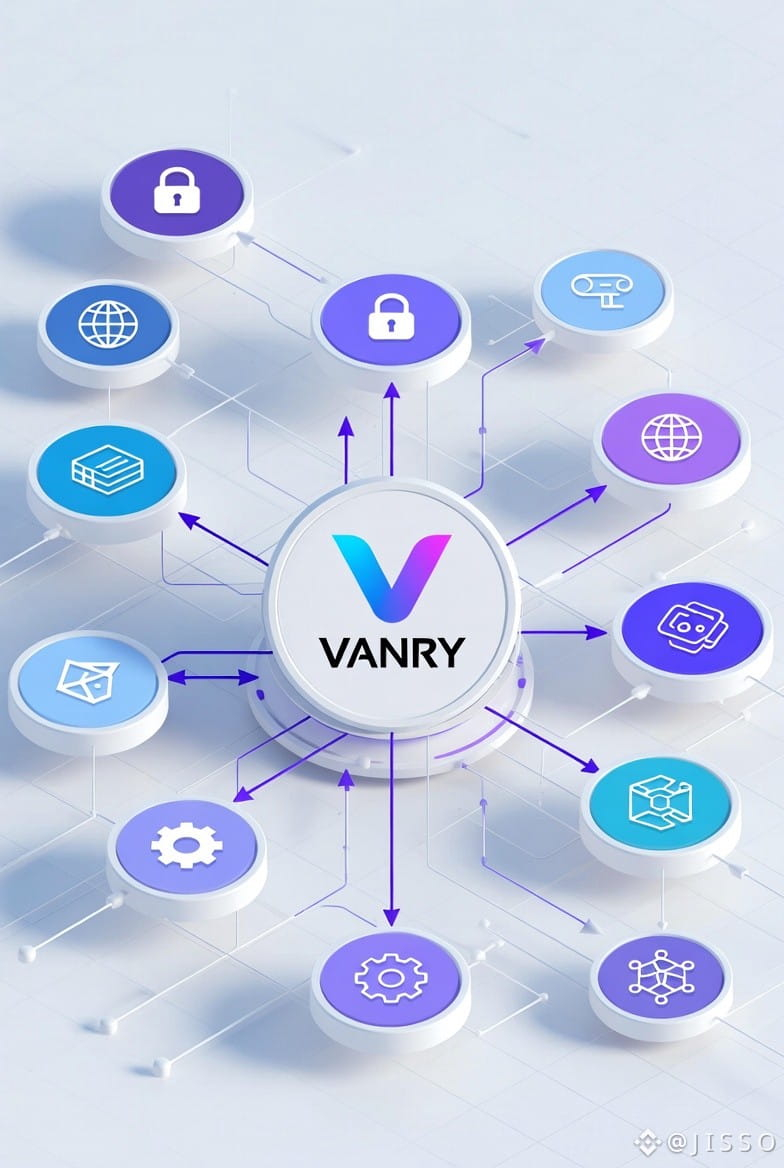
The VGN gaming network is less visible but more revealing. Games built on it do not announce themselves as "blockchain games" because that phrase has become synonymous with cynical financial extraction. They are just games, with item trading and ownership happening through infrastructure that players do not need to think about. Some of these games have player counts that would be embarrassing to a traditional studio but represent genuine outliers in Web3. One of them has maintained consistent daily active users for over a year, which is approximately thirteen months longer than the average play-to-earn economy survives.
I am skeptical of the AI and environmental verticals, not because the infrastructure cannot support them but because those sectors are crowded with solutions looking for problems. The brand loyalty angle is more compelling than it initially sounds. Traditional loyalty programs are essentially broken: points expire arbitrarily, transferability is restricted, and the value proposition degrades over time as companies debase their currencies. Tokenizing these systems does not automatically fix the incentives, but it at least creates the possibility of exit. Customers with transferable, persistent rewards have leverage that they currently lack.
The VANRY token itself is notable for what it does not do. It is not aggressively deflationary. It does not have complex yield mechanics designed to attract mercenary capital. It is used for fees, staking, and governance, which is exactly what a utility token should do. The supply dynamics are predictable enough that developers can actually price services in it, which is a low bar that most tokens fail to clear.
What strikes me about Vanar's positioning is their apparent indifference to crypto culture. They do not engage in the usual discourse about maximalism or decentralization purity. They have not positioned themselves as an "Ethereum killer" or aligned with any particular ideological camp. They seem to view blockchain as infrastructure to be used rather than a community to join, which is exactly how the technology will need to be treated for any meaningful adoption to occur.
This is also the risk. The history of technology is full of superior products that lost because they failed to build network effects, political coalitions, or cultural momentum. Vanar's focus on functionality over narrative may leave them vulnerable to competitors with better marketing and worse technology The gaming and metaverse spaces specifically are littered with well-engineered platforms that could not acquire users fast enough to survive
There is also the question of whether "make blockchain invisible" is actually what consumers want, or merely what builders want to believe consumers want. Ownership without friction sounds appealing, but some friction serves important functions. The cognitive load of managing private keys, while currently excessive, does at least force users to take security seriously. Complete abstraction might enable broader adoption while enabling broader negligence.
The Vanar bet is that infrastructure maturity will resolve these tensions: that wallet technology will improve, that custody solutions will become more sophisticated, and that users can have security without complexity. It is a reasonable bet, but not a certain one.
I do not know if Vanar succeeds. The chain is functional, the products are real, and the team understands their users better than most. Whether that translates to the scale they are targeting depends on execution timing, competitive dynamics, and factors outside their control. What I do know is that they are asking the right questions, which is rare enough to be worth noting.
The next phase of Web3 will be defined by projects that stopped promising revolutions and started delivering marginal improvements to specific problems. Vanar fits that description precisely. Whether marginal improvements are enough to justify the industry's existence is a separate question, but it is probably the only question that matters now.